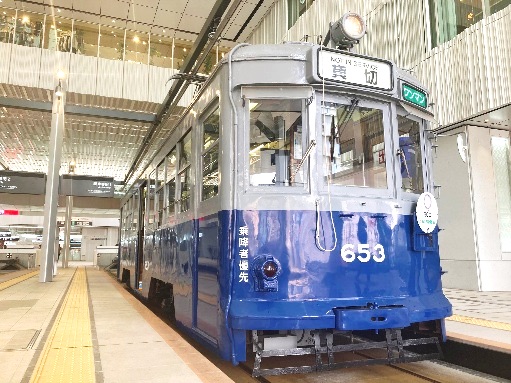
Step back in time on Hiroshima’s “Peace Loop 653”, a special tour that links passengers to the city’s past and present.
Visitors to Hiroshima tend to have an interest in learning about its past, as it was one of only two cities, alongside Nagasaki, to have experienced an atomic bombing. Now, the city is offering visitors a unique way to connect to that history, as Hiroshima Electric Railway is running a limited-time sightseeing tour aboard the historic 653 tram, one of the few vehicles to survive the bombing of 6 August, 1945.
Called “Peace Loop 653”, the tour takes place on the tram, which was built in 1942 and was operating near Eba in Hiroshima when the atomic bomb was dropped. Although it was severely damaged, it was repaired and returned to service just four months later.
▼ Eba is around 3.4 kilometres (2 miles) from the Atomic Bomb Dome.
The tram continued operating for decades and is now preserved as a special event vehicle. While it occasionally runs for commemorative occasions and special events, the Peace Loop 653 tour gives visitors a rare opportunity to ride the historic vehicle as part of a guided tour.
▼ Restored to its original appearance, the tram even has a wooden interior that reflects the look of Hiroshima streetcars in the 1940s.
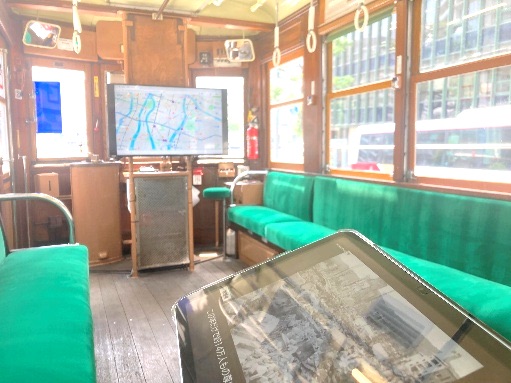
The Peace Loop 653 takes passengers around Hiroshima’s city centre on a loop route, circling around twice as onboard commentary introduces passengers to the city’s history, recovery, and modern attractions.
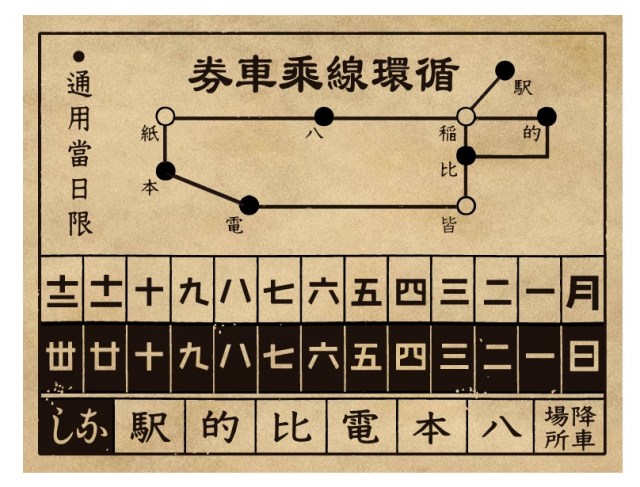
The tour departs from Hiroshima Station, where passengers are welcomed by a guide wearing a restored 1940s-style uniform. Before boarding, participants will receive a special souvenir inspired by wartime-era tickets, adding another element of history to the journey.
On the first loop of the tour, passengers learn about Hiroshima before the atomic bombing and in the immediate aftermath. Historical footage from the era will be available to watch on tablets during the ride, allowing visitors to see how the city looked before and after the bombing.
The second loop around focuses on Hiroshima’s recovery and its present-day identity. Using an original tour map, passengers can discover the city’s rebuilt streets, local attractions, and recommendations from guides. During this part of the journey, passengers who prefer to hop off before Hiroshima Station can do so at select stops, although once passengers disembark from the tram it will conclude their tour as they won’t be able to reboard.
▼ First loop in purple, second loop in navy, with stops for alighting in yellow and Hiroshima Station in the red box.
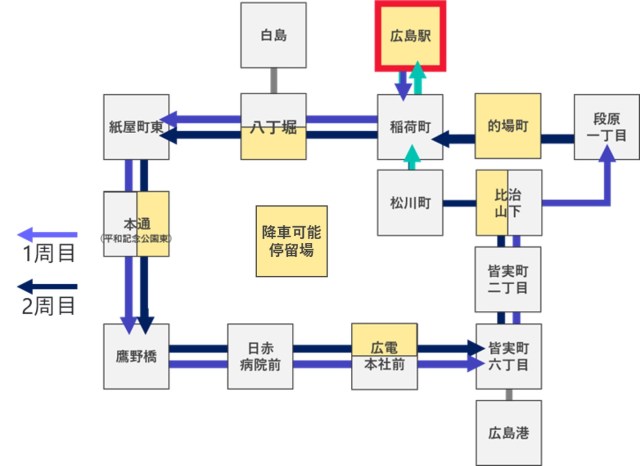
The route above is read as follows:
Loop 1: Hiroshima Station – Inari-machi – Kamiyacho-higashi – Hondori – Takanobashi – Hiroden-honsha-mae – Minami-machi rokuchome
Loop 2: Minami-machi rokuchome – Matoba-cho (alighting stop) – Hatchobori (alighting stop) – Hondori (alighting stop) – Hiroden-honsha-mae (alighting stop) – Hijiyama-shita (alighting stop) – Hiroshima Station (final stop)
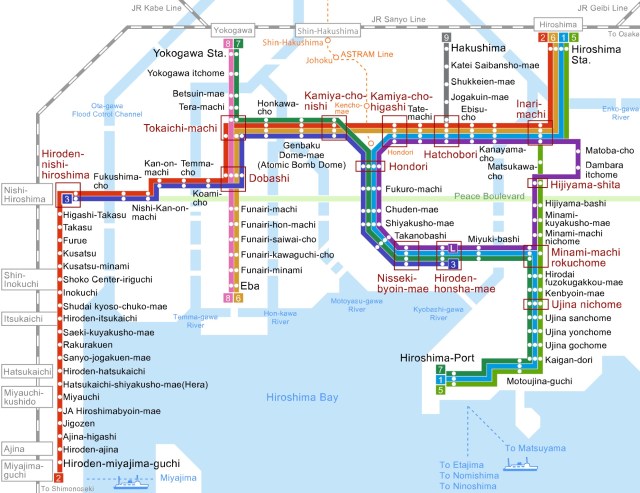
▼ The tram utilises the purple loop route, and a portion of the light green route, seen on the upper right.
The tour also includes a two-day Hiroshima Tabi Pass, which gives participants unlimited travel on select local trains, buses, and other transport services during their stay. The experience lasts around 40 minutes from Hiroshima to the first alighting stop, or 90 minutes for the full two-loop journey to and from Hiroshima Station.
Each tour is limited to 25 passengers, with morning and afternoon departures on select weekends and public holidays. The 10:30 a.m. morning departures will take place on 5, 6, 19, 20, 21, 22 September and 10, 12, 24, 25, 31 October. The 1:30 p.m. afternoon departures will take place on 19, 20, 21, 22 September.
▼ Take a look at the Peace Loop 653 service below.
Tickets cost 3,500 yen (US$21.96) for adults (junior high school age and above), 1,500 yen for elementary school-age children, while preschool children ride free. Advance reservations are recommended (online bookings here), but if seats remain available, same-day applications will also be accepted at Hiroshima Station.
Being able to ride a tram that survived the atomic bombing of Hiroshima is a rare experience that connects you to the city’s past in a truly tangible and memorable way. Not only is it a reminder of the city’s war-torn past, it’s also a symbol of survival that’s symbolic of the city itself, and you can ride the tram during its limited run until 31 October.
Source: Press release
Featured image: Press Release
Insert images: Press release, Hiroshima Electric Railway
● Want to hear about SoraNews24’s latest articles as soon as they’re published? Follow us on Facebook and Twitter!