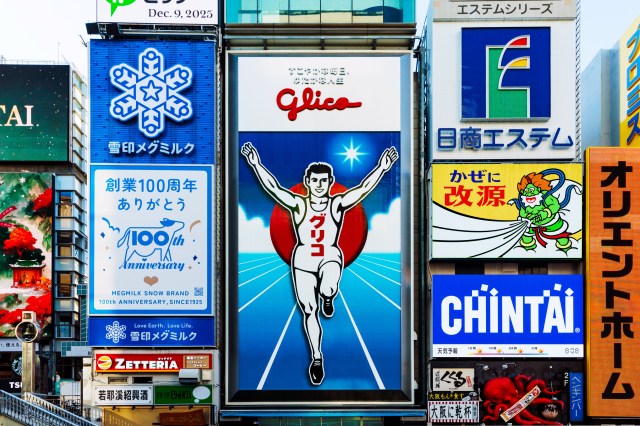
Now’s the time to say goodbye to the city’s sixth running man before he disappears forever.
If you’ve ever been to Osaka, one of the landmarks you’ve probably taken a photo in front of is the Glico “running man” sign. While this might sound like an odd tourist draw, the giant signboard has become one of the most famous sites in the prefecture, with the arms-raised athlete connecting with visitors from around the globe, who may or may not be aware that the sign is actually an ad for one of the country’s most popular confectionery makers.
▼ The sign reportedly attracts an estimated 70,000 to 80,000 visitors a day.
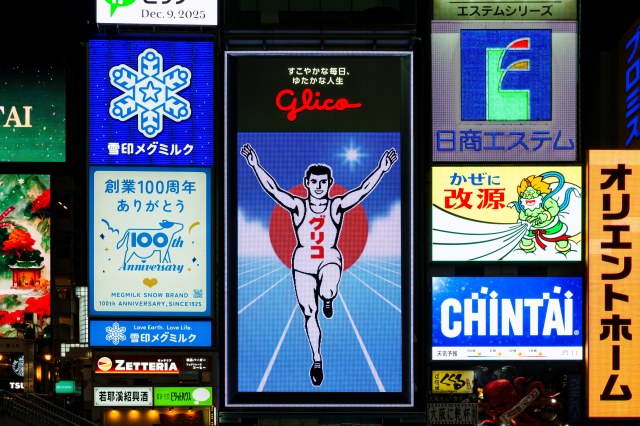
The signboard is so famous that when its operators, Ezaki Glico, announced that it would be disappearing from the landscape for several months for a makeover, it became a national news story. Glico made the announcement at a press conference in Osaka on 14 October, where it revealed that the current Glico running man sign – the sixth of its kind, which has been overlooking the river since 2014 – will be replaced by a seventh-generation version next spring.
▼ Sayonara, number six.
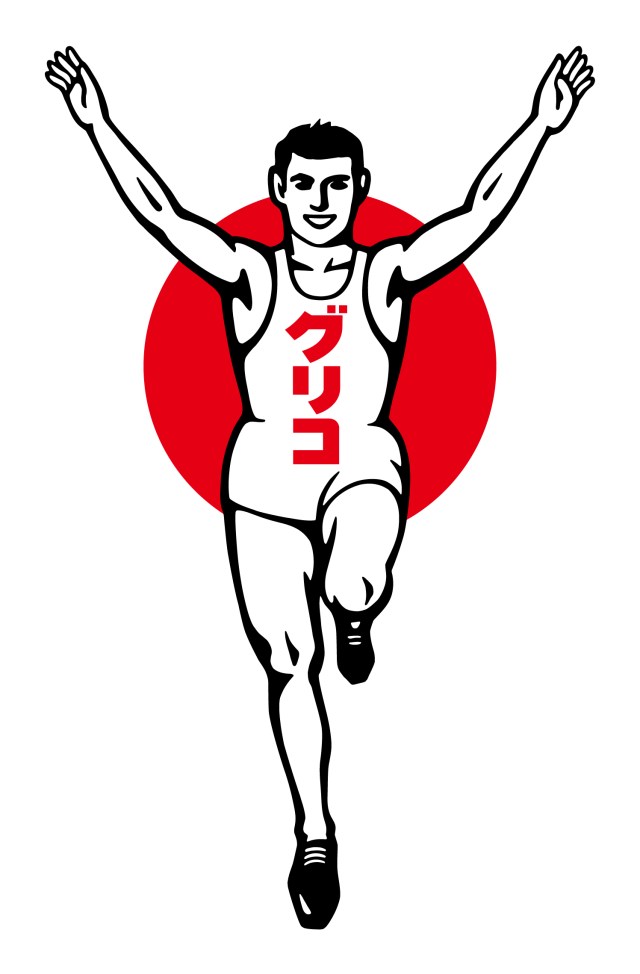
That means the current running man’s days are numbered, with Glico saying that work on the signboard will commence in December. As for what the new design will look like, well, Glico is keeping that a secret, but company representative Yoriko Miki told reporters that the runner will remain the main attraction. According to Miki, the running man represents the company’s founding spirit and its purpose of helping people enjoy “Healthy days, a fulfilling life”.
▼ グリコ = Glico
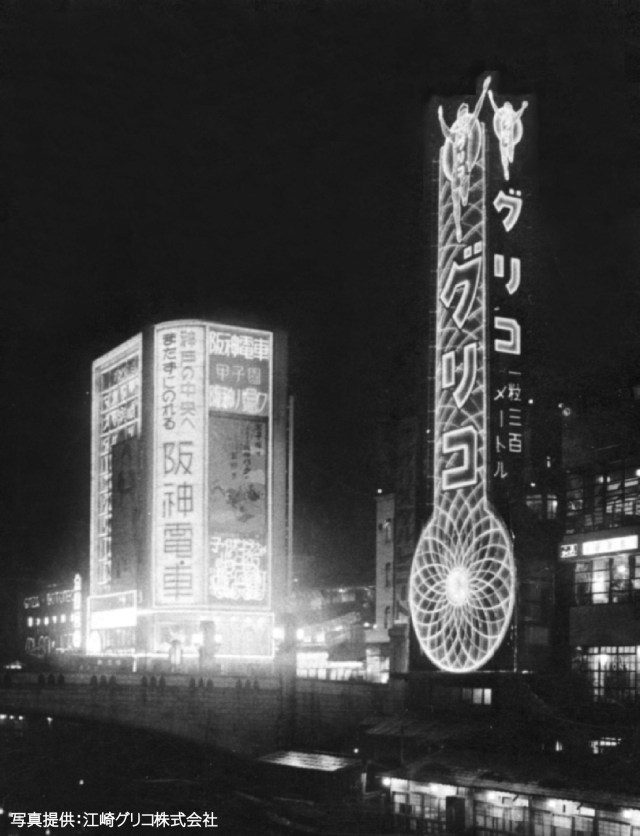
The company has long held close ties with Osaka, having been founded there 104 years ago, in 1922. The signboard has enjoyed a similarly long history, appearing beside Ebisubashi Bridge in 1935, where it towered over the landscape at a height of 33 metres (108 feet), with large neon lettering making it stand out at night.
▼ It quickly became a local landmark, but was dismantled in 1943 as materials were needed for the war.
Then, from 1955 to 1963, the second incarnation took up residence in the same location, this time above a stage with a giant toy crocodile playing the piano.
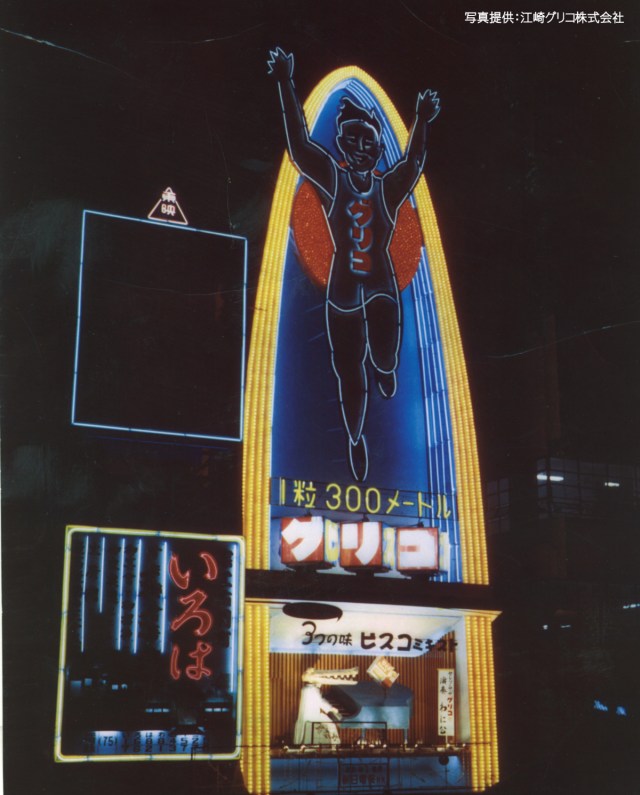
From 1963 to 1972, things got even wilder, with the third sign featuring an elaborate fountain that sprayed 12 tonnes of water from 150 nozzles arranged around the runner, illuminated by hundreds of coloured lights to create a colourful effect.
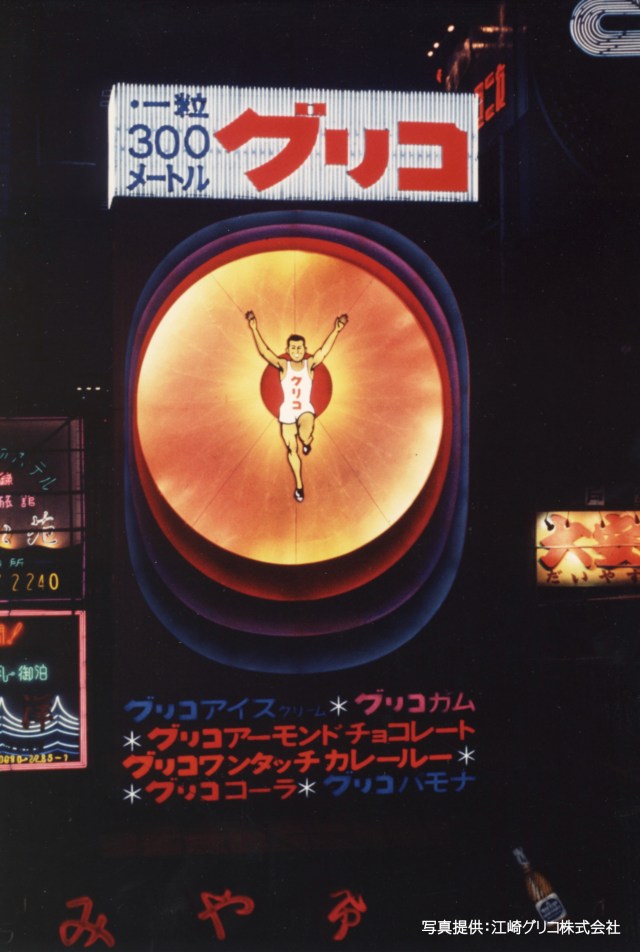
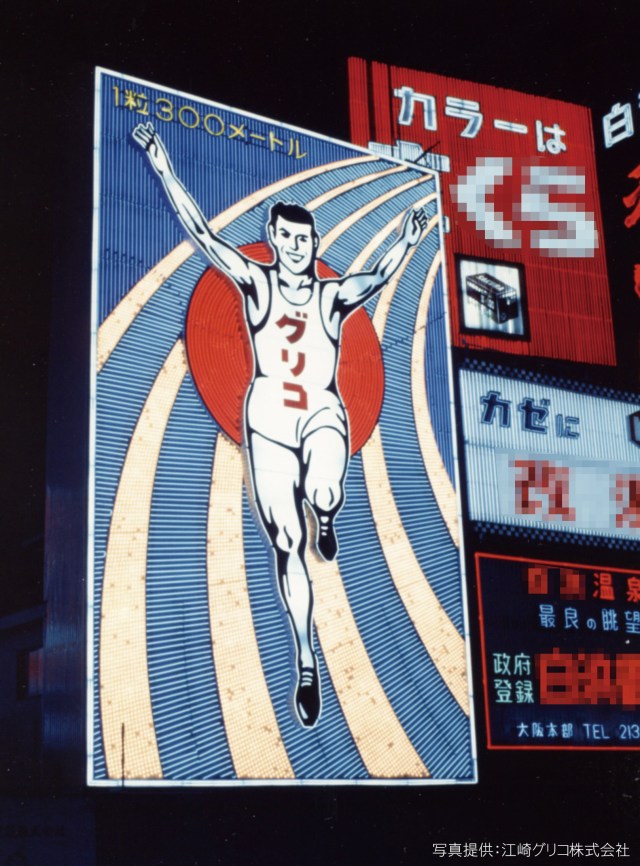
The fourth sign, in place from 1972 to 1996, included a version of the running track we now see today, but after it was switched off and removed due to renovation work on the neighbouring building, Osaka was without its running man for a whole year.
For the fifth iteration, which ran from 1998 to 2014, the colours of the background changed to simulate the passage of a whole day, making it look as if the runner was racing through Osaka from morning until night.
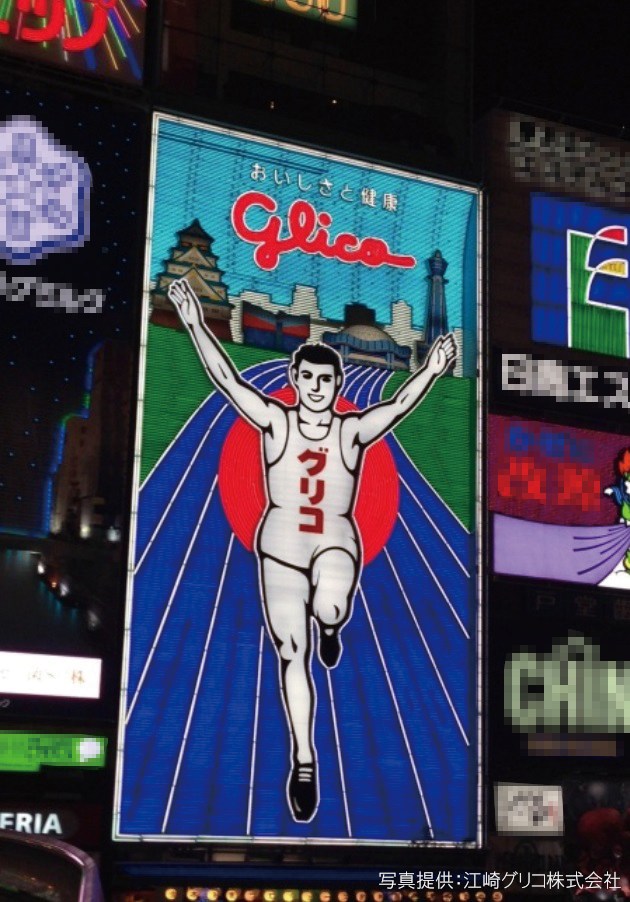
The current, sixth-generation sign continues the running man tradition of being lit up over the river, with around 140,000 LED lights illuminating him through the night.
▼ The backgrounds also changed to show the runner travelling through locations in Japan and around the world.
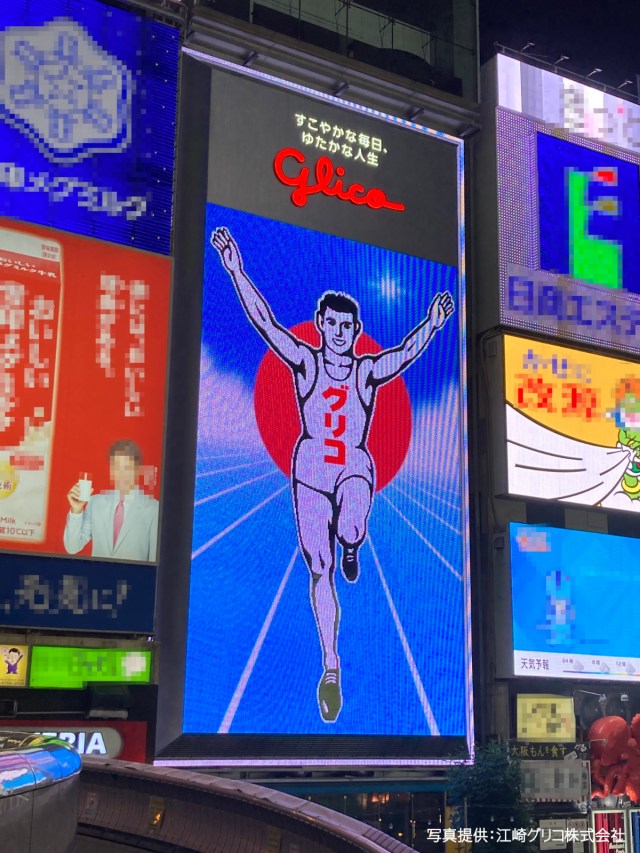
In looking back at the history of the sign itself, it’s interesting to see just how many forms it’s taken over the years, all while remaining a beloved symbol of the region. As for whether the seventh iteration will be equally welcomed, or reviled like the Suica successors in Tokyo, we’ll have to wait until March 2027 to find out. For now, you’ll want to make your way to Dotonbori to say your farewells, and let anyone who’s visiting Osaka know that the running man won’t be running this winter.
Source: Glico via TBS via Yahoo! News Japan
Images: Glico
● Want to hear about SoraNews24’s latest articles as soon as they’re published? Follow us on Facebook and Twitter!