

The top requests for implementation would benefit not only foreign workers, but Japanese workers as well.
Workplace reforms are a hot topic in Japan right now, especially given the government’s new visa system for foreign workers as an effort to tackle the country’s labor shortages. As more foreign workers join the workforce, some workplaces have begun to adapt in multiple ways, such as by changing the specific language forms required when interacting with customers.
In light of these developments, online job searching platform JapanWork conducted a survey from January 29-February 6 among its users on various Japanese workplace topics. It’s worth noting first that JapanWork has 150,000 registered users, largely from south and southeast Asian countries, with the largest concentration from the Philippines. Most of the jobs advertised on the platform are blue-collar positions such as hotel cleaning, operating the cash register at convenience stores, line work at a food factory, or assembling and packing of goods.
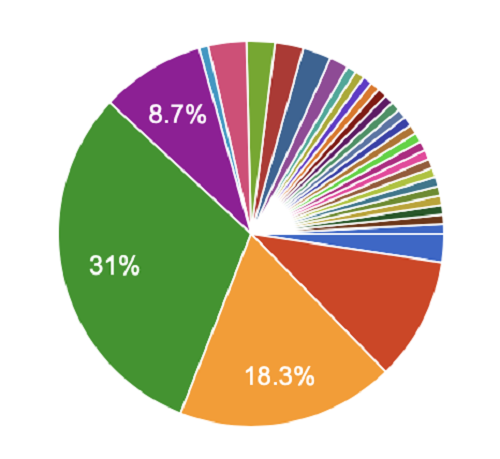
There were 126 respondents to the survey from 32 countries ranging in age from their teens through to their 50s. The largest demographic groups reflected were Filipino (31 percent), Nepalese (18.3 percent), Sri Lankan (10.3 percent), and Vietnamese (8.7 percent).
▼ Nationality breakdown of respondents (see above)
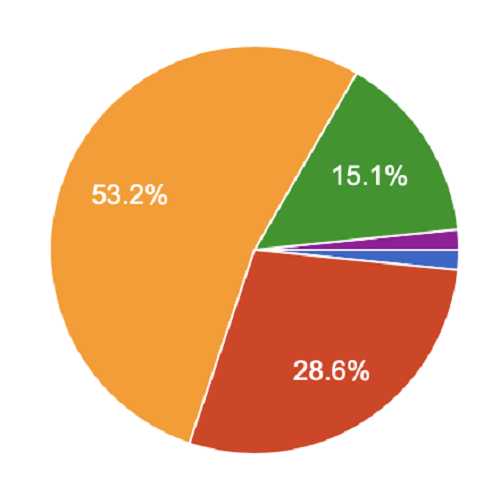
The breakdown of age groups was as follows: 30s (53.2 percent), 20s (28.6 percent), 40s (15.1 percent), 50s (1.6 percent), and teens (1.6 percent).
▼ Age breakdown of respondents (see above)
Furthermore, the majority of its respondents held either permanent resident status (eijusha / 36.5 percent) or long-term resident status (teijusha / 36.5 percent) in Japan, and had experience working in Japan for between 3-5 years (38.9 percent).
While the survey dealt with a mix of questions surrounding workplaces and job hunting activities in Japan, perhaps the most loaded question of them all was “What are some things that should change or be reformed in the Japanese workplace?” to which a variety of responses were recorded. Let’s take a look at them in greater detail below.
▼ “What are some things that should change or be reformed in the Japanese workplace?” (see results below)
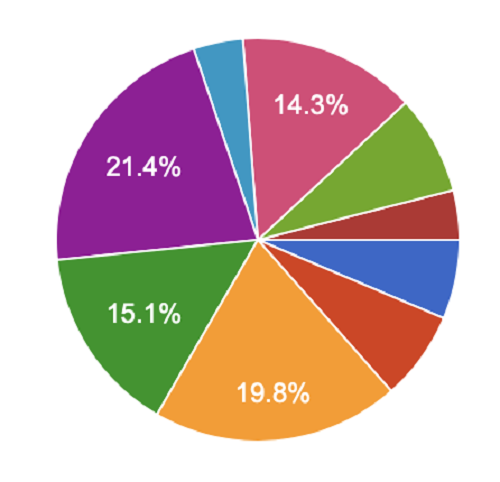
9. Hair and dress codes (4 percent)
8. Content of training sessions (4 percent)
7. Way of determining working shifts (6.3 percent)
6. Availability of translated training materials and manuals (7.1 percent)
5. Workload (7.9 percent)
Overtime work is rampant within Japanese companies. While efforts have been made to change the system in light of highly publicized employee “death from overwork” (karoshi) cases, the problem persists on a systemic level. Perhaps Microsoft Japan’s experiment this past summer with a three-day weekend (which resulted in increased productivity) will further the conversations for some change. Foreign workers chimed in with their thoughts about workload on the survey as well:
- “The fact that overtime remains an expectation should be changed.” (Filipino, 30s)
- “There should be clearly defined working hours. I won’t do unpaid overtime.” (Argentinian, 20s)
4. Work environment (14.3 percent)
The survey shared no additional comments about this entry.
3. Salary increase system (15.1 percent)
Foreign workers may not understand the workplace norms and cultural expectations regarding salary raises in Japan, which are largely tied to seniority within a company. For one, it’s not very common to ask for a raise of your own accord. Foreign workers shared some of their thoughts about the pros of effecting a more transparent, skill-based system on the survey:
- “The distribution of salaries is not proportionate to the corporate structure. In a large corporate structure, workers with advanced knowledge should be paid a suitable salary.” (Singaporean, 30s)
- “I think productivity would increase if there were a clear salary increase system.” (Vietnamese, 30s)
2. Introduction of a complete manual of job responsibilities (19.8 percent)
Due to differences between countries in terms of workplace norms, it’s hard for many foreign workers to know what to do when Japanese workers might think of something as common sense or understand it tacitly–a point that is also likely contributing to over 30 percent of Japanese managers feeling intense stress from working with foreigners. As a result, the second biggest response indicated that foreign workers would like their job expectations and responsibilities explicitly spelled out in the form of a workplace guide:
- “There are times when I can’t understand all oral instructions, so I think my mistakes would decrease if I could refer to a manual that clearly laid out all duties and procedures.” (Filipino, 20s)
- “I always worry whether I’m doing something the right way because there are no clear directions telling me exactly what I need to do.” (Mongolian, teens)
1. Writing of resumes/CVs (21.4 percent)
The top response echoed a common concern voiced by many Japanese workers as well. The drafting of a resume/CV (rirekisho) is time-intensive, laborious, and likely to cause a headache for anyone, but the struggle is intensified for those whose native language is not Japanese or who are unfamiliar with the formal language and kanji often used on such official documents. There has actually been an increase in the number of workplaces in Japan not requiring submission of a resume at job interviews in recent years due to these very reasons. Foreign workers summed up their resume frustrations succinctly on the survey:
- “Using kanji is difficult.” (Filipino, 30s)
- “I can’t understand the cramped text on there.” (Indian, 40s)
In summary, it appears that many of the requested workplace changes/reforms by foreign workers relate to more explicitly given, less context-driven systems, procedures, and instructions. To read some further voices on the topic, see this interview we conducted a while back of some foreign workers in Japan and their positive and negative experiences within a Japanese workplace.
Source: PR Times via ITmedia Inc.
Top image: Pakutaso
Insert images: PR Times
● Want to hear about SoraNews24’s latest articles as soon as they’re published? Follow us on Facebook and Twitter!
 Over 30 percent of surveyed Japanese managers feel intense stress from working with foreigners
 Japanese workers reveal the 8 most astonishing things new employees do in the workplace
 Japan’s workplace drinking party communication is unnecessary, says majority of workers in survey
 Japan’s “workstyle reforms” are actually making managers’ jobs a lot harder【Survey】
 Survey shows foreigners’ desire to work in Japan long-term dropping, but that’s not the whole story
 A real-world Pokémon Poké Ball hotel is opening in Japan at a still-secret location [Video]
 Japan’s revolving sushi restaurant king Sushiro coming to U.S. this fall with high prices, no tipping
 The mystery of Port Store, the Japanese convenience store that looks like a Lawson rip-off
 Tamagotchi evolves into a ring for its 30th anniversary, preorders now open
 Elderly couple donates 400 million yen to erect Myaku-Myaku statue in Osaka
 Japan Railways announces unlimited-ride train pass for fall travel
 Lawson convenience store opens its first mobile, trailer-style location in Japan
 Studio Ghibli unveils new anime calendars and diary planners for 2027
 Family Mart releases Famima convenience store products nationwide, but which ones are worth buying?
 One Piece Day 2026 brings new art, music, and new cast announcements
 Japan’s final Penguin Suica train cards have already shipped, and when they’re gone, they’re gone
 Solo travel in Japan: Hidden beer garden in Tokyo is a haven for single visitors
 Japan approves foreign resident visa renewal fee increases of up to 967 percent, starts soon
 Farewell Final Ceremony announced for Tokyo’s life-size Gundam statue, will stream live
 Hobonichi unveils new 2027 planners, diaries and stationery with One Piece, Suica Penguin, Hello Kitty and a must-buy Mini Techo
 Family Mart releases new Human Made Cup Noodle in Japan, with freebies for Nigo fans
 Hikaru Utada sings new song in Shinkansen commercial for Japan’s Supreme Class cabins
 Mister Donut releases new doughnuts that look and taste like Japanese sweet potatoes
 12-year-old British girl who went missing in Tokyo found safe after visiting anime sites around Yokohama
 7-year-old boy left behind on Mt. Fuji by his own dad
 Sushi Bus: Japan’s first conveyor-belt bus lets you eat sushi while sightseeing around Tokyo
 Pokémon Center Online designates first Pokémon items that will require Japanese ID card to buy
 Japanese toilet aims to attract foreign tourists but not everybody is happy about it
 New Japanese vending machine at Shinkansen station sells cups of ice on platform
 Study finds hundreds of people in Indonesia legally named after Naruto, Inuyasha, other anime stars
 Japan announces sudden 400-percent increase in visa fees for foreigners entering the country
 Japan’s human washing machines will go on sale to general public, demos to be held in Tokyo
 Studio Ghibli has a new anime out, and there’s only one place in the world where you can see it
 Starbucks Japan releases new drinkware and goods for Valentine’s Day
 Starbucks Japan releases new sakura goods and drinkware for cherry blossom season 2026
 Japan’s newest Shinkansen has no seats…or passengers [Video]
 Tokyo subway installing new ticket gates that don’t accept payment through Suica or other IC cards
 Japanese ninja certification exam attracts 131 candidates from Japan and abroad
 Salomon releases Japan-exclusive Mt. Fuji hiking gear that doubles as an amazing souvenir
 Put sesame oil in your coffee? Japanese maker says it’s the best way to start your day【Taste test】
 Majority of surveyed Japanese workers have dated a coworker, over 20 percent their boss or senpai
 What makes a good boss in Japan? Workers sound off in survey
 Survey suggests about half of Japanese companies has an “old guy who does nothing”
 Survey reveals most Japanese workers want to work from home at least twice per week
 Invasion of privacy? Survey asks workers about social media friend requests from the boss
 Survey says more than 70 percent of Japanese people think gender inequality exists in Japan
 Japan second-least attractive country for expats to work, survey says, but is it really that bad?
 Wage hell — Japanese office worker reveals soul-crushing past paycheck for 171 hours of overtime
 Survey by Japanese ministry reveals high rates of “maternity harassment” in workplace
 Majority of Japanese mayors say foreign residents are essential but most see good and bad effects
 Government survey finds teleworking at least once per week raises Japanese worker happiness level
 Survey shows that many Japanese business people’s sleep patterns have changed since teleworking
 Survey finds only six percent of Japanese workers motivated, seventh lowest in the world
 Foreign tourists pick the top 10 inconveniences about traveling in Japan【Survey】
 Meetings and more meetings: Foreigners list the pros and cons of working at a Japanese company
 Nearly half of young Japanese women say they “hate” the company they work for in survey