
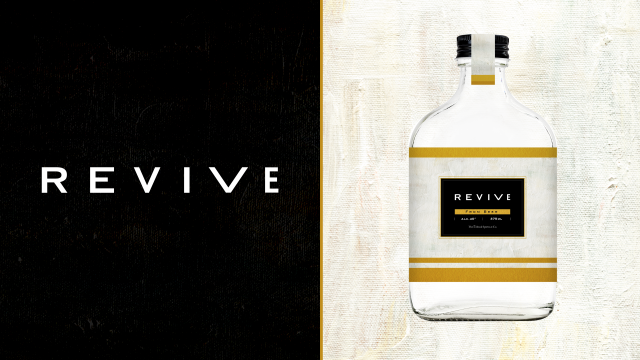
Because a beer is a terrible thing to waste.
With the unexpected and unprecedented drop in social activity for most of 2020, not only restaurants but their suppliers have also been hit hard financially. For example, beer sales in Japan plummeted by 52 percent in April compared to the same time the year before.
As a result, leading brand Budweiser had a glut of about 80,000 beers on their hands. With no end to this lull in social drinking in sight, it would all likely go to waste.
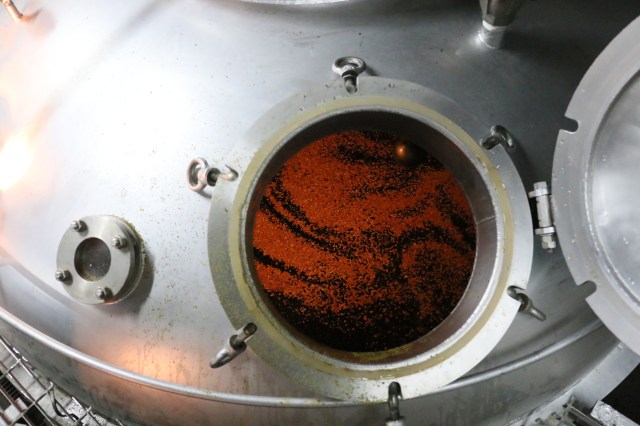
Luckily, this is the type of situation that Tokyo-based Ethical Spirits are consummate pros at handling. They are the producers of Last, which is a flavored gin made from the leftover sediment (lees) of sake production.
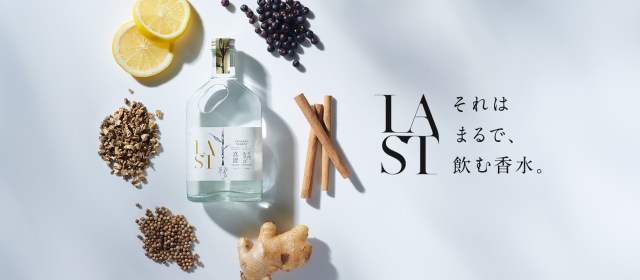
This time, Ethical Spirits are attempting the same magic with beer as a source ingredient. However, there are a lot of differences between sake lees and beer: one’s made from rice and the other barely, one’s solid and the other’s a carbonated liquid, and so on.
So Ethical Spirits joined forces with one of Japan’s largest and longest-running sake producers Gekkeikan and made use of their vast resources and expertise in the production of Revive: quite possibly the world’s first gin made from leftover Budweiser.
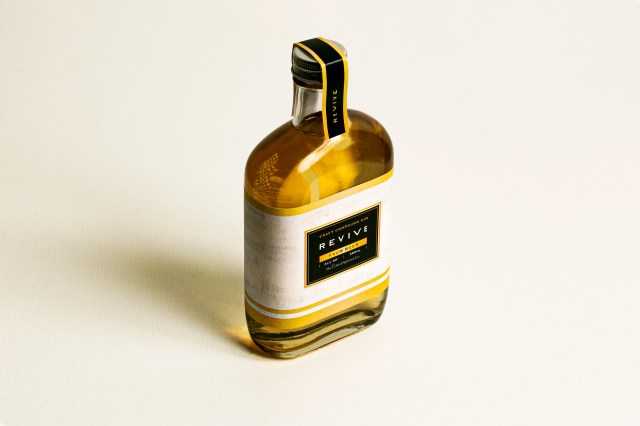
Juniper berries are used to give that distinct gin flavor, along with lemon peels and cinnamon. Hops and beechwood chips are also added to bring out the inherent flavors of the Budweiser brewing process.
Also, because it’s made from beer rather than grain alcohol, the result has a much thicker and complex taste that complements bolder foods with spicy and salty flavors.
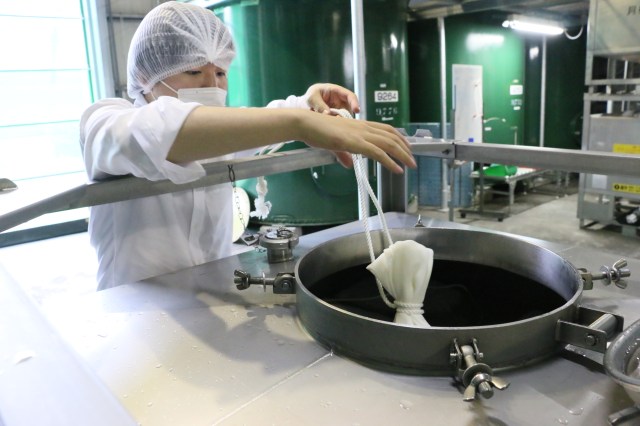
But more importantly, a sip of Revive also contains a hint of doing the right thing by supporting Ethical Spirits’ business model of sustainably cutting costs while reducing waste products, as impossible as that sounds from conventional business wisdom.
For example, while making Last sake, breweries can cheaply offload their lees to Ethical Spirits who then make it into gin. Then a part of the proceeds of Last’s sales goes into buying rice that Ethical Spirits gives back to the breweries so they can continue to make sake and thus make more lees which will again make more Last.
Anheuser-Busch InBev, however, is a far cry from a rural Japanese sake brewery and likely doesn’t need donations of barley. So instead, Ethical Spirits will point their circle-of-life model toward the Japanese live music scene. A portion of the sales of Revive will be donated to Music Cross, which is an aid fund for those in the live music industry, to ensure there will be plentiful places that sell Budweiser in the future.
This also means that Revive is a relatively short-term project and supplies are limited. So if you’re curious about what a gin made from recycled beer tastes like, or are interested in helping out the Japanese live music scene while getting a buzz on at the same time, this Bud’s for you!
Just pick up a bottle for 5,500 yen ($52) from Ethical Spirits online store linked below.
Source: Ethical Spirits, PR Times
Images: PR Times
● Want to hear about SoraNews24’s latest articles as soon as they’re published? Follow us on Facebook and Twitter!
 Krispy Kreme Gin: Making use of doughnut scraps never tasted so good
 Booze made from wood coming soon in Japan
 Japan gifts the world with First Essence Tagame Gin made from a giant water bug
 Starbucks Japan reveals new Tsukimi Moon-Viewing drinkware and gifts for autumn 2026
 A real-world Pokémon Poké Ball hotel is opening in Japan at a still-secret location [Video]
 Japan’s first fall color forecast for 2026 is here!
 Japan’s revolving sushi restaurant king Sushiro coming to U.S. this fall with high prices, no tipping
 The mystery of Port Store, the Japanese convenience store that looks like a Lawson rip-off
 Tamagotchi evolves into a ring for its 30th anniversary, preorders now open
 Elderly couple donates 400 million yen to erect Myaku-Myaku statue in Osaka
 Japan Railways announces unlimited-ride train pass for fall travel
 Lawson convenience store opens its first mobile, trailer-style location in Japan
 Mini CRT-lookalike Final Fantasy figurines are awesome pixel art music boxes [Video]
 Japan’s final Penguin Suica train cards have already shipped, and when they’re gone, they’re gone
 Studio Ghibli unveils new anime calendars and diary planners for 2027
 Solo travel in Japan: Hidden beer garden in Tokyo is a haven for single visitors
 Japan approves foreign resident visa renewal fee increases of up to 967 percent, starts soon
 Farewell Final Ceremony announced for Tokyo’s life-size Gundam statue, will stream live
 Hobonichi unveils new 2027 planners, diaries and stationery with One Piece, Suica Penguin, Hello Kitty and a must-buy Mini Techo
 Family Mart releases new Human Made Cup Noodle in Japan, with freebies for Nigo fans
 One Piece Day 2026 brings new art, music, and new cast announcements
 Hikaru Utada sings new song in Shinkansen commercial for Japan’s Supreme Class cabins
 Mister Donut releases new doughnuts that look and taste like Japanese sweet potatoes
 12-year-old British girl who went missing in Tokyo found safe after visiting anime sites around Yokohama
 7-year-old boy left behind on Mt. Fuji by his own dad
 Sushi Bus: Japan’s first conveyor-belt bus lets you eat sushi while sightseeing around Tokyo
 Pokémon Center Online designates first Pokémon items that will require Japanese ID card to buy
 Japanese toilet aims to attract foreign tourists but not everybody is happy about it
 New Japanese vending machine at Shinkansen station sells cups of ice on platform
 Study finds hundreds of people in Indonesia legally named after Naruto, Inuyasha, other anime stars
 Japan announces sudden 400-percent increase in visa fees for foreigners entering the country
 Japan’s human washing machines will go on sale to general public, demos to be held in Tokyo
 Studio Ghibli has a new anime out, and there’s only one place in the world where you can see it
 Starbucks Japan releases new drinkware and goods for Valentine’s Day
 Starbucks Japan releases new sakura goods and drinkware for cherry blossom season 2026
 Japan’s newest Shinkansen has no seats…or passengers [Video]
 Tokyo subway installing new ticket gates that don’t accept payment through Suica or other IC cards
 Japanese ninja certification exam attracts 131 candidates from Japan and abroad
 Salomon releases Japan-exclusive Mt. Fuji hiking gear that doubles as an amazing souvenir
 Put sesame oil in your coffee? Japanese maker says it’s the best way to start your day【Taste test】