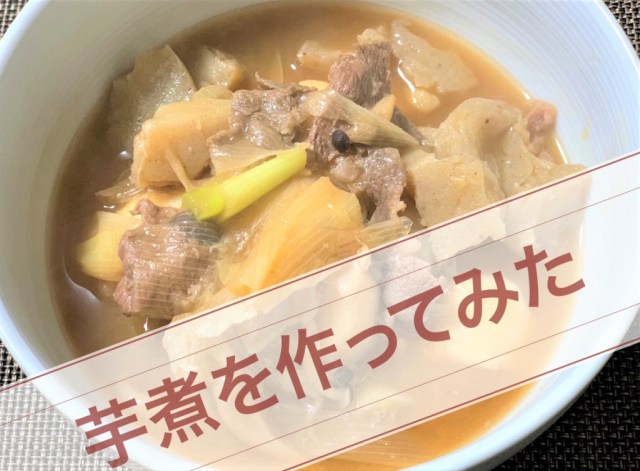
This autumn staple of Yamagata Prefecture comes to our kitchen in Tokyo with the help of a friend from the region.
Nothing feels quite so much like home for people in Japan’s northern Tohoku region, and Yamagata Prefecture in particular, as those autumn days spent on the riverbank cooking up a batch of delicious imoni (芋煮) with family and friends. The piping hot taro and beef stew is the perfect treat to enjoy on a crisp fall day while soaking in the natural scenery. Yamagata City evens hosts the country’s largest annual imoni festival, which one of our Japanese-language reporters actually went to check out in person this past September. As someone who lived in Yamagata City for two years, I can also personally vouch for the regional pride and nostalgia that the mere thought of imoni drums up in locals.
One of our Japanese-language reporters, K. Masami, was recently in touch with a friend from Yonezawa City, Yamagata Prefecture who mentioned that imoni is one of her most cherished memories of growing up there. Masami realized that she had never actually tasted imoni before and asked her friend to teach her how to cook it. What follows is Masami’s first attempt at recreating Tohoku’s gastronomic gem in her kitchen in Tokyo.
It’s important to note before we begin that there’s no one prescribed way to make imoni. The specific ingredients and flavors vary a bit from region to region and even family to family, so you should follow your taste buds to create a version that works best for you.
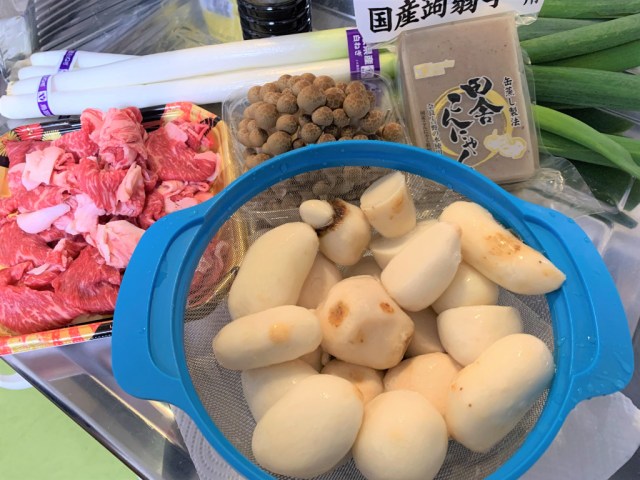
Ingredients
- Taro (里芋): lots
- Konjac (板こんにゃく), white is best: 1 package
- Shimeji mushrooms: 1 bundle
- Sliced beef–Yonezawa beef is best (and considered one of the three best kinds of Japanese beef in general): about 2 generous handfuls
- Spring onions: lots
- Sugar: to taste
- Soy sauce: to taste
- [If available, otherwise substitute with a flavorful sauce of your liking] “Umai Tare” (うまいたれ / literally “delicious sauce”) from Yamagata Prefecture: to taste
▼ Pictured (top to bottom, left to right): spring onions, sliced beef, shimeji mushrooms, konjac, taro
Instructions
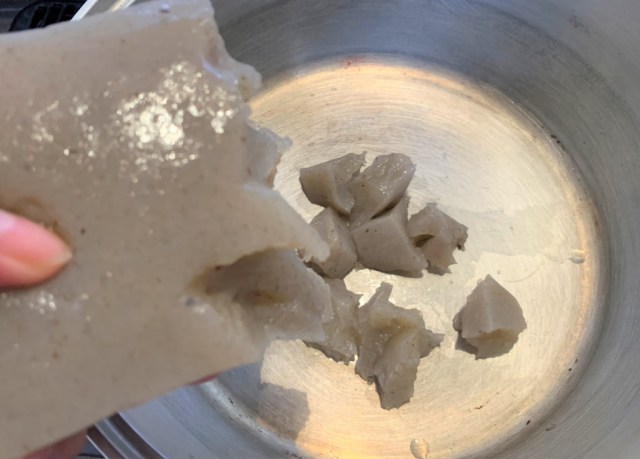
1. Tear the slab of konjac into little pieces in a pot. A white or lighter-colored konjac will absorb the soy sauce and other flavors more easily.
2. Peel the taro and cut them into chunks of your desired size (larger than bite-size is typical). Add to pot.
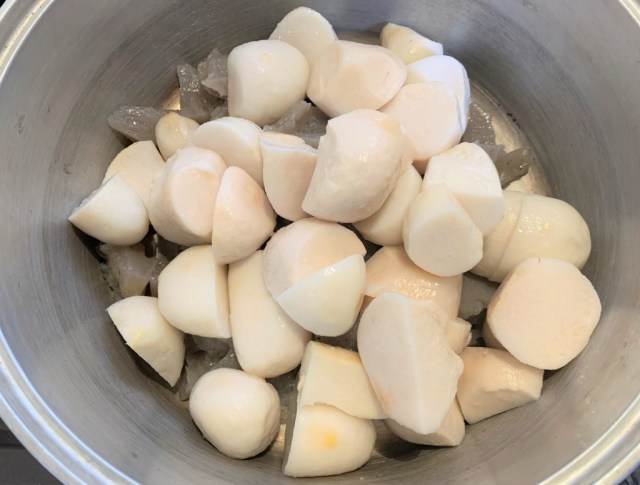
3. Coat the pieces with a little bit of water and cover the pot with a lid. Steam the taro and konjac.
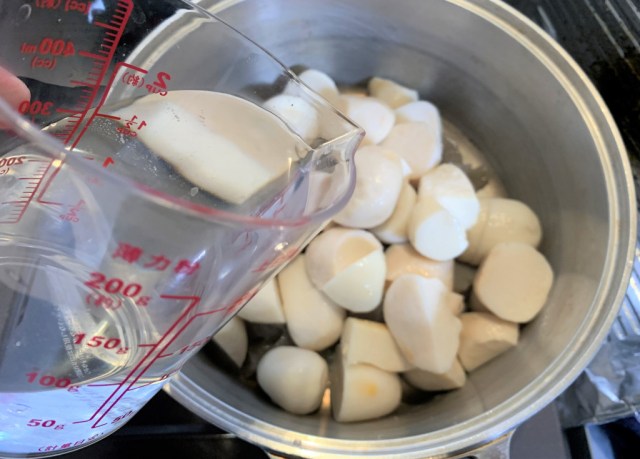
4. Once it comes to a simmer, add a generous helping of sugar and then soy sauce. Stir the pot so that the taro begins to absorb the flavors more easily.
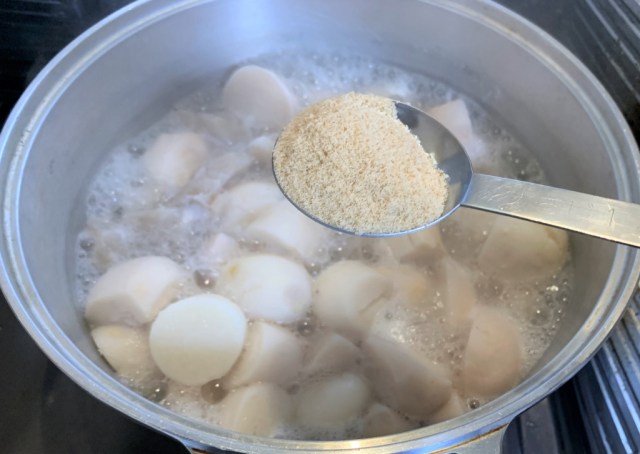
5. Add the shimeji mushrooms and a little more water. Try sampling the broth and add more sugar and/or soy sauce to taste.
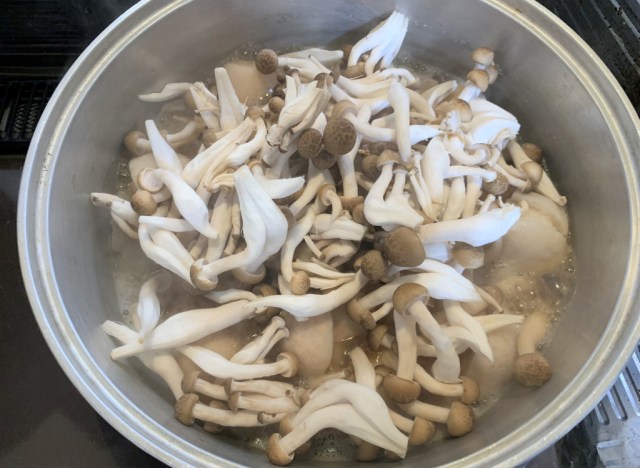
6. Lastly, add the beef (cut into bite-sized slices) and thick chunks of spring onions.
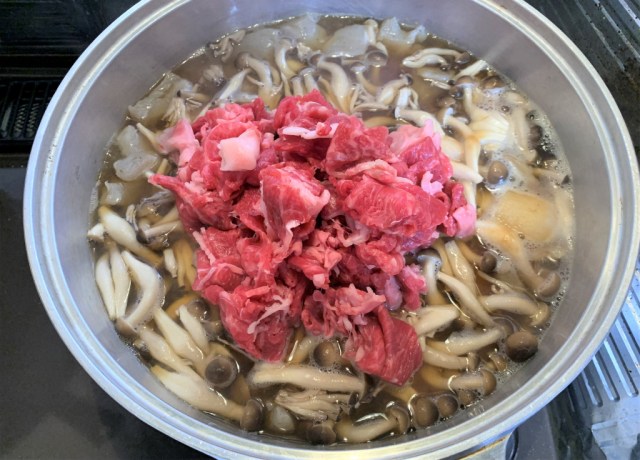
7. Try sampling the broth again and flavor with a little “Umai Tare” (or a similar sauce) to taste.
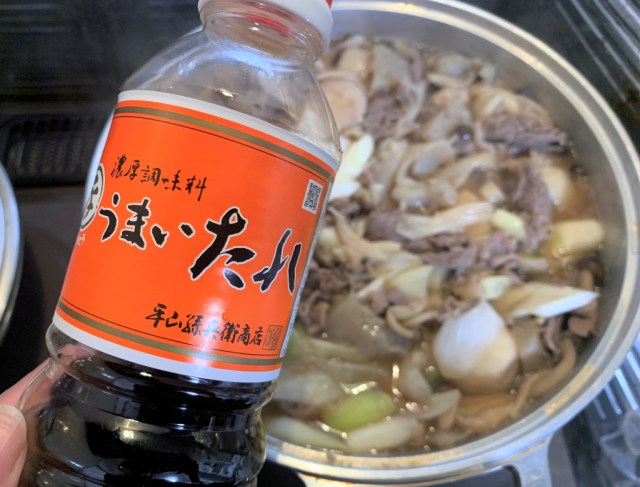
8. After stirring for a bit longer it’s done! Can’t you almost smell the delicious aroma wafting through your computer?
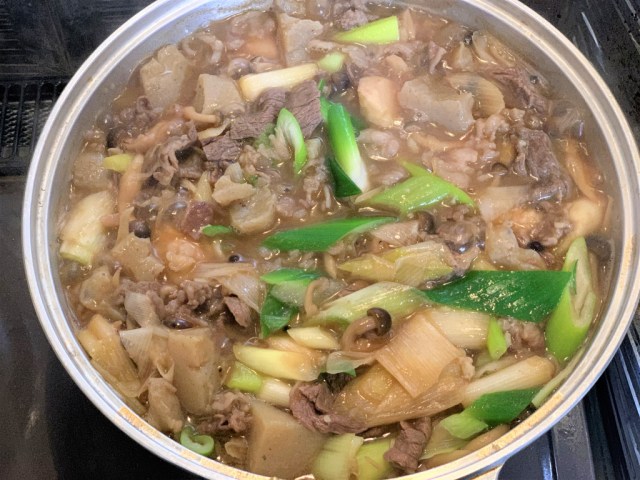
Reflections
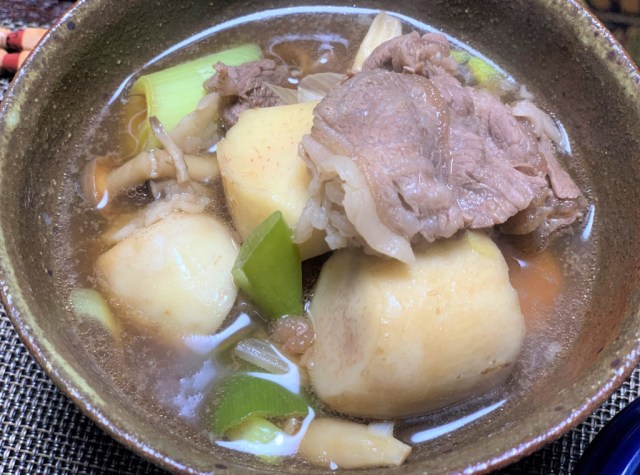
Cooking imoni was more difficult than Masami anticipated. Visually speaking, her finished creation came out looking quite different from her friend’s who was coaching her alongside, making her own batch of the stew. In particular, her friend’s broth was transparent-looking while Masami’s was a bit cloudy.
▼ Her Yamagata-born friend’s imoni on the left, Masami’s on the right
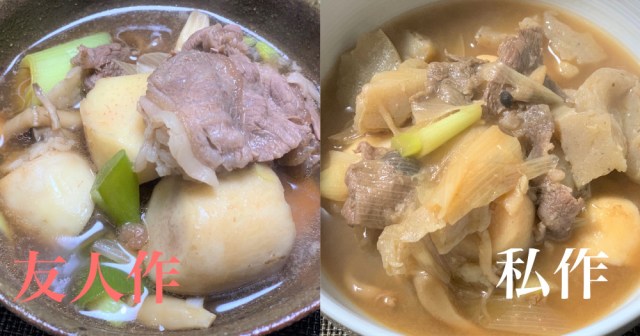
She attributed the difference perhaps to the fact that she had let the taro simmer too long at the beginning and they fell apart a bit while cooking. She felt she had added too many of the side ingredients, too, as well as not scraped away enough of the scum that had materialized after adding the beef.
Nevertheless, she thought that she achieved the desired taste more or less–it was quite tasty! It seemed important that she hadn’t skimped on the sugar or soy sauce. The addition of Yamagata’s own “Umai Tare” at the end also perfected the balance of flavors.
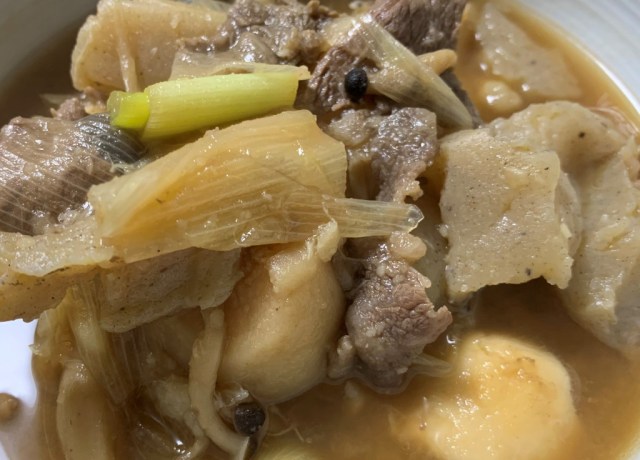
According to her friend, two important tips are to add only a little bit of water at the beginning while the taro and konjac are steaming and to only gently stir the beef at the end. Masami made a note to keep these things in mind the next time she wanted to make imoni. After all, practice makes perfect.
By the way, here are some photos of her friend’s completed imoni:

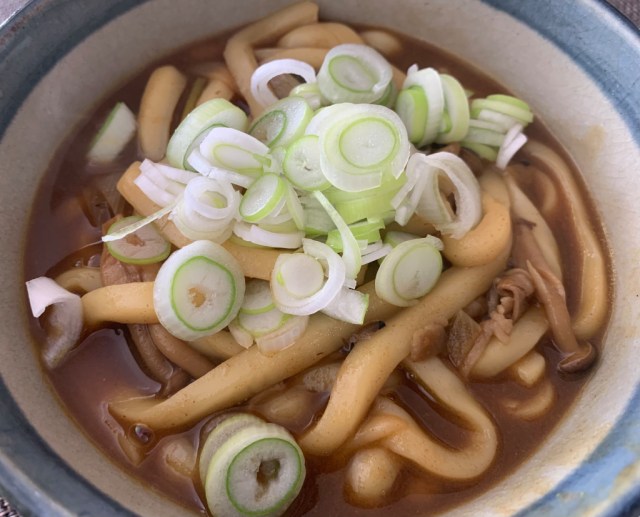
In addition, it’s customary to cook curry udon in the pot at the end to use up any leftover broth–a truly delicious finishing touch.
Coincidentally, my own former student from Yamagata City also whipped up a little taste of home at her apartment in Tokyo just the other week! Here’s her version of imoni:
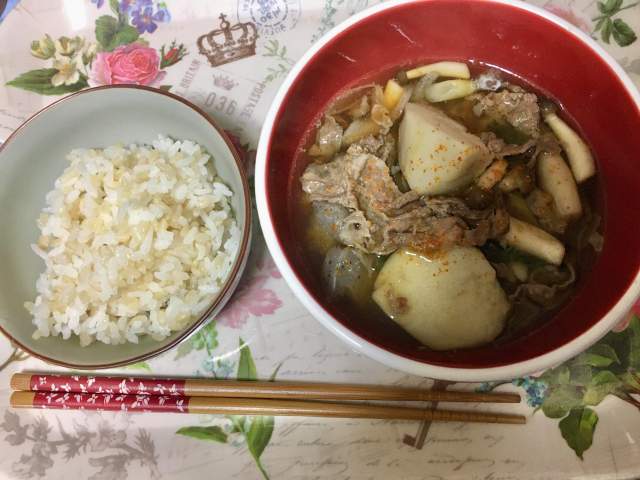 Image: Asaka Saito
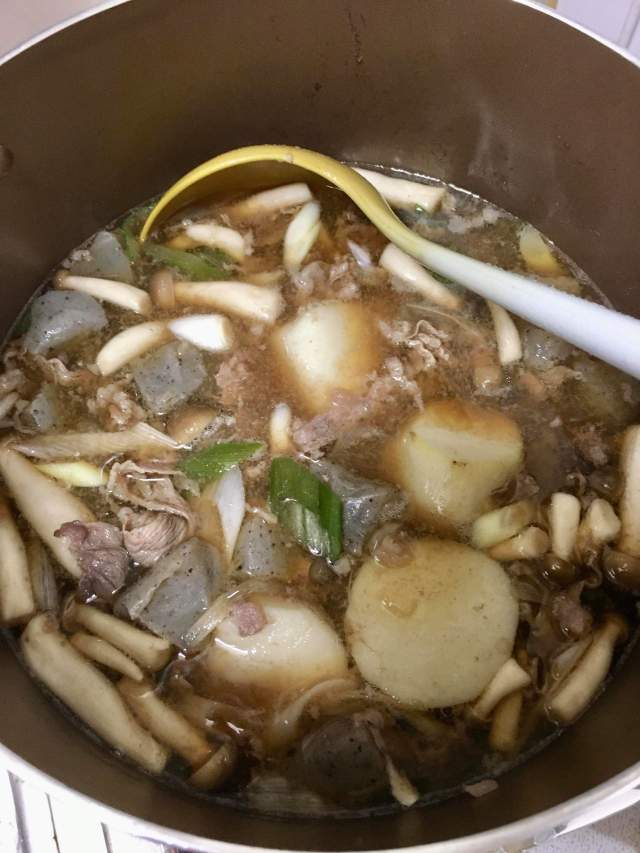 Image: Asaka Saito
For another local specialty food item that’s in hot demand in Japan at the moment, check out these croissant gyoza from Kagawa Prefecture that we had to wait a full year to get our hands on.
Images © SoraNews24
● Want to hear about SoraNews24’s latest articles as soon as they’re published? Follow us on Facebook and Twitter!
[ Read in Japanese ]