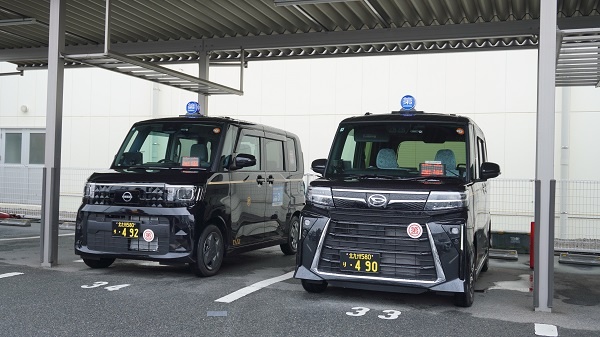
Shift in government policy allows Japan’s smallest cars to address a big problem for the taxi industy.
Though Japan has a famously convenient rail network, there are times when the route and timing you have in mind for your travel plans mean that hailing a taxi is actually your best transportation alternative. What’s more, between the polite, uniformed drivers and dainty doilies used as seat covers, a ride in a Japanese taxi can be a memorable cultural experience for international travelers, and one that might be getting more unique with the introduction of kei jidosha taxis.
Kei jidosha (literally “light automobile”) is a class of ultra-compact car in Japan, with tax benefits and lower toll road fees provided for staying within limits on body size and engine displacement. They’re a cool and quirky part of Japanese car culture that’s rarely exported outside of the Japanese domestic market, and especially rare to see in western countries, though they have a growing fan base among gray market importers these days in the U.S. and Canada.
Until recently, kei jidosha were not authorized by the Japanese government for use as taxis. That changed on June 1, though, when the Ministry of Land, Infrastructure, Transport and Tourism said, sure, taxi operators can now have kei cars in their fleets. The first company to take advantage of this new opportunity was Daiichi Kotsu, which added a pair of kei taxis to be based in Kitakyushu, Fukuoka Prefecture, where the company is headquartered.
▼ Video showing Daiichi Kotsu driver Saori Yamamoto behind the wheel of her kei taxi
Daiichi Kotsu has since added two keis to its fleet in Shingu, Wakayama Prefecture, and plans to have the ultra-compact cars in a total of 17 prefectures by the end of summer.
▼ A Shinto priest performed a ceremony to convey blessings upon the Wakayama kei taxis before their initial outing, as shown in the video here.
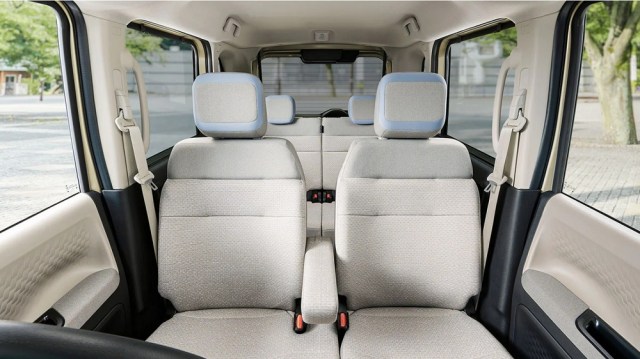
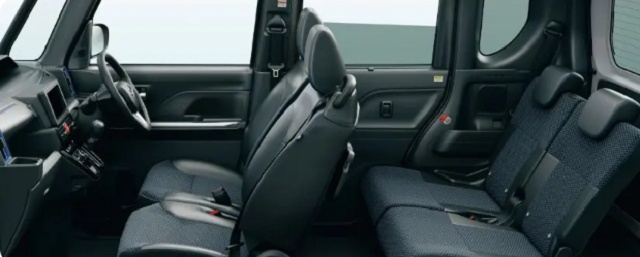
Daiichi Kotsu’s first kei taxis appear to be Nissan Roox and Daihatsu Tanto models, which, like all kei cars, can be no longer than 3.4 meters (11.2 feet) in length, 1.48 meters in width, and 2 meters in height. Despite those modest dimensions, though, their boxy shapes provide more interior room than you might expect if you’ve never been inside a practicality-minded kei car before.
▼ Roox interior
▼ Tanto interior
The shift to allow keis for taxi use came at the request of taxi industry, which is looking for ways to attract cab drivers to the line of work. Over approximately the past decade, the number of taxi drivers in Japan has fallen from around 346,000 to 249,000, setting up a potential labor vacuum as existing drivers grow older and retire. The hope is that with kei cars’ smaller sizes making them more maneuverable and easier to drive, especially on narrow or steep roads, their introduction will attract a wider range of applicants to taxi work than the bulkier standard sedans can.
In the foreign automotive press and can enthusiast circles, there’s a common misperception that kei jidosha are Japanese “city cars,” compact vehicles designed to navigate traffic and parking in congested cities like Tokyo and Osaka. In actuality, though, keis are primarily Japan’s countryside cars, popular in rural communities where the issue isn’t heavy traffic, but narrow streets that have to wind over and around mountains, rice fields, and other parts of the landscape that take precedence over road construction in community planning. As such the highest demand for kei taxi services is probably going to be in rural areas where trains or busses come by infrequently or are absent altogether. More accessible taxi services will be especially beneficial to elderly rural residents with mobility needs but who have aged out of driving themselves and may not have family members living close by to ferry them to and from shopping, social engagements, and medical appointments.
Because of that, if you’re traveling in Japan, you might not see a ton of kei taxis in the biggest, most touristy cities. Daiichi Kotsu’s expansion plans, for example, include adding kei cars in Niigata, one of Japan’s less urbanized prefectures, and Ikona Kotsu, in the Nara Prefecture town of Ikona, has two in service now as well. But should you find yourself wanting to get off the beaten path in Japan, and in the process getting off the train and bus routes, a kei taxi ride could be in your future.
Source: Sanyo Shimbun, Daiichi Kotsu, Nara Shimbun
Top image: Daiichi Kotsu
Insert images: Nissan, Daihatsu
● Want to hear about SoraNews24’s latest articles as soon as they’re published? Follow us on Facebook and Twitter!