
Japan has had a complicated relationship with tattoos over its history. Unlike in most western countries where it’s simply considered a form of expression or drunkenly poor decisions, currently body art is generally looked down upon in Japanese society despite having some of the best artists and techniques in the world.
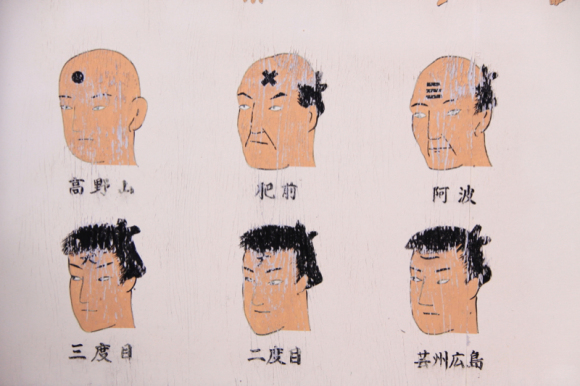
And yet most people in Japan are unaware that not too long ago, for a time during the Edo Period (1603-1868) the go-to form of punishment for non-violent crimes was a tattoo right in the center of your forehead.
Called a “tattoo penalty” (irezumi kei) it was handed down to perpetrators of relatively minor crimes like theft and burglary. It was classified as a type of “corporal punishment” along with caning.
Oftentimes the penalty was accompanied by expulsion from the area. It served as a deterrent both due to the pain of getting your face tattooed and being publicly displayed as a criminal for the rest of your life.
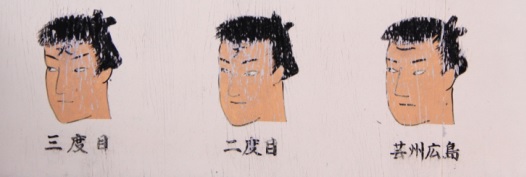
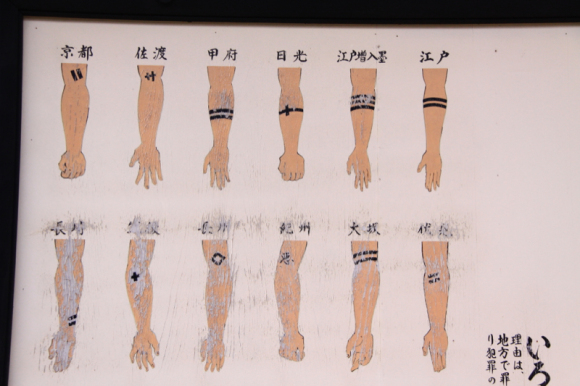
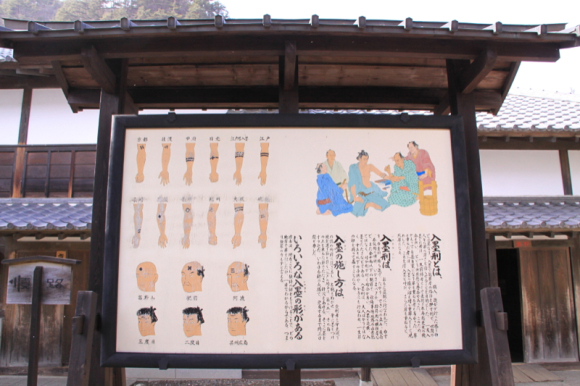
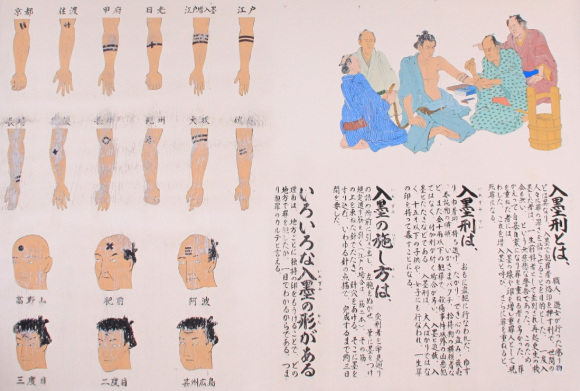
It also had a record keeping purpose. As you can see in the photos above and below, the style of tattoo was chosen by each region individually. This way people could also know what area the convict was sentenced.
Also in the bottom row of images we can see a sort of three-strikes policy in Hiroshima where each crime gets one stroke of the Chinese character for “large” (大). In most regions, if a tattooed person repeat-offends then the penalty is death.
Tattooing in Japan can be traced back to the Jomon and Yayoi periods (14,000 B.C. – 300 A.D.) when they were believed to hold a mystical significance. Afterwards the culture moved away from tattoos well until the Edo Period when it came back in a very different way.
No prisons existed in the Edo period until the development of large cities like Osaka and Edo (Tokyo) which lead to an increase in crime. Before then, amputation of the nose or ear was the punishment of the day.
In 1745, tattooing replaced amputation as society became gentler and less blood-thirsty. This continued over the years with the face tattoos changing to the less embarrassing – and quite fashionable by today’s standards – arm tattoo.
In 1872, the newly-established government of Japan abolished the tattoo penalty once and for all.
Oddly enough, right in the middle of all this around the early 1800s, body-art suddenly became all the rage with the common people of Japan. And with the number of people seen sports tats in the streets of Japan these days, we might be due for another come-back.
Original Story: Mami
Images: (C)EDO WONDERLAND
 Step back in time to the Edo period at this unusual highway rest stop in Japan
 Man with face covered in tattoos admits to repeatedly headbutting Tokyo store clerk【Video】
 The depressing diet of a Tokyo prostitute during Japan’s Edo period
 Big win for tattoo artists: Japan’s Supreme Court rules medical licenses aren’t necessary
 Six members of Japan’s Self-Defense Forces face punishment for unauthorized curry-eating
 Studio Ghibli releases the My Neighbour Totoro tea caddy, with a magical self-closing lid
 Create a tiny Ghibli anime world on your bookshelf with new miniature papercraft art kits
 Public restrooms in Osaka to get in-stall video screens with ads
 Ghibli Museum building becomes a cuddly cushion
 Starbucks Japan releases new My Fruit³ Frappuccino at only 34 stores around the country
 Japan now has a “for foreign tourists only” Mt. Fuji sightseeing train[Video]
 7-Eleven Japan releases a crazy new viral sandwich: Chocolate Sprinkles and Whipped Cream
 Japan’s heart-melting, mouthwatering cat-shaped bread can now be ordered online【Photos】
 Japanese public toilet in Tokyo has windows that change colour when you use it
 Umamusume food and drinks dash into real world at Family Mart convenience stores[Taste test]
 Japanese onsen egg maker from 100-yen store Daiso needs to be on your shopping list
 Cherry blossoms begin blooming in Japan with record-early starts for sakura season
 Tokyo government organizes food truck event to clear out delinquent/homeless teen gathering area
 Nine amazing off-the-beaten-path cherry blossom spots in Japan for yaezakura and shidarezakura
 Stunning central Japan wisteria festival is like a purple fantasy straight out of a Ghibli movie
 When will the cherry blossoms reach full bloom in Japan this year?[Forecast]
 Studio Ghibli unveils new Rollbahn notebook in honour of Howl’s Moving Castle
 Studio Ghibli adds new anime tumblers to its cool streetwear brand in Japan
 Universal Studios’ Sailor Moon theme park attraction is finally coming to America
 Starbucks Japan unveils new sakura cherry blossom collection for hanami season 2026
 Train station platform ramen store closes its doors on half a century of history in Tokyo
 Studio Ghibli releases Catbus pullback keychain that runs like the anime character
 Nine great places to see spring flowers in Japan, as chosen by travelers (with almost no sakura)
 Starbucks Japan releases first-ever Hinamatsuri Girls’ Day Frappuccino
 Studio Ghibli adds new Mother’s Day gift sets to its anime collection in Japan
 Virtual idol Hatsune Miku redesigned with look that adds new elements and brings back old ones
 Survey asks foreign tourists what bothered them in Japan, more than half gave same answer
 Japan’s human washing machines will go on sale to general public, demos to be held in Tokyo
 Starbucks Japan releases new drinkware and goods for Valentine’s Day
 We deeply regret going into this tunnel on our walk in the mountains of Japan
 Studio Ghibli releases Kodama forest spirits from Princess Mononoke to light up your home
 Starbucks Japan releases new sakura goods and drinkware for cherry blossom season 2026
 Japan’s newest Shinkansen has no seats…or passengers [Video]
 Major Japanese hotel chain says reservations via overseas booking sites may not be valid
 Put sesame oil in your coffee? Japanese maker says it’s the best way to start your day【Taste test】
 No more using real katana for tourism activities, Japan’s National Police Agency says