
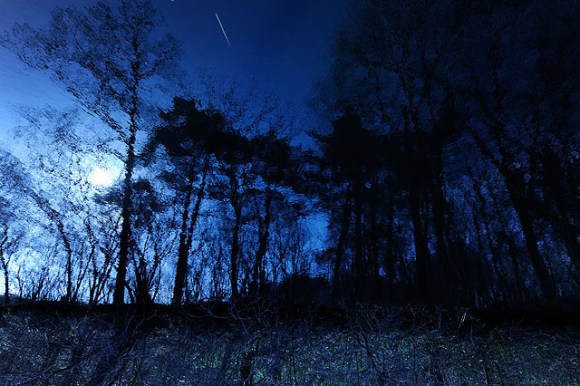
Two years after Japan’s great earthquake and the Daiichi nuclear diaster comes a documentary that tells of the citizens who still can’t return home to Iitate Village in Fukushima due to the high levels of radiation.
Over at our sister site, Pouch, film critic Kaori Saito was given the opportunity to check out the film production of “Iitate Village, the Problem of Radiation and Returning Home” (in Japanese “Iitate-mura hoshano to kison”) before it was released to the Japanese public on May 4. Kaori comments that the work deserves particular credit for its delicate treatment of the continuing problem of radiation and the depiction of the struggles of the inhabitants affected.
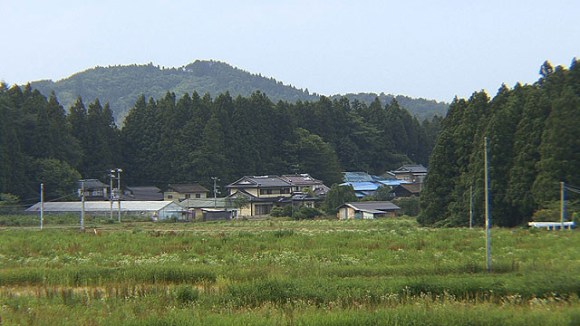
For the readers who are unfamiliar with Iitate, it is a village that is located 30 kilometers from Fukushima Daiichi nuclear power plant within the prefecture of Fukushima. While it is reasonable to believe that the level of radioactive contamination would be comparatively low for an area this far from the power plant, due to the strong winds, snow and rain that occurred directly following the disaster, the actual levels of contamination far exceeded original estimates. For Japan and Iitate Village, unprecedented levels of radiation poured down, making the land uninhabitable and thus leaving the former residents no alternative but to abandon their village and seek refuge elsewhere.
The director of the documentary, Toshikuni Doi, examines the lives of those still living with the harsh realities brought about by contamination and reveals the actual state of affairs two years after the nuclear disaster. The inhabitants of Iitate Village first received the news from the government that their hometown came under the red zone a month after the nuclear explosion. For anyone being informed that they have been living in a hazardous zone for an entire month, it would be a very emotional realization and quite difficult to comprehend. It’s understandable that there would be a lot of psychological trauma and feelings of anger and mistrust towards the Japanese government. In the latest offering from Doi, firsthand interviews with the affected villagers are conducted in such a way that the viewer truly feels the villagers’ plight.
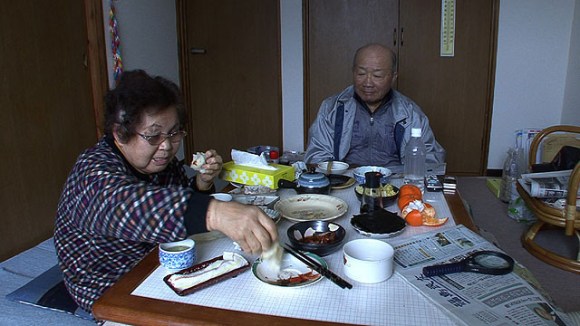
The film is broken up into two sections, with the first section focusing on the theme of “Family.” It depicts the struggles of two families who, prior to the nuclear disaster, worked either as agricultural or dairy farmers. In the film, members from one family comment on how they are trying their best to acclimatize to an office job away from Iitate Village . However, they also concede that “the stress is, at times, unendurable and that one day, as a family, we hope to return to the village to live as before.”
The second family interviewed is in a very different situation and is forced to live separately. The father expresses his longing to one day reunite with his adult son and live as before. However, his wife surprisingly carries a completely opposite set of views, suggesting that in reality, recreating the lifestyle of the past is not possible. It seems that the husband is only focussing on his dream, whereas the wife is viewing the situation before her in a practical manner and assessing the probabilities of actualizing her hopes. At any rate, it is fair to say that the interviewees featured here have had their lives turned upside down by the earthquake and nuclear disaster and that each family member possesses, to some degree, their own approach to dealing with the harsh realities thrust before them.
The scene that reduced our reporter Kaori to tears is found in the second part of the film. It deals with the subject of decontamination of the village and the fears of young mothers in the area towards radiation. These anxieties were brought about by their inability to seek refuge away from the village immediately after the nuclear disaster, with many worrying about the effects this would have on their children. For example, after finding refuge, many children have been teased about coming from Iitate Village. As a result, these young mothers fear their children will be faced with even more hardships once they reach a marriageable age, and wonder, “Will our children be allowed to marry and to give birth without social taboo?” Even if decontamination proves successful, the emotional scars left from the disaster look set to remain alive among these young women and their children for some time to come.
For many affected by the contamination, what proves most frustrating is the Japanese government’s repeated hackneyed phrase, “decontamination, decontamination.” The safety reference value for returning back to Iitate village is set at 20 millisievert (mSv), however the scientific basis for this value is rather vague. At the explanatory meeting sessions held by the government, questions by the citizens regarding whether these safety levels are truly safe were met by the reply of “we still don’t know.” Another problem that is raised at this part of the film is the idea that comments from experts in the field are being used to emphasize the effectiveness of decontamination in an attempt to quell the fears of the public and thus restart the nuclear power plants. In other words, it is believed that decontamination efforts will provide the nuclear energy industry with a green light in reestablishing its nuclear power plants just like before the Daiichi disaster. However, since the effectiveness of the decontamination process is in question, it is argued that Iitate Village and other areas with levels of radiation exceeding that of Chernobyl should be permanently declared a red zone. The line of reasoning here is that bringing such highly contaminated areas’ radiation readings down into the 20 millisievert range is thought to be an impossible undertaking for the near future.
It is easy for those of us far away from the affected areas to put the earthquake and nuclear disaster behind us. However, those who sought refuge after the events of March 2011 are suffering even now. This film stands as a way for people far away from Fukushima to become more acquainted on a personal level with the people of Iitate Village and to also give a firsthand account of the aftermath of this catastrophic disaster.
[ Read in Japanese ]
 Take a tour of the Fukushima Daiichi Nuclear Power Plant seven years after the disaster 【Video】
 More Than Half of Cleanup Staff at Fukushima Nuclear Plant on Counterfeit Contracts
 TEPCO in hot water for use of tasteless hashtag in recent tweet about Fukushima Nuclear Plant
 First nuclear power plant set to restart in Japan after 2011 meltdown
 Krispy Kreme releases Super Mario doughnuts in Japan for a limited time
 Ramen restaurant in top Tokyo tourist neighborhood skips price gouging, but how does it taste?
 7-Eleven Japan releases a crazy new viral sandwich: Chocolate Sprinkles and Whipped Cream
 Japan’s ministry of economy reminds us to “use sound judgment” before buying toilet paper
 Ghibli Museum building becomes a cuddly cushion
 “Online streamer” tops dream job poll for young Japanese kids, older kids not so interested
 Senkoji: The Japanese temple that’s more like a theme park to heaven and hell
 Drinkable pixels: 7-Eleven Japan creates new convenience store juice with “pixels” inside
 Sushi Wine doesn’t pair well with raw fish, but we’re still going to buy another bottle
 Nine-Patty Evangelion Cheeseburger has a 0.00001% Chance of Failing to Fill You Up (3D Photos)
 Japanese onsen egg maker from 100-yen store Daiso needs to be on your shopping list
 Starbucks Japan releases new My Fruit³ Frappuccino at only 34 stores around the country
 Tokyo government organizes food truck event to clear out delinquent/homeless teen gathering area
 Cherry blossoms begin blooming in Japan with record-early starts for sakura season
 Nine amazing off-the-beaten-path cherry blossom spots in Japan for yaezakura and shidarezakura
 Stunning central Japan wisteria festival is like a purple fantasy straight out of a Ghibli movie
 Create a tiny Ghibli anime world on your bookshelf with new miniature papercraft art kits
 Studio Ghibli releases the My Neighbour Totoro tea caddy, with a magical self-closing lid
 Japan now has a “for foreign tourists only” Mt. Fuji sightseeing train[Video]
 When will the cherry blossoms reach full bloom in Japan this year?[Forecast]
 Starbucks Japan unveils new sakura cherry blossom collection for hanami season 2026
 Train station platform ramen store closes its doors on half a century of history in Tokyo
 Studio Ghibli releases Catbus pullback keychain that runs like the anime character
 Nine great places to see spring flowers in Japan, as chosen by travelers (with almost no sakura)
 Starbucks Japan releases first-ever Hinamatsuri Girls’ Day Frappuccino
 Studio Ghibli adds new Mother’s Day gift sets to its anime collection in Japan
 Virtual idol Hatsune Miku redesigned with look that adds new elements and brings back old ones
 Survey asks foreign tourists what bothered them in Japan, more than half gave same answer
 Japan’s human washing machines will go on sale to general public, demos to be held in Tokyo
 Starbucks Japan releases new drinkware and goods for Valentine’s Day
 We deeply regret going into this tunnel on our walk in the mountains of Japan
 Studio Ghibli releases Kodama forest spirits from Princess Mononoke to light up your home
 Starbucks Japan releases new sakura goods and drinkware for cherry blossom season 2026
 Japan’s newest Shinkansen has no seats…or passengers [Video]
 Major Japanese hotel chain says reservations via overseas booking sites may not be valid
 Put sesame oil in your coffee? Japanese maker says it’s the best way to start your day【Taste test】
 No more using real katana for tourism activities, Japan’s National Police Agency says
 Haruki Murakami’s solution to the nuclear power debate in Japan: Actually call it “nuclear power”
 Alone in the Red Zone: Fukushima Town’s Sole Resident Speaks Out in Harrowing Documentary
 U.S. military personnel launch US$5 billion lawsuit against Tokyo Electrical Power Company
 Return to Fukushima: Decontaminated town reopens to residents, but is anybody living there?
 First worker to die from Fukushima radiation exposure officially recognized by Japan’s government
 Foreign workers being hired for Fukushima nuclear power plant decommissioning project
 Google to Photograph Street Views of Evacuated Town in Fukushima
 One filmmaker’s mission to show the world the real Fukushima, and how you can help
 Fukushima rebuilds its future with fish, tomatoes and hula-dancing girls