
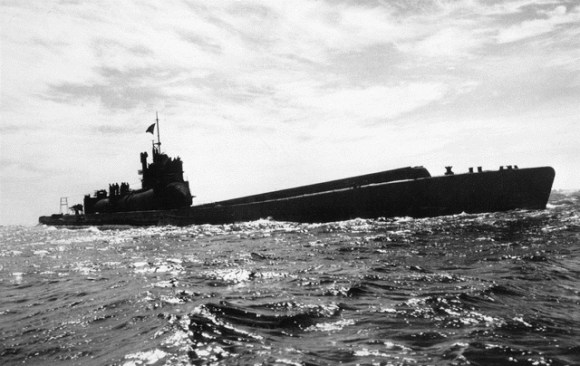
Japan and the nations the English-speaking RocketNews24 team hail from are on good terms these days, but just a few generations ago things weren’t so friendly. While the greatest scientific minds of Japan today focus on putting solar panels on the moon or turning algae into fuel, during the 1930s and 40s weapons development was a much bigger growth area than green energy.
Recently, the wreckage of one of the Japanese Imperial Navy’s most advanced pieces of equipment from World War II was discovered off the coast of Hawaii. What exactly was it? A submarine, or maybe an aircraft carrier?
It was both.
Researchers from the University of Hawaii recently came across an unusual bit of wreckage while scouring the sea floor. Initially discovered last August, both the US and Japanese government have now officially recognized the sunken hull as being that of the I-400, the very first completed vessel from the I-400 submarine line.
At the time of its completion in the shipyards of Hiroshima Prefecture’s city of Kure, the I-400 was the world’s largest submarine. At 122 meters (400 feet) long and with a displacement of 6,560 tons, it was the size of a destroyer, and capable of circling the globe one and a half times on a single fueling.
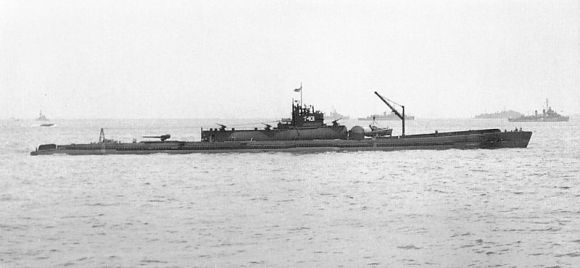
Aside from their impressive range, the recently found I-400, I-401 (also located off the coast of Hawaii in 2005), and I-402 (scuttled in the East China Sea following the war) all shared another unique characteristic: they were in fact submersible aircraft carriers.
▼ The hangar entrance of an I-400-class submarine/carrier
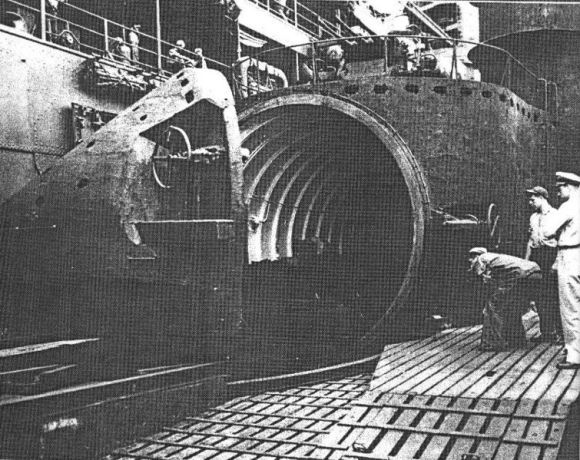
The I-400 was able to store three Aichi M6A Seiran dive bombers in its aircraft bay. The planes’ wings and tail could both fold for more compact storage, and a catapult was used to launch them from the sub after surfacing, eliminating the need for a full-sized flight deck.
At the end of World War II the US military took custody of the Imperial Navy’s fleet, and the I-400 was brought to Hawaii for analysis. Once researchers were finished examining the vessel, it was used for live fire target practice, eventually being sunk in 1946, after which it wasn’t seen again until the recent discovery of its remains.
Even today, the I-400 still stands as an engineering marvel, and its technological aspects are all the more compelling with the luxury of being able to observe them 67 years removed from their initial intent.
Source: Gadget Sokuho
Insert images: Wikipedia
 Japanese-language Chinese news site predicts future of aircraft carriers, uses sci-fi images
 7-Eleven Japan releases a crazy new viral sandwich: Chocolate Sprinkles and Whipped Cream
 Ramen restaurant in top Tokyo tourist neighborhood skips price gouging, but how does it taste?
 Drinkable pixels: 7-Eleven Japan creates new convenience store juice with “pixels” inside
 Japan now has a “for foreign tourists only” Mt. Fuji sightseeing train[Video]
 Studio Ghibli releases the My Neighbour Totoro tea caddy, with a magical self-closing lid
 Krispy Kreme releases Super Mario doughnuts in Japan for a limited time
 Hey, Japanese taxi driver! Take us to the best sakura site in Yamanashi Prefecture!
 Japanese jeweler launches new engagement and wedding rings with Sanrio character Tuxedo Sam
 Universal Studios’ Sailor Moon theme park attraction is finally coming to America
 The 10 best day trips from downtown Tokyo【Survey】
 Japanese onsen egg maker from 100-yen store Daiso needs to be on your shopping list
 Starbucks Japan releases new My Fruit³ Frappuccino at only 34 stores around the country
 Tokyo government organizes food truck event to clear out delinquent/homeless teen gathering area
 Cherry blossoms begin blooming in Japan with record-early starts for sakura season
 Nine amazing off-the-beaten-path cherry blossom spots in Japan for yaezakura and shidarezakura
 Stunning central Japan wisteria festival is like a purple fantasy straight out of a Ghibli movie
 Create a tiny Ghibli anime world on your bookshelf with new miniature papercraft art kits
 When will the cherry blossoms reach full bloom in Japan this year?[Forecast]
 Starbucks Japan unveils new sakura cherry blossom collection for hanami season 2026
 Train station platform ramen store closes its doors on half a century of history in Tokyo
 Studio Ghibli releases Catbus pullback keychain that runs like the anime character
 Nine great places to see spring flowers in Japan, as chosen by travelers (with almost no sakura)
 Starbucks Japan releases first-ever Hinamatsuri Girls’ Day Frappuccino
 Studio Ghibli adds new Mother’s Day gift sets to its anime collection in Japan
 Virtual idol Hatsune Miku redesigned with look that adds new elements and brings back old ones
 Survey asks foreign tourists what bothered them in Japan, more than half gave same answer
 Japan’s human washing machines will go on sale to general public, demos to be held in Tokyo
 Starbucks Japan releases new drinkware and goods for Valentine’s Day
 We deeply regret going into this tunnel on our walk in the mountains of Japan
 Studio Ghibli releases Kodama forest spirits from Princess Mononoke to light up your home
 Starbucks Japan releases new sakura goods and drinkware for cherry blossom season 2026
 Japan’s newest Shinkansen has no seats…or passengers [Video]
 Major Japanese hotel chain says reservations via overseas booking sites may not be valid
 Put sesame oil in your coffee? Japanese maker says it’s the best way to start your day【Taste test】
 No more using real katana for tourism activities, Japan’s National Police Agency says