
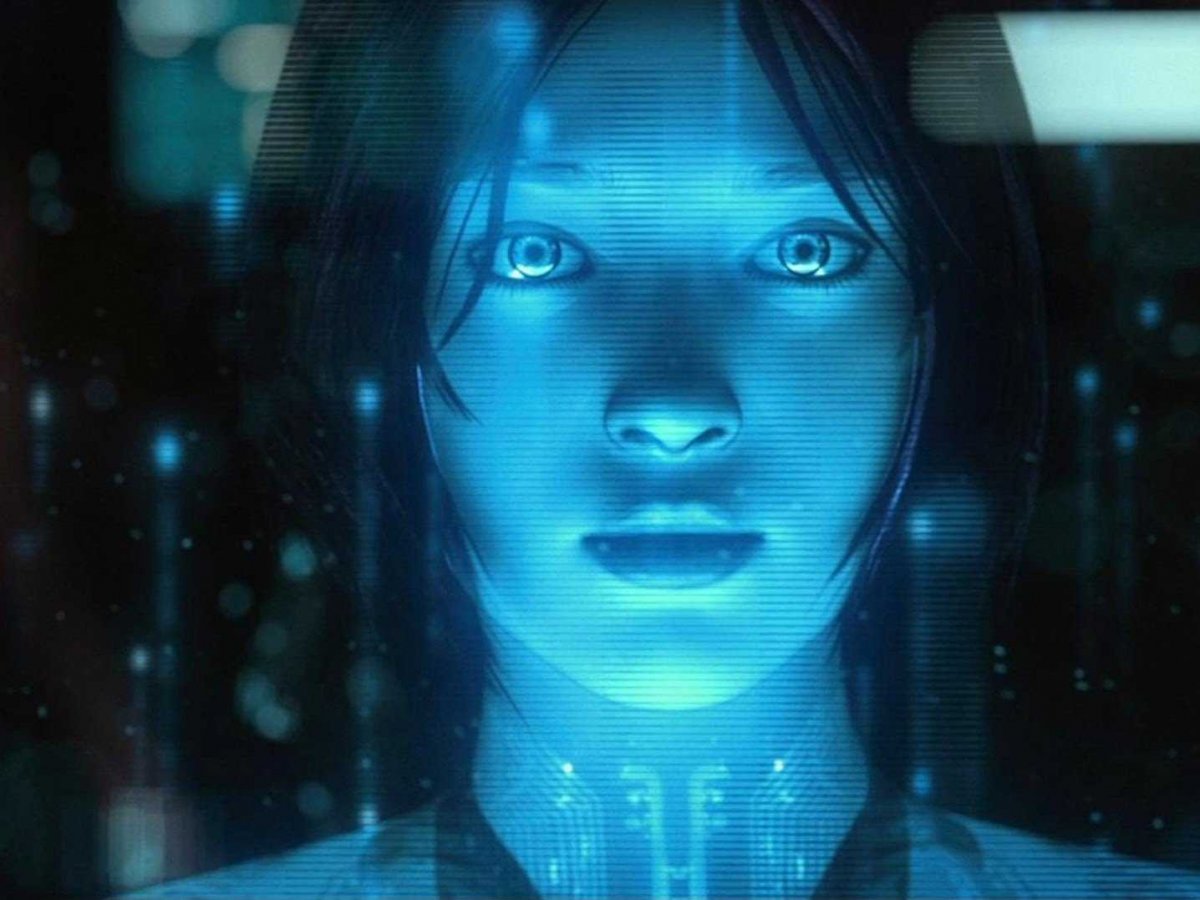
Windows Phone is still a distant third to Apple and Android in the smartphone market, but Microsoft is hoping to change that with the introduction of Windows Phone 8.1— and more importantly its personal digital assistant Cortana.
Microsoft claims that Cortana isn’t like your average virtual assistant. She’s supposed to be a little wittier, more personable, and capable of learning more about you than Siri or Google Now.
After using Cortana for a week and speaking with Microsoft’s Marcus Ash, Partner Group program manager, it’s clear that the company’s got a lot riding on the success of its new virtual assistant.
But there’s still several obstacles in Microsoft’s way. Besides the competition from Apple and Google, virtual assistants still haven’t really become a mainstream part of a smartphone user’s everyday routine.
We sat down with Ash to talk about how Microsoft created Cortana, its plans for the future and its strategy in facing the competition.
Business Insider: Microsoft interviewed real-life personal assistants when creating Cortana. What was the strategy behind that?
Marcus Ash: If you want to make a real humanistic connection with that technology, the best thing you can do is find a set of humans that do the job we think this phone should be able to do. We [asked] them, ‘What do you do to really make the person that you work for happy? What types of [tasks] do they ask you to do?’
The other area we were focusing on was how much personality we should attribute to this assistant. These machine learning systems need a lot of data. So if you don’t ask the right questions, then you’re not going to get the right data, and then the system can’t train itself. So it never really gets better.
You need a pleasant sounding voice. You need to make sure that voice sounds as human as you can possibly make it.
“You need to make sure that voice sounds as human as you can possibly make it.”
We need to make sure that the voice actually has human sounding phrases to say. When you ask a question that you would ask a normal person, the system should respond the same way a person would respond. So we really thought of all those problems.
So we thought let’s go talk to people who have these personal assistant jobs where we could get a flavor for how much of their personality comes through on the job. We examined the dynamic between the person that’s being assisted versus the assistant.
BI: In what other ways did you study real personal assistants?
MA: We interviewed these people that had these high-stress jobs, meaning they were assisting people who were celebrities where it really matters that you’re getting things right. I think it was somewhere between five and seven assistants that we interviewed over the course of one week. And we had them keep a journal, and we looked through those journals and we looked back and did exit interviews.
We asked them tell us about the relationship with the person [he or she] worked for. We said, tell me the types of things you do for them. Tell me how much they have to ask you to do things for you versus how proactive you are. That’s where we got a lot of insight.
BI: So what was the most important thing you found through that process?
MA: It’s all about trust. This person tells me very private information. And this person expects me to keep this private information between us. They didn’t go into details, but you can imagine the kinds of things that an assistant that follows that type of person around might see or hear. If the person doesn’t trust me, then I can’t do my job effectively because I’ll be limited in the information that I get from that person.
I just had this idea that the personal assistant knows the person [they’re assisting] so well that they can anticipate things. I just wouldn’t have guessed that it was so rigorous. One person pulled out her journal. She called it her bible of this particular person.
And she wrote down this extensive set of notes ranging from people that this person had met, and what this person was wearing the first time they had met, and very detailed work around what they think they would need to refer to at a later time. And she had this great quote about how there’s a difference between what the person says they like and what they really like.
BI: I can see how trust and personality would be very important for a personal assistant. But how do those characteristics translate to a phone?
MA: The notebook in our case belongs to Cortana. It’s actually her view of you. It’s based on what you say, and it’s based on you giving access and having this trust relationship build. She’ll never put anything in your notebook that you’re not aware of, or that you don’t trust. But she’ll make inferences about you based on the information you tell her.
She works for you, so you can take that and say that’s wrong, and ‘why would you assume that I like this particular restaurant?’ And she’ll say ‘well because I observed this particular behavior about you.’ And if you say ‘well that’s not correct,’ she’ll respond ‘okay got it.’ So we thought that metaphor really worked for us and it would be a great way to translate the design of what Cortana knows about you.
This is a very personal thing for people. Especially as we look forward to the future at all the types of things that our devices are going to know about us. Knowing that you can trust this device to do the right things with that data is really one of the key points we honed in on early by talking to these assistants. Personality, I thought, was a real breakthrough for us. If you don’t have a personality, it’s really hard for people to trust you.
“If you don’t have a personality, it’s hard for people to trust you.”
BI: In my personal experience, it doesn’t seem like people really use Siri or Google Now too often. I never see people talking out loud to their phones in public, and I personally don’t use Siri much on my iPhone unless I’m setting an alarm or reminder. Can Cortana make the virtual assistant more valuable than just a shortcut to setting an alarm?
MA: People have been working on speech systems for years. They’re very complex. They’re very difficult to get right. The thing that gives me a lot of hope on these systems is that we’ve reached a point where we’re collecting so much data about speech that the speech systems are improving at such a rapid rate. It’s much better than it was five years ago, and it’s growing at such an exponential rate because there’s so much data being poured into smartphones. So that makes me feel great.
These conversational systems are on this natural progression curve where they’re going to get really good. You’re going to see less false positives and problems with recognition. One of the main reasons we had to go into beta actually is because the system is only as good as the amount of data you have. And it just takes a certain amount of time to train the system.
BI: The smartphone market share in the U.S. is largely dominated by Apple and Android. Could Cortana and Windows Phone 8.1 influence smartphone shoppers to turn to Windows Phone rather than Apple or Android?
MA: We think it’s [the virtual assistant] going to be one of the next big things that distinguishes these platforms. How good is the assistant and the contextual learning technology on this phone? So I think that’s a longer-term vision. Even in the shorter term, the idea that Windows Phone has done something that’s interesting and unique and that we’ve got a distinct point of view about, it feels like we’re getting a lot of pickup.
BI: Google Now also develops and changes the more it learns about you. It also seems like Motorola’s Moto X is very contextually-aware and is sort of based on this idea of being your personal assistant. What makes Cortana different or better than Google Now?
MA: We focus a little bit more on contextual triggers that we think people will actually understand. We always talk about 3 triggers—we talk about time, we talk about location and we talk about people. Those are the triggers people get. Let’s just focus on a set of things that are going to be of high utility and limit the number of triggers so that people can understand what the system is capable of.
For us is a notion of personality. When we look at Google, they’ve made some pretty clear decisions. It’s about getting you quickly and efficiently to Google’s services. It’s not about personality. There’s just something really delightful that makes people smile about having an anthropomorphic personality inside this assistant. We studied this a lot and looked at people’s reaction in labs; it just makes people smile. It also opens up this type of trust relationship we talk a lot about.
Google has got a decision to make around how they’re going to create a personality.
“Google has got a decision to make about how they’re going to create a personality.”
They have to really think hard about what the future of these assistants is going to be, and whether or not people are going to get used to talking to a search engine.
People love the fact that they can talk to this like they’re talking to a person.
It’s ultimately a question of who can get the most information in a privacy- controlled way that’s still personal. The more you know, the better these systems are going to get. And if you can’t do that, I just have a hard time seeing how you can evolve this in a way that could be truly revolutionary.

 Microsoft’s Windows 10 ads inadvertently ruffle feathers in Korea with… a bad choice of font?
 Siri Puts the “Ass” Back into Personal Assistant with Her Japanese Record Debut
 Was iOS 7 created in Microsoft Word? Czech expert makes us believe so【Video】
 This Japanese startup has created a hologram assistant to control all your devices
 Math-solving phone app is the quickest way to self-study, skip homework, and/or fail your tests
 Ramen restaurant in top Tokyo tourist neighborhood skips price gouging, but how does it taste?
 Deer are appearing in Osaka City, may have wandered there from Nara[Video]
 7-Eleven Japan releases a crazy new viral sandwich: Chocolate Sprinkles and Whipped Cream
 Uniqlo announces new T-shirts for One Piece, Naruto and more for manga publisher’s 100th birthday
 Japan’s ministry of economy reminds us to “use sound judgment” before buying toilet paper
 Japan’s reverse maid cafe lets cosplaying customers play the part of maids in Tokyo
 You can make a knife (yes, a knife) out of Japanese dried fish【Video】
 Umamusume food and drinks dash into real world at Family Mart convenience stores[Taste test]
 All-you-can-eat doughnuts at Mister Donut: How many can we eat in 60 minutes?
 Studio Ghibli releases the My Neighbour Totoro tea caddy, with a magical self-closing lid
 Japanese onsen egg maker from 100-yen store Daiso needs to be on your shopping list
 Starbucks Japan releases new My Fruit³ Frappuccino at only 34 stores around the country
 Tokyo government organizes food truck event to clear out delinquent/homeless teen gathering area
 Cherry blossoms begin blooming in Japan with record-early starts for sakura season
 Nine amazing off-the-beaten-path cherry blossom spots in Japan for yaezakura and shidarezakura
 Stunning central Japan wisteria festival is like a purple fantasy straight out of a Ghibli movie
 Create a tiny Ghibli anime world on your bookshelf with new miniature papercraft art kits
 Japan now has a “for foreign tourists only” Mt. Fuji sightseeing train[Video]
 When will the cherry blossoms reach full bloom in Japan this year?[Forecast]
 Starbucks Japan unveils new sakura cherry blossom collection for hanami season 2026
 Train station platform ramen store closes its doors on half a century of history in Tokyo
 Studio Ghibli releases Catbus pullback keychain that runs like the anime character
 Nine great places to see spring flowers in Japan, as chosen by travelers (with almost no sakura)
 Starbucks Japan releases first-ever Hinamatsuri Girls’ Day Frappuccino
 Studio Ghibli adds new Mother’s Day gift sets to its anime collection in Japan
 Virtual idol Hatsune Miku redesigned with look that adds new elements and brings back old ones
 Survey asks foreign tourists what bothered them in Japan, more than half gave same answer
 Japan’s human washing machines will go on sale to general public, demos to be held in Tokyo
 Starbucks Japan releases new drinkware and goods for Valentine’s Day
 We deeply regret going into this tunnel on our walk in the mountains of Japan
 Studio Ghibli releases Kodama forest spirits from Princess Mononoke to light up your home
 Starbucks Japan releases new sakura goods and drinkware for cherry blossom season 2026
 Japan’s newest Shinkansen has no seats…or passengers [Video]
 Major Japanese hotel chain says reservations via overseas booking sites may not be valid
 Put sesame oil in your coffee? Japanese maker says it’s the best way to start your day【Taste test】
 No more using real katana for tourism activities, Japan’s National Police Agency says
 Want to become a virtual YouTuber? Now there are apps for that too!
 How much private info can a thief glean from a stolen smart phone? We investigate
 Japanese city passes ordinance to limit smartphone use, applies to people outside the city too