Just take a beat and really think about it calmly.
Social media really is a great way for governments to disseminate information to the masses. Sometimes they have great tips, such as where you can find nice graffiti and how to turn a plastic bottle into a drink dispenser.
Now, the Ministry of Economy, Trade and Industry has posted a message that we also should pay close attention to.
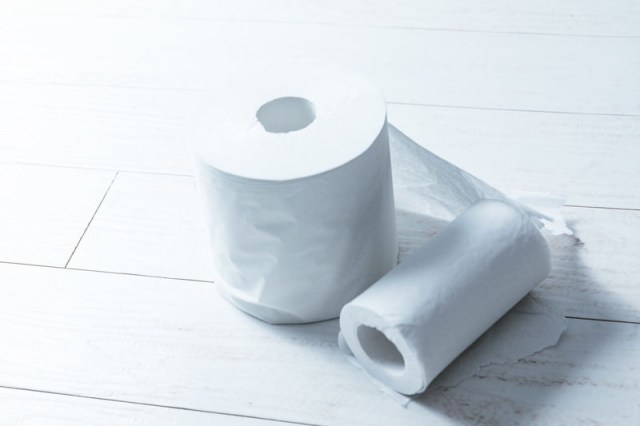
“Regarding the distribution of toilet paper in light of the situation in Iran and other matters, toilet paper is almost entirely produced domestically. The raw materials are domestically collected recycled paper and pulp, with almost no dependence on the Middle East, so there will be no direct impact. There is also sufficient capacity to increase production, so we ask that you use sound judgment based on accurate information before buying any.”
イラン情勢等を踏まえた #トイレットペーパー の流通について、トイレットペーパーはほとんど国内で生産されています。原料は、国内回収古紙やパルプで、中東依存のものはほぼないため、直接の影響はありません。増産余力も十分にあるため、購買にあたり正確な情報のもと冷静なご判断をお願いします。
— 経済産業省 (@meti_NIPPON) March 19, 2026
The ministry also linked to a webpage with more details, stating that the advice was due to reports on social media that stocks of toilet paper had been disappearing in some parts of Japan, and confirmed by the Japan Household Paper Industry Association.
This begs the question: Why, of all things, is toilet paper what people in Japan scramble for whenever the proverbial poop hits the fan? To answer that, we’ll need to look at the country’s surprisingly long history of toilet paper and crises, dating back to the Oil Crisis of 1973, and it can all be traced to a single supermarket in Osaka.
Back then, the global economy was upended when Middle Eastern oil-producing countries imposed an embargo on countries that had supported Israel, Japan among them. This resulted in mass shortages of oil and skyrocketing prices.
At the same time, much of Japan was still in the process of widespread urbanization, and many people were still using pit toilets where they could get away with using newspaper to wipe themselves with if need be. But for people living in newly modernized parts of the country, such as Senri New Town — one of the most state-of-the-art neighborhoods in Japan, made in the spirit of the upcoming 1970 Osaka Expo — flush toilets were standard but still a relatively new concept and very prone to clogging if the wrong things were sent down one.
▼ Senri New Town: A Living Artificial City (1968)
But even when the Oil Crisis first hit, these people still weren’t focused on toilet paper in particular. Rather, they were concerned about prices of everything skyrocketing due to the rapidly rising cost of logistics.
In the days leading up to October 31, 1973, the Daimaru Peacock supermarket in Senri New Town announced that they would be having a sale on that day, selling four-packs of toilet paper rolls for 138 yen each, down from the regular price of 200 yen. Such a discount on a daily necessity in the face of soaring prices ended up bringing nearly every housewife within a mile radius, some 200 in total, lining up around the block. It was far more than Peacock expected, and their stock was sold out almost instantly. As a result, they had to bring out other toilet paper that sold for the regular price of 200 yen.
The spectacle of so many people buying toilet paper at once caught the attention of the media. However, by the time a Mainichi Shimbun reporter came down to check it out, they only saw the regularly priced paper on the shelves. As such, they reported it as if people were hoarding toilet paper merely as a result of the Oil Crisis rather than just pouncing on a really good price. Whether that was a misunderstanding or done intentionally to make it a more sensational article is unclear, but the topical angle of the ongoing oil shock helped the story spread, and it became national news before too long. People hearing the news then began feeling that if it could happen there, it could happen where they lived too, and all across the country, flocks started securing their own toilet paper for fear there would be no more.
▼ A news report from 1973 about panic buying all over Japan. It had also spread to other products by this time, such as salt, detergent, and feminine hygiene products.
Thus began the great toilet paper panic-buying of 1973. The mass hysteria grew so large that it eventually became international news, and in a bizarrely ironic twist, Johnny Carson made a joke about it on the Tonight Show, forgetting to add the word “possibly will be” and making it sound like there actually was a shortage in the USA to his tens of millions of viewers. That ended up triggering panic-buying of toilet paper there as well. He later apologized, saying he didn’t want to be remembered as the guy who caused a fake toilet paper scare.
▼ I guess I’m probably not helping with that. Anyway, heeeeeeeeeere’s Johnny sparking a fake toilet paper scare!
Of course, the truth was that toilet paper was never in danger of running out in Japan or the USA. The massive spike in purchases did cause temporary shortages, but manufacturers at the time said they never had trouble making more.
And yet, the seed of paper psychosis had already been planted in the public at large in Japan, and from time to time, whenever it looked like things were about to take a turn for the worse, people still started inexplicably buying up toilet paper. In the early months of the COVID-19 pandemic, one of the first things to run out, possibly even faster than face masks, was toilet paper.
And now, as we look down the barrel of an even nastier oil shock, toilet paper is again becoming the canary in our economic coal mine. As the ministry pointed out, there is no issue with the supply of toilet paper in particular, but the reaction of other social media users felt otherwise.
“I’m buying it now because prices are going up on April 1!”
“Is there enough fuel for the machines that manufacture it? How about the plastic packaging?”
“What? People are hoarding toilet paper again?”
“I think the factories mostly use natural gas now, but what if that stops too?”
“And how do they plan to transport it?”
“You should probably put this info on the TV, where all the old people who were around in 1973 can see it.”
“Is the ministry planning on carrying all the toilet paper to us by hand?”
“People need to hear this. Today I saw four elderly people with 18 rolls each at the drug store.”
“I get that the toilet paper won’t run out, but won’t the cost of producing it go way up?”
And quite frankly, these people are all correct, too. Even the ministry was very cautious about their wording, using terms like “almost” or “no direct impact” and recognizing the fact that this current oil crisis will almost certainly affect prices at the very least.
But the important thing to remember is that this will basically affect everything, not just toilet paper. So, the ministry’s advice is sound in that we should take a deep breath and think carefully about how much toilet paper we buy, but mainly because we should probably buy lots of other stuff too before the cost of everything really starts popping off.
Source: Twitter/@meti_NIPPON, Ministry of Economy, Trade and Industry, Senri New Town Johokan, NIST
Top image: Pakutaso
● Want to hear about SoraNews24’s latest articles as soon as they’re published? Follow us on Facebook and Twitter!