

Dr. Timothy Mousseau, professor of Biological Sciences at the University of South Carolina and researcher for the Chernobyl and Fukushima Research Initiative, presented new findings to the International Ornithological Congress in Tokyo last week that suggest radiation contamination around Fukushima Daiichi, even at low levels, is negatively impacting biodiversity and wildlife populations.
Mousseau and his collaborators have been monitoring radiation levels at 1,500 sites and bird populations at 400 points across Fukushima over the last 3 years. The lay of the land and dispersal patterns of radioactive matter have created a very heterogenous situation in the Fukushima exclusion zone, meaning areas of high radiation lie right alongside areas of low radiation. By controlling for other environmental factors, the scientists can apply a rigorous statistical analysis to predict what the population in a particular area should be.
Using this method, Mousseau et al have found both the number of birds and the variety of species drop off as radiation levels rise, and more importantly, that there is no threshold under which the effect isn’t seen.
This is counter to what both the Japanese government and the United Nations Scientific Committee on the Effects of Atomic Radiation have said regarding low-level radiation. In a report on the situation in Fukushima released in April, UNSCEAR said, “Exposures of both marine and terrestrial non-human biota following the accident were, in general, too low for acute effects to be observed,” although the report goes on to hedge that “changes in biomarkers cannot be ruled out.” Indeed, Mousseau and the Wild Bird Society of Japan report seeing partial albinism in Fukushima birds, a condition rarely seen outside of Chernobyl (see photo above).
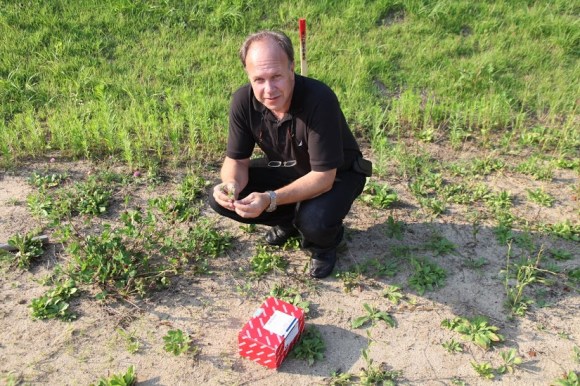
▼ Mousseau collecting samples in Fukushima
Citing years of research in Chernobyl and meta-analysis of studies on areas with naturally occurring radiation, Mouseau says, “Contrary to government reports, there is now an abundance of information demonstrating consequences, in other words, injury, to individuals, populations, species, and ecosystem function stemming from low-dose radiation.”
What we need now, he continues, is more funding for research into what this means in the long term, for the flora and fauna of Fukushima, as well as for the people who live alongside them.
Source: Timothy Mousseau
Images: Courtesy Timothy Mousseau
 Fukushima Prefecture Produces First Thesis on the Effects of Internal Radiation Exposure: Children of Fukushima Unaffected?
 New study shows wildlife thriving in areas evacuated after Fukushima nuclear meltdown【Video】
 A real-world Pokémon Poké Ball hotel is opening in Japan at a still-secret location [Video]
 Starbucks Japan reveals new Tsukimi Moon-Viewing drinkware and gifts for autumn 2026
 Japan’s revolving sushi restaurant king Sushiro coming to U.S. this fall with high prices, no tipping
 The mystery of Port Store, the Japanese convenience store that looks like a Lawson rip-off
 Tamagotchi evolves into a ring for its 30th anniversary, preorders now open
 Elderly couple donates 400 million yen to erect Myaku-Myaku statue in Osaka
 Lawson convenience store opens its first mobile, trailer-style location in Japan
 Japan Railways announces unlimited-ride train pass for fall travel
 Family Mart releases Famima convenience store products nationwide, but which ones are worth buying?
 Studio Ghibli unveils new anime calendars and diary planners for 2027
 Japan’s final Penguin Suica train cards have already shipped, and when they’re gone, they’re gone
 Solo travel in Japan: Hidden beer garden in Tokyo is a haven for single visitors
 Japan approves foreign resident visa renewal fee increases of up to 967 percent, starts soon
 Farewell Final Ceremony announced for Tokyo’s life-size Gundam statue, will stream live
 Hobonichi unveils new 2027 planners, diaries and stationery with One Piece, Suica Penguin, Hello Kitty and a must-buy Mini Techo
 Family Mart releases new Human Made Cup Noodle in Japan, with freebies for Nigo fans
 One Piece Day 2026 brings new art, music, and new cast announcements
 Hikaru Utada sings new song in Shinkansen commercial for Japan’s Supreme Class cabins
 Mister Donut releases new doughnuts that look and taste like Japanese sweet potatoes
 12-year-old British girl who went missing in Tokyo found safe after visiting anime sites around Yokohama
 7-year-old boy left behind on Mt. Fuji by his own dad
 Sushi Bus: Japan’s first conveyor-belt bus lets you eat sushi while sightseeing around Tokyo
 Pokémon Center Online designates first Pokémon items that will require Japanese ID card to buy
 Japanese toilet aims to attract foreign tourists but not everybody is happy about it
 New Japanese vending machine at Shinkansen station sells cups of ice on platform
 Study finds hundreds of people in Indonesia legally named after Naruto, Inuyasha, other anime stars
 Japan announces sudden 400-percent increase in visa fees for foreigners entering the country
 Japan’s human washing machines will go on sale to general public, demos to be held in Tokyo
 Studio Ghibli has a new anime out, and there’s only one place in the world where you can see it
 Starbucks Japan releases new drinkware and goods for Valentine’s Day
 Starbucks Japan releases new sakura goods and drinkware for cherry blossom season 2026
 Japan’s newest Shinkansen has no seats…or passengers [Video]
 Tokyo subway installing new ticket gates that don’t accept payment through Suica or other IC cards
 Japanese ninja certification exam attracts 131 candidates from Japan and abroad
 Salomon releases Japan-exclusive Mt. Fuji hiking gear that doubles as an amazing souvenir
 Put sesame oil in your coffee? Japanese maker says it’s the best way to start your day【Taste test】