
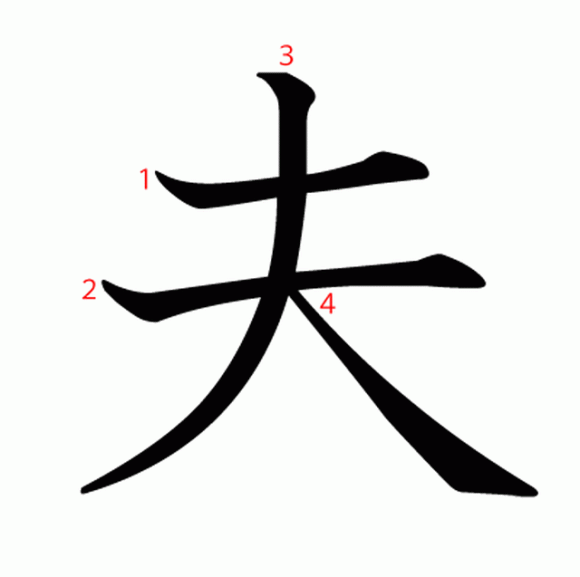
The common stereotype about women among sexually frustrated, mostly parents’ basement-dwelling, men is that girls only go for attractive, rich guys, and never the nice, tender guys with warm hearts and chic fedoras.
Well, when it comes to one of those observations, anyway, there appears to be at least one cultural precedent of a diabolical hidden message that seemingly proves the stereotype right in one of the very words that defines men and women’s relationship in Japan…
At this top of this page, you’ll see the the kanji character for husband (“otto”), which is commonly used to describe someone’s husband indirectly (women tend to directly refer to their husbands by pet names, the most common being, “anata,” which loosely translated means something like, “Hey, you over there.”). It’s a fairly simple character and one that Japanese learners meet not too far into their studies. So far, so unremarkable.
But let’s see what happens when we flip it upside-down:
▼ Hey, doesn’t that look a bit like…
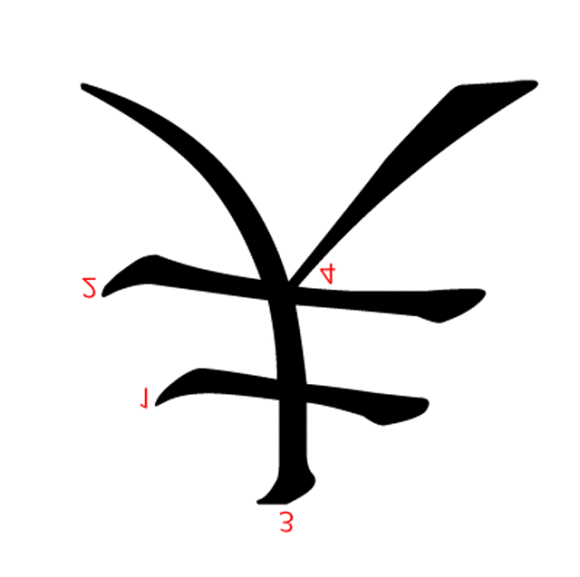
▼ Well, this is awkward.
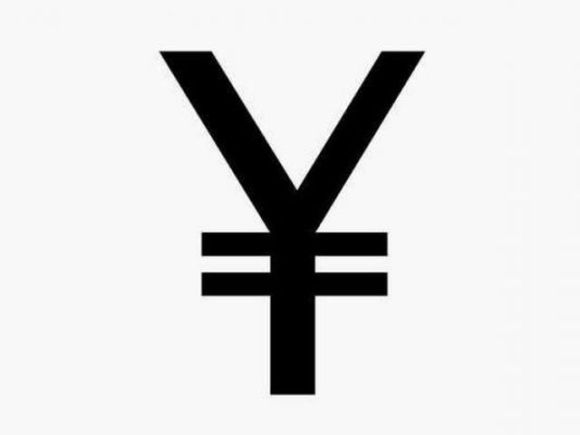
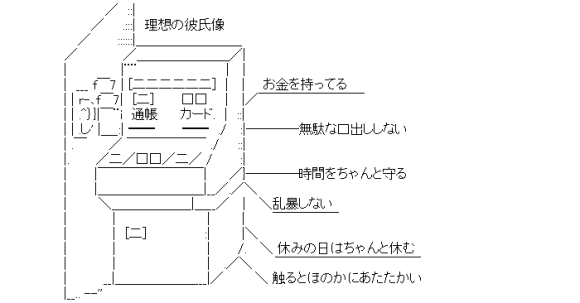
And, lest you think this is totally a coincidence that a vertically flipped “husband” should come out as the symbol for Japan’s currency, there’s actually a relatively common Japanese Internet joke that the perfect boyfriend or husband in Japan is…an ATM.
“Has money, never talks back, always on time, never forceful, doesn’t work on holidays, warm to the touch.”
So, the resemblance is a little eerie, to be sure, but there’s actually no deeper purpose here outside of a funny Internet meme, mostly because the Japanese don’t actually even use the yen symbol unless dealing with foreigners. They typically go for the native en (円) except maybe for when talking about international currency exchanges or something. History – insofar as I had time to Google – is pretty unclear about the¥symbol’s origins or whether it was devised by a Japanese or non-Japanese person.
The most commonly accepted theory, of course, is that it’s just a Y for “yen” with two lines through it – because that’s, like, just what you do with currency symbols – because in native Japanese it’s sometimes pronounced “en” and sometimes pronounced “yen” depending on the numbers that precede it, which was apparently terribly confusing to old-timey foreigners.
So, rest assured guys; this doesn’t mean Japanese women see yen signs whenever they look at men and probably aren’t waiting on proposals from ATMs.
Source: alfalfalfa
Feature image: Kanji Jiten
 Cool design on Japanese posters lets you look at kanji upside-down for a whole new meaning
 Pretty money – Poll reveals Japan’s “coolest” cash
 Japan’s Kanji of the Year revealed, reflects both the good and the bad of 2022
 Japan’s Kanji of the Year announced, shows the bright and dark spots of 2024【Video】
 What’s in a name? The 10 most common surnames in Japan (and their meanings)
 Lawson convenience store at popular tourist site is one of the most unusual in Japan
 Drink vending machines disappearing in Japan as number drops to lowest in 30 years
 Yokohama restaurant serves fried axolotl, along with giant isopod, camel, and crocodile
 30 Pikachus want to share a Tokyo hotel room with you that has separate Grass, Water, Fire spaces
 Downtown Tokyo’s meaty monster Kaibutsu ramen will challenge your stomach, thrill your taste buds
 McDonald’s and Gundam team up for customized anime mecha and fried chicken sandwiches[Video]
 Hello Kitty visits SoraNews24 HQ! Traditional Mongolian wrestling starts four seconds later
 This overlooked neighborhood east of Tokyo is awesome in many ways, left us with just one regret
 Visiting Japan’s one-and-only, and only-for-a-limited-time, Dragon Ball noodle restaurant[Photos]
 Giant Chiikawa statues appear in one of Tokyo’s most confusing train stations【Photos】
 Japan reportedly adding Japanese language skill requirement to most common foreigner work visa
 Pokémon and Ikea Japan cross over into each other’s worlds with collaboration events
 Mt. Fuji decorated with a 500,000-flower pink carpet is Japan’s ultimate spring view
 Starbucks Japan closing only Shinkansen platform branch for popularity-triggered renovations
 You can assemble a well-balanced team of Pokémon, them eat them, thanks to Japanese cake chain
 Two food hacks take Japan’s convenience store fried chicken to amazing new sandwich heights
 7-Eleven Japan’s new baked-in-store sweet treat is only available in three parts of the country
 Man bites woman at cherry blossom park in Japan, dies shortly after
 Peanuts and Coke becomes a viral hit in Japan, but is it a trend worth joining?
 Japan now has a special desk for people who work at home with a pet cat[Photos]
 Famous Tokyo cherry blossom spot installs view-blocking screens to fight overcrowding[Video]
 Uniqlo announces new T-shirts for One Piece, Naruto and more for manga publisher’s 100th birthday
 Train station platform ramen store closes its doors on half a century of history in Tokyo
 Starbucks Japan releases new My Fruit³ Frappuccino at only 34 stores around the country
 Krispy Kreme releases Super Mario doughnuts in Japan for a limited time
 Japanese onsen egg maker from 100-yen store Daiso needs to be on your shopping list
 Studio Ghibli releases Catbus pullback keychain that runs like the anime character
 Survey asks foreign tourists what bothered them in Japan, more than half gave same answer
 Japan’s human washing machines will go on sale to general public, demos to be held in Tokyo
 Starbucks Japan releases new drinkware and goods for Valentine’s Day
 We deeply regret going into this tunnel on our walk in the mountains of Japan
 Starbucks Japan releases new sakura goods and drinkware for cherry blossom season 2026
 Studio Ghibli releases Kodama forest spirits from Princess Mononoke to light up your home
 Japan’s newest Shinkansen has no seats…or passengers [Video]
 Major Japanese hotel chain says reservations via overseas booking sites may not be valid
 Put sesame oil in your coffee? Japanese maker says it’s the best way to start your day【Taste test】
 No more using real katana for tourism activities, Japan’s National Police Agency says
 W.T.F. Japan: Top 5 kanji with ironic meanings【Weird Top Five】