
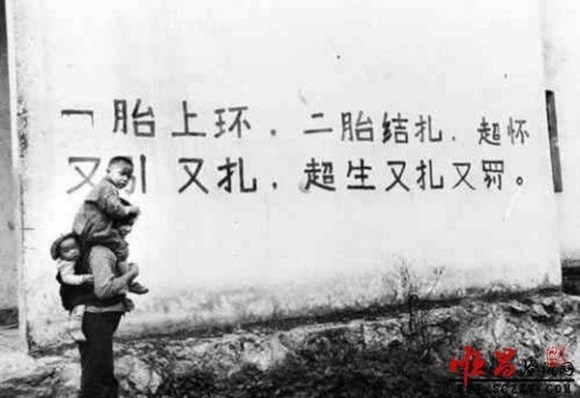
Back when China enforced its one-child policy, slogans were publicly displayed to deter citizens from having too many children. Many of them were not so much educational, however, as disturbing…
The Chinese government rolled out its controversial one-child policy in 1980 as a method of keeping its rapidly increasing population under control. Every married couple was allowed to have only only one baby, with exemptions for those belonging to certain ethnic minorities and in special situations such as remarriage, which allowed some couples to have up to two children.
It’s common to spread word of a government policy through use of slogans to raise awareness among citizens, but looking back at some of the messages written in public places during the earlier years of administration has sent a chill down our spines.
In rural areas of China, instead of promoting the supposed positive outcomes of the policy, what can only be described as threats were written in big, bold characters in order to make the message abundantly clear to the less educated.
We’re happy to say that these are now relics of the past, but can you imagine seeing messages like these written across a wall in your home town?
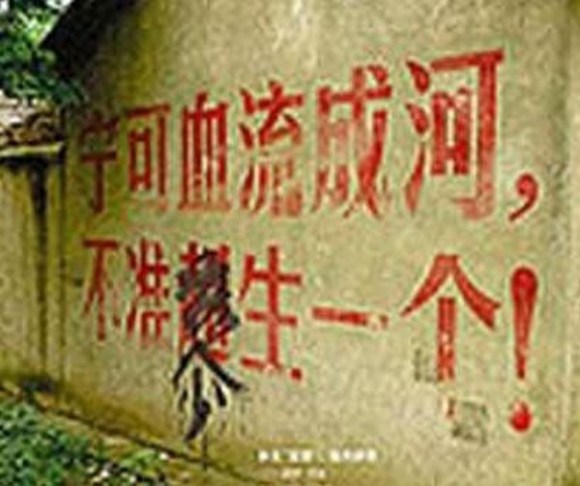
▼ “Blood can form a river, but more than one child cannot be allowed!”
▼ “Use a coil after the first, ligation after the second; face abortion and sterilization if you conceive too many, face sterilization and penalty if you deliver too many.”
▼ “Abort if you have to, or your house and cattle will be taken away.”

▼ “Hit it! Abort it! Let it flow! Anything but let it be born!”
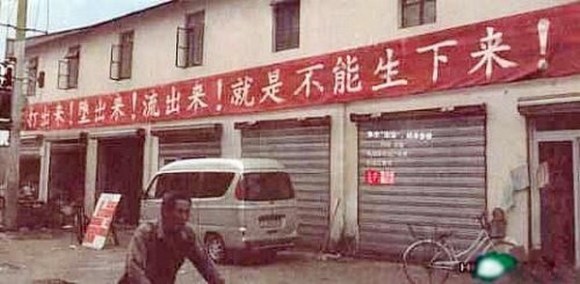
As seen in some of the photos above, locals had vandalized some of the writings as an act of protest. It was inevitable that the people felt highly intimidated and pressured by these extreme slogans, and that resulted in distress and even conflicts. In 2007, the Chinese government moved to scrub out messages of this kind, and in 2011 ordering a thorough cleanup. The authorities subsequently took on a more positive approach to campaigning the policy by incorporating concepts of building warm, harmonious families and respecting the elders at home.
Of course, not all the slogans found in rural villages were threats of sterilization or punishment. Among the many slogans that were banished from the walls, there were also messages that attempted to educate and promote an image of positivity:
▼ “Have fewer children and plant more trees, have fewer children and rear more pigs.”

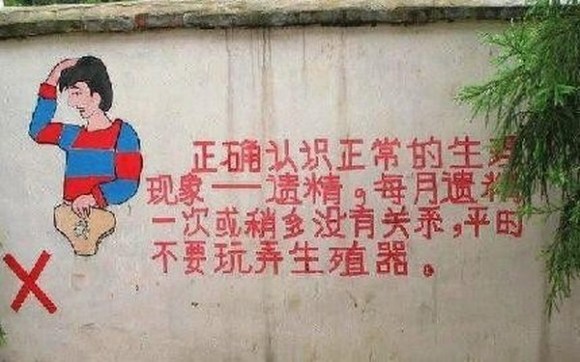
▼ “Have a correct understanding of the normal physiological phenomenon—spermatorrhea. It’s nothing unusual if it happens once or twice a month, don’t play with yourself too much.”
China’s one-child policy was abolished in October this year, and couples are now allowed to have two children.
Source/images: ETToday
 What’s it like to be a working mother in China? We asked a Chinese mom
 Japan’s best conveyor belt sushi restaurant of seven years ago has now, finally, come to Tokyo
 Japanese trains in Sapporo might be better than those in Tokyo, thanks to one special feature
 Lawson convenience store at popular tourist site is one of the most unusual in Japan
 Drink vending machines disappearing in Japan as number drops to lowest in 30 years
 Starbucks Japan releases FIVE new Frappuccinos in a day, and we try them all in 90 minutes
 What’s wrong with English education in Japan? Pull up a chair…
 Mr. Sato discovers his inner beaver with a 16-inch chocolate “twig” at Tokyo Station
 Support your faves and avoid oshikatsu burnout — advice from our resident otaku
 Japanese fashion company’s modernized haori half coats will keep you warm and samurai chic
 Does this video about an abandoned dog leave you wiping your eyes or shaking your fist?
 Japan reportedly adding Japanese language skill requirement to most common foreigner work visa
 Mt. Fuji decorated with a 500,000-flower pink carpet is Japan’s ultimate spring view
 Pokémon and Ikea Japan cross over into each other’s worlds with collaboration events
 Starbucks Japan closing only Shinkansen platform branch for popularity-triggered renovations
 You can assemble a well-balanced team of Pokémon, them eat them, thanks to Japanese cake chain
 30 Pikachus want to share a Tokyo hotel room with you that has separate Grass, Water, Fire spaces
 Man bites woman at cherry blossom park in Japan, dies shortly after
 7-Eleven Japan’s new baked-in-store sweet treat is only available in three parts of the country
 Peanuts and Coke becomes a viral hit in Japan, but is it a trend worth joining?
 Japan now has a special desk for people who work at home with a pet cat[Photos]
 Famous Tokyo cherry blossom spot installs view-blocking screens to fight overcrowding[Video]
 Uniqlo announces new T-shirts for One Piece, Naruto and more for manga publisher’s 100th birthday
 Train station platform ramen store closes its doors on half a century of history in Tokyo
 Starbucks Japan releases new My Fruit³ Frappuccino at only 34 stores around the country
 Krispy Kreme releases Super Mario doughnuts in Japan for a limited time
 Japanese onsen egg maker from 100-yen store Daiso needs to be on your shopping list
 Survey asks foreign tourists what bothered them in Japan, more than half gave same answer
 Japan’s human washing machines will go on sale to general public, demos to be held in Tokyo
 Starbucks Japan releases new drinkware and goods for Valentine’s Day
 We deeply regret going into this tunnel on our walk in the mountains of Japan
 Starbucks Japan releases new sakura goods and drinkware for cherry blossom season 2026
 Studio Ghibli releases Kodama forest spirits from Princess Mononoke to light up your home
 Japan’s newest Shinkansen has no seats…or passengers [Video]
 Major Japanese hotel chain says reservations via overseas booking sites may not be valid
 Put sesame oil in your coffee? Japanese maker says it’s the best way to start your day【Taste test】
 No more using real katana for tourism activities, Japan’s National Police Agency says