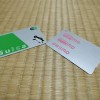

“Tee hee! Your window to society is open.”
One of the funniest features of human languages has to be euphemisms. Rather than just talk about unpleasant things head-on, we often refer to them in roundabout ways. For example, you didn’t poop, you just “went number two.” Or instead of firing someone, you’re just presenting them with “an early retirement opportunity.”
And Japanese is no different when it comes to an assortment of funny euphemisms. It turns out that no matter what language we speak, humans still like having ways to talk around things they’d rather not confront directly.
That’s why today we’re counting down the top five most hilarious Japanese euphemisms. Some of these may not be the most useful or common, but they will probably bring a smile – or look of horror! – to the face of anyone you use them on.
So let’s get to it! Starting off with…
#5. Your window to society is open: 社会の窓が開いている
Uh oh! You just got to work and you and your boss are rushing off to an important meeting when suddenly… you spot that your boss’s fly is down. You can’t have him meet important clients like this, but you also don’t want to say anything potentially embarrassing yourself, so what do you do?
Simple. Just tell him shakai no mado ga aite iru. This phrase literally translates to “your window to society is open,” which though strange at first actually kind of makes sense the more you think about it. Your pants hole is an open window to the world, possibly showing them things they’d rather not see, so it’s best to zip it up as soon as possible.
At any rate, it certainly makes more sense than “your fly is down.” That just makes it sound like I have a pet fly who crashed. And why is only the zipper on pants referred to as a “fly?” Why not on a jacket too? It just brings up more questions than it answers.
Understandability rating: 5/5. Every Japanese person I asked knew this one. Maybe that means they have a habit of not zipping up, or at least spotting those who don’t.
#4. A guest has arrived: お客さんが来た

It’s that time of month… which is itself another charming euphemism. One of the many ways in Japanese to tell someone that you’re on your period is to say okyakusan ga kita, which translates to “a guest has arrived.”
This one feels like it makes less sense the more you think about it, since wouldn’t “a guest arriving” happen when you become pregnant and hence miss a period? Or maybe we’re just thinking way too hard about this.
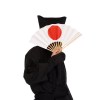
Other popular ways to refer to your own shark week is hatabi (“flag day”) or akabi (“red day”). While “red day” should be pretty obvious, “flag day” refers to red blood spots on white underwear looking like the Japanese flag.
▼ “Do you like my fan? I made it myself!”
“Uh….”

Understandability rating: 4/5. Only one Japanese person I asked didn’t understand this one, but he was a guy, so take that for what it’s worth.
#3. Private-use generator: 自家発電
「原子力発電所はピカチュウを探す場所ではありませんよ」 pic.twitter.com/M5rQH2TB1I
— 出ない順 試験に出ない英単語 (@NISE_TOEIC) December 20, 2016
Ah yes, self-pleasuring has to be one of the most euphemism-ridden in any language. People will go great lengths to refer to it as pretty much anything they can, except for it’s actual name of course. You can “spank the monkey,” “shake the snake,” “pet the kitty,” or even have a “ménage à moi.”
But one expression in Japanese that we really don’t have in English is jika hatsuden, which translates to a “personal-use generator.” You’re not going to get any help from the power plant, you’re gonna have to generate this electricity yourself.
And while we’re at it, though there are plenty of hilarious euphemisms for the body parts used when firing up the old “personal-use generator,” the ones I find most personally amusing are dankon (a mixture of dansei “man” and daikon “long white radish“) for the men and ke manju (“hairy steamed bun“) for the women. You’ll never look at a platter of food the same again!
Understandability rating: 3/5. About half of the Japanese people I asked knew this one, although I’m guessing the other half just didn’t want to admit it.
#2. The ant gate crossing: 蟻の門渡り

There’s really no way to sugarcoat this one, so we’ll just get right into it: let’s talk about the grundle. You know, that smooth patch of skin between your butthole and your long white radish (for men) or hairy steamed bun (for women).
Yup. That place.
Personally I didn’t even know there was a word for that area in English until a few years ago. But now you won’t have to wait to learn how to say it in Japanese, because it’s simply ari no to watari, which translates to “the ant gate crossing.”
This is another one that seems to make less sense the more you think about it. At first you’re like, oh yeah, ants are small and that area’s not very big, so I guess… but wait, where are the ants coming from? And why is there a gate? Why wouldn’t they be crossing over a plain or field? And why are they traveling out of one hole and into another?!
▼ If they’re fire ants, that’s really gonna hurt….
Fire Ants in My Pants: Only the Worst Summer Vacation in the History of Forever (Funn https://t.co/gWkKKLugfm pic.twitter.com/lCCShhgY1X
— Brony Sainclair (@SainclairBrony) December 10, 2016
Understandability rating: 2/5. Only a few of the Japanese people I asked knew about this one. When I asked them how they referred to the area otherwise, they just giggled and said they don’t know, so I think that means we need to make this one better known, so that the whole world can be better educated about the grundle area!
And the #1 most hilarious Japanese euphemism is…
.
.
.
.
.
.
.
.
.
.
1. Like washing a burdock root in the Pacific Ocean: 太平洋でごぼうを洗う
Have you ever heard the expression “like throwing a hotdog down a hallway?” How about “like dropping a toothpick in a volcano?”
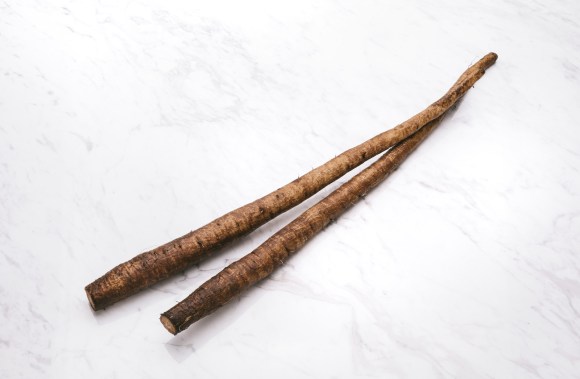
Well rest assured that the same kind of ridiculous euphemism exists in Japanese too: taiheiyō de gobō o arau. This literally translates to “washing a burdock root in the Pacific Ocean.” Yikes, that’s even more of an insult than any of the English ones!
Understandability rating: 1/5. Only one of the Japanese people I asked knew about this saying, but all the others I asked laughed at it as soon as I told them it (before I explained the meaning), so I have a feeling they just didn’t want to admit to knowing such a “dirty” phrase.
Also, for those unfamiliar with burdock root, it’s a long thin root full of fiber that’s often cut up and served in soups and rice.
▼ It also happens to be the name of Goku’s father,
but don’t you dare say anything about Goku’s mom!
So there you have it, the top five most hilarious Japanese euphemisms. Do you know any funny euphemisms in Japanese that we missed, or in any other languages? Let us know in the comments, and when you’re ready to make up to your Japanese friends for using these euphemisms on them, be sure to check out the top five hand gestures that you should avoid around them so you don’t make things worse.
Top image: PAKUTASO (edited by RocketNews24)
W.T.F. Japan will be back next Thursday. In the meantime, give me a follow on Twitter and let me know if there’s any topics you’d like to see covered. See you next week!