
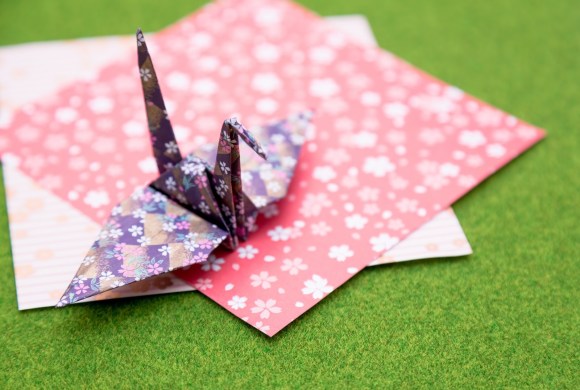
What many may think is well-intentioned well-wishing may not actually be all that well-received by victims of natural disasters.
As you know, southwestern Japan experienced record rainfall last week and over the weekend, causing river overflows, flash-flooding, landslides, and mudslides. More than 100 people died, and many more are injured, while countless others are still missing.
Fortunately the rains have now stopped, but that doesn’t mean the crisis is over. Millions of people were forced to evacuate, and many who have no homes to return to are forced to stay in crowded shelters with little food and water, and perhaps no electricity.
Thankfully, victims of natural disasters can always count on well-wishers to donate supplies, but there is one gift that victims are not thankful for, according to netizen @NORIhannya.
https://twitter.com/NORIhannya/status/1015401144221249536“To those who are not experiencing the natural disaster due to heavy rainfall:
Please stop sending origami cranes. They take up space and are heavy, and they’re hard to throw away because of what they are. They’re not food and they can’t be sold to make money. They’re just there for the maker’s self-satisfaction. Please just donate whatever it costs to make origami cranes. Please. From someone who experienced the 2011 Great East Japan Earthquake and Tsunami.”
Why Japanese paper cranes, you ask? According to Japanese legend, folding 1,000 paper cranes will allow you to be granted a wish by the elusive and mystical Japanese crane, usually in the form of long life and recovery from illness. As such, strings of 1,000 cranes have also become a symbol of hope in hard times, which is why groups of well-wishers will collaborate on a set and send them to people in need.
▼ Apparently this is how all of those cranes end up being stored…
https://twitter.com/iiizzzwww22/status/1015800934780174339
Surely they’re intended to boost the morale of disaster victims, but in practical terms, receiving 1,000 paper cranes when you’re homeless and living in a shelter with thousands of other people without sufficient food and water is kind of a bummer. Another netizen shared the transcript of an anecdote from another victim of the 3.11 disaster that is rather eye-opening to that fact:
https://twitter.com/iiizzzwww22/status/1015610027460063232“We’d been living in the shelter shoulder-to-shoulder with nothing to eat or drink for 2 days. When we finally received a box of relief supplies, we opened it eagerly, only to find it to be full of paper cranes and nothing else. I will never forget the despair we felt then, and the following eruption of anger.”
It’s hard to imagine such a scene if you haven’t lived it, but it’s easy to understand why 1,000 paper cranes alone would not be very helpful for disaster victims, and might even have the opposite effect of what was intended.
The responses of Japanese netizens, however, varied from indignation to complete agreement:
“What a lame world we live in. I understand that the cranes aren’t useful in areas that are under strain, but I want you to think, even just a little, about the people who kindly made those cranes.”
“No…no matter what you think, isn’t that going a little too far? Those people probably had no idea about this and worked really hard to make them…”
“If you really want to send cranes, just send a single one along with money, food, or water. That way, when people see it, they will smile, and feel your kindness. I think that’s better than sending 1,000 cranes.”
“A lot of people are saying that the people who sent the cranes did it out of compassion, but I think sending something that’ll just get in the way is not compassionate at all.”
“Maybe they’d be happy to receive them once everything settles down…”
Most netizens agreed, however, that probably the best way to help is to send money. Surprisingly, disaster relief centers often end up getting a lot of useless things, in addition to paper cranes, and sometimes even certain foods are not helpful, depending on what resources a center has available to them.
In the end, donating cash to a reputable organization helps the volunteers and those in charge get exactly what is needed for the situation. Another great way to help? Donate blood. You could save lives, and get some exclusive Love! Live goods in exchange. Win-win!
Source: Twitter/@NORIhannya via My Game News Flash
Top/Featured Image: Pakutaso
 Used undies, rotten food, expired meds and other disaster “aid” Japan doesn’t want
 Kobe man arrested after threatening driving school with 1,500 origami cranes
 Don’t forget: Yahoo! Japan to make disaster relief donation for every person who searches for “3.11” today
 Japanese trains in Sapporo might be better than those in Tokyo, thanks to one special feature
 Douhua, a delicious tofu pudding, is Mr. Sato’s new favourite food
 Japanese hot spring YouTuber finds her niche showing off out-of-the-way local onsen【Videos】
 How do people in Japan feel about eating whale? We asked five people for their opinions
 “25 Potential Culture Shocks from around the World” infographic offers tidbits of travel wisdom
 Lawson convenience store at popular tourist site is one of the most unusual in Japan
 Studio Ghibli releases new action figures featuring Nausicaä of the Valley of the Wind characters
 30 Pikachus want to share a Tokyo hotel room with you that has separate Grass, Water, Fire spaces
 Video teaches Japanese schoolgirls how to pick panties out of their butts without anyone noticing
 Studio Ghibli turns My Neighbour Totoro characters into bag charms for everyday adventures
 Japan reportedly adding Japanese language skill requirement to most common foreigner work visa
 Mt. Fuji decorated with a 500,000-flower pink carpet is Japan’s ultimate spring view
 Pokémon and Ikea Japan cross over into each other’s worlds with collaboration events
 Starbucks Japan closing only Shinkansen platform branch for popularity-triggered renovations
 You can assemble a well-balanced team of Pokémon, them eat them, thanks to Japanese cake chain
 Man bites woman at cherry blossom park in Japan, dies shortly after
 7-Eleven Japan’s new baked-in-store sweet treat is only available in three parts of the country
 Peanuts and Coke becomes a viral hit in Japan, but is it a trend worth joining?
 Japan now has a special desk for people who work at home with a pet cat[Photos]
 Famous Tokyo cherry blossom spot installs view-blocking screens to fight overcrowding[Video]
 Uniqlo announces new T-shirts for One Piece, Naruto and more for manga publisher’s 100th birthday
 Train station platform ramen store closes its doors on half a century of history in Tokyo
 Starbucks Japan releases new My Fruit³ Frappuccino at only 34 stores around the country
 Krispy Kreme releases Super Mario doughnuts in Japan for a limited time
 Japanese onsen egg maker from 100-yen store Daiso needs to be on your shopping list
 Survey asks foreign tourists what bothered them in Japan, more than half gave same answer
 Japan’s human washing machines will go on sale to general public, demos to be held in Tokyo
 Starbucks Japan releases new drinkware and goods for Valentine’s Day
 We deeply regret going into this tunnel on our walk in the mountains of Japan
 Starbucks Japan releases new sakura goods and drinkware for cherry blossom season 2026
 Studio Ghibli releases Kodama forest spirits from Princess Mononoke to light up your home
 Japan’s newest Shinkansen has no seats…or passengers [Video]
 Major Japanese hotel chain says reservations via overseas booking sites may not be valid
 Put sesame oil in your coffee? Japanese maker says it’s the best way to start your day【Taste test】
 No more using real katana for tourism activities, Japan’s National Police Agency says