
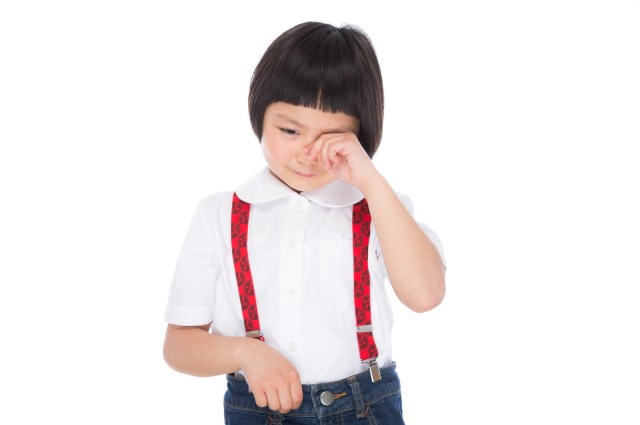
In light of an upcoming law, this survey sought adults’ attitudes towards broad topics related to disciplining children and child abuse.
In 2019, the number of births in Japan numbered fewer than 870,000–a staggering new low amidst decades of decline. The country’s declining birthrate continued to be a widely discussed societal issue this past year along with a series of highly visible child abuse incidents. In order to combat the latter, the Amended Child Abuse Prevention Act, originally proposed to the National Diet by the Ministry of Health, Labour and Welfare back in March, will prohibit corporal punishment when it takes effect this coming April. This month the Ministry also released guidelines in preparation for the impending legislation which define types of corporal punishment and strategies to combat child abuse.
In light of these new developments, Japanese travel provider Air Trip conducted an Internet survey in mid-December on topics related to the use of corporal punishment when disciplining children as well as child abuse, to gauge the general public’s reactions. There were 796 male and female respondents to the survey ranging in age from their 20s to 70s. Of these individuals, 456 have children of their own while 340 do not have any children. Let’s take a look at all six of the survey questions in greater detail and their corresponding results.
Survey Questions
Q1: [For those with children] Have you ever struck your child/been about to strike your child?
The survey results revealed that of the 456 respondents with children, 49.8 percent have struck a child before and 26.1 percent have been about to strike a child.
Q2: Do you believe that corporal punishment is necessary when disciplining children?
For a little context, we’ve seen examples of corporal punishment in Japan this year go viral online and be hotly debated, including this teacher punching a student and a mother smacking her child. The majority of survey takers replied that the use of corporal punishment was at least occasionally necessary when disciplining children. Among those with their own children, 70.6 percent said that it was necessary on a daily basis or occasionally, while 67.4 percent of those without their own children said the same.
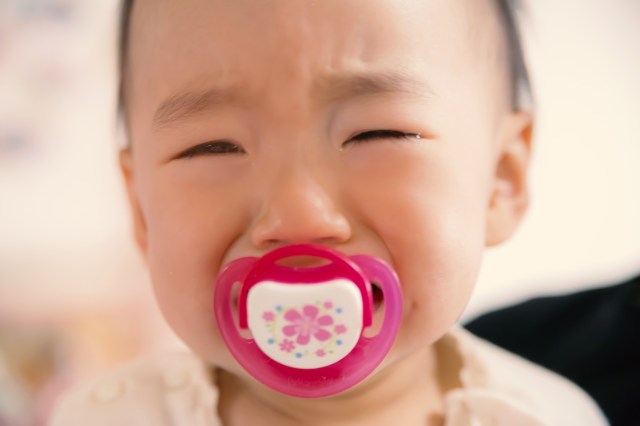
Q3: The other day the Ministry of Health, Labour and Welfare released guidelines on corporal punishment. What do you think of them creating these guidelines?
Among all survey respondents, 50.8 percent had no opinion on the guidelines, 35.8 percent approved of them, and 13.4 percent opposed them.
Those who approved of the guidelines provided reasons such as “Adults these days are lacking in common sense so it’s necessary to spell things out for them” and “The definition of corporal punishment changes with the times so it’s best to be clear.” Those who opposed the guidelines provided reasons such as “Every household has a different style of parenting so it’s impossible to standardize guidelines in one manual” and “Even if guidelines are in place those who abuse children will continue to do it.”
Q4: Within the corporal punishment guidelines released the other day by the Ministry of Health, Labour and Welfare, out of the concrete examples given as corporal punishment, please choose the ones that you consider to be corporal punishment.
Quick note: this particular question seems to comprise a looser definition of corporal punishment including punishments that are not directly physical but may encompass emotional abuse as well.
Both of the groups with and without children selected “Saying ‘I wish you were never born’ as a joke” as the most agreed-upon example of abuse (69.7 percent with children and 80 percent without children). The other examples in decreasing order of general consensus included “Not giving them dinner for not doing their homework,” “criticizing or ignoring only one sibling,” “hitting them because they hit a friend,” “slapping their cheek because they wouldn’t listen after you warned them,” and “making them sit seiza-style for a long time because they pulled a prank.”
The example with the least amount of general consensus was “Spanking them for stealing someone else’s things” (38.4 percent with children and 40.3 percent without children). A very small number of respondents also did not classify any of the examples as corporal punishment.

Q5: What do you think about the punishments for child abuse by parents in present-day Japan?
Current law stipulates that offenders will serve under a year of penal servitude or pay under one million yen (US$9,100) in fines. Those parents whose abuse results in the death of a child will serve between 3-20 years. Presently, neither life imprisonment nor the death penalty are stipulated by law.
Out of the survey respondents, 66 percent thought these penalties are too lax, 22.7 percent did not know, 7.8 percent thought they are appropriate, and 3.5 percent thought they are too strict.
Q6: What needs to be done to stop child abuse by parents?
58.8 percent of all survey takers agreed that an expansion of parent consultation centers for parents was the most necessary countermeasure for change. The only three other responses that scored over 50 percent in general consensus included an expansion of temporary child protection shelters, proactive police intervention, and early intervention by child consultation centers.
The lowest-ranking response (besides “Other”) at 21.6 percent was a change in the duty and acquisition of paternity leave (i.e., a rethinking of traditional gender roles in Japan), which experts recently voiced as a prerequisite for raising the country’s declining birthrate.
All in all, it seems like Japanese parents still have yet to completely agree on what actually constitutes corporal punishment when disciplining their children. Perhaps an awareness campaign surrounding the government’s recently released guidelines will go a long way towards building a general consensus before the new law goes into effect early next year.
Source: @Press
Top image: Pakutaso
Insert images: Pakutaso (1, 2)
● Want to hear about SoraNews24’s latest articles as soon as they’re published? Follow us on Facebook and Twitter!
 Sending naughty kids to bed without dinner may soon be illegal in Japan
 Japan’s prime minister wants to make it illegal for parents to hit kids when disciplining them
 Mother smacks child for riding bike in front of oncoming car, debate ensues【Video】
 Japanese school teacher in hot water for knocking student’s face against chalkboard, other abuse
 Japan to allow joint custody of children after divorce, survey investigates public’s attitudes
 Tokyo ward looking to change lodging laws, ban more than half of its Airbnb-style rentals
 Okinawa man convinced he won 700 million yen by scammers, saved by convenience store staff
 Mister Donut releases new sweet potato doughnuts in Japan, and we’ve ranked them from best to worst
 Uniqlo’s sister brand will be waiting with Pokémon sweaters and parkas this fall [Pics]
 Starbucks Japan unveils new Chilled Cup drinks for autumn
 New Transforming Business Card case brings anime mecha to Japanese work meetings
 Anime magical girls grow to gigantic size with new Madoka Magica plushies [Photos]
 Tokyo’s red-light district cafe lets you dine inside a real 1960s cabaret
 New Japanese ice cream is Ballin, in more ways than one
 Starbucks Japan proves Pumpkin Spice is NOT dead, with a new take for autumn
 Kyoto temple bans visitors from wearing kimono
 Lego PlayStation recreates Sony’s original console, makes unusual choice for games to salute
 A real-world Pokémon Poké Ball hotel is opening in Japan at a still-secret location [Video]
 Japan’s first fall color forecast for 2026 is here!
 Starbucks Japan reveals new Tsukimi Moon-Viewing drinkware and gifts for autumn 2026
 New Pokémon anniversary song is 22 minutes long, features all 1,025 Pokémon species [Video]
 New Japanese convenience store rice balls taste like instant noodles [Taste test]
 Japan’s revolving sushi restaurant king Sushiro coming to U.S. this fall with high prices, no tipping
 Tamagotchi evolves into a ring for its 30th anniversary, preorders now open
 12-year-old British girl who went missing in Tokyo found safe after visiting anime sites around Yokohama
 7-year-old boy left behind on Mt. Fuji by his own dad
 Japan’s final Penguin Suica train cards have already shipped, and when they’re gone, they’re gone
 Sushi Bus: Japan’s first conveyor-belt bus lets you eat sushi while sightseeing around Tokyo
 Studio Ghibli unveils new anime calendars and diary planners for 2027
 Study finds hundreds of people in Indonesia legally named after Naruto, Inuyasha, other anime stars
 Japan approves foreign resident visa renewal fee increases of up to 967 percent, starts soon
 Japan tripled its departure tax to fund tourism but is using the money on cherry blossoms and bears
 Solo travel in Japan: Hidden beer garden in Tokyo is a haven for single visitors
 Japan announces sudden 400-percent increase in visa fees for foreigners entering the country
 Japan’s human washing machines will go on sale to general public, demos to be held in Tokyo
 Studio Ghibli has a new anime out, and there’s only one place in the world where you can see it
 Starbucks Japan releases new drinkware and goods for Valentine’s Day
 Starbucks Japan releases new sakura goods and drinkware for cherry blossom season 2026
 Japan’s newest Shinkansen has no seats…or passengers [Video]
 Tokyo subway installing new ticket gates that don’t accept payment through Suica or other IC cards
 Japanese ninja certification exam attracts 131 candidates from Japan and abroad
 Salomon releases Japan-exclusive Mt. Fuji hiking gear that doubles as an amazing souvenir
 Put sesame oil in your coffee? Japanese maker says it’s the best way to start your day【Taste test】
 Survey finds more than 70 percent of Japanese children have an online friend
 Should you put your kid on a leash? Japanese mothers weigh in
 Lots of Japanese parents want their kids to work for Nintendo, but not just for the money, survey says
 Survey says more than 70 percent of Japanese people think gender inequality exists in Japan
 Almost half of Japanese grade-school girls say they’ve never heard of “programming” in survey
 What do Japanese kids spend their allowance on? Survey finds out
 Survey Reveals that 65.5% of Japanese Male Office Workers Have Considered Divorce