Tokyo Metropolitan Board of Education continues mental gymnastics and insists that undercuts cause harmful incidents and accidents.
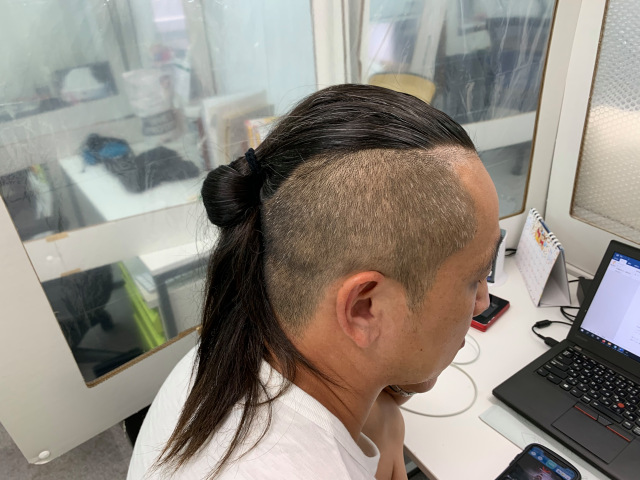
School dress codes are universally reviled by students, whether it’s forbidding the exposure of one’s shoulders or even banning tights during cold, wintry months. Besides clothes, in Japan it’s not unusual for hairstyles to be strictly monitored too—no dyed hair, no hair growing past a certain length, and in the case of the Tokyo Metropolitan Board of Education, no two block hairstyles. A two block hairstyle is essentially an undercut on both sides of the head, popular among young male actors and music stars.
This week, Tokyo Metropolitan Assemblyman and Japanese Communist Party member Yuichi Ikegawa posted a video clip from a meeting in which he asked the reason for the two block hairstyle ban, but received an answer even more perplexing than the actual ban itself. In the video, which can be seen here, Ikegawa was told by Tokyo Metropolitan Board of Education head Yuji Fujita:
“In regards to the hairstyle you mention…there are cases of students being involved in incidents or getting into accidents as a result of their appearance, and so the rule is something that has been put in place with the objective of protecting the students.”
▼ Going off the Tokyo Metropolitan Board of Education’s logic, you can get into a physical fight if you have an undercut, but any other hairstyle only prompts a seething, contactless stare-off.
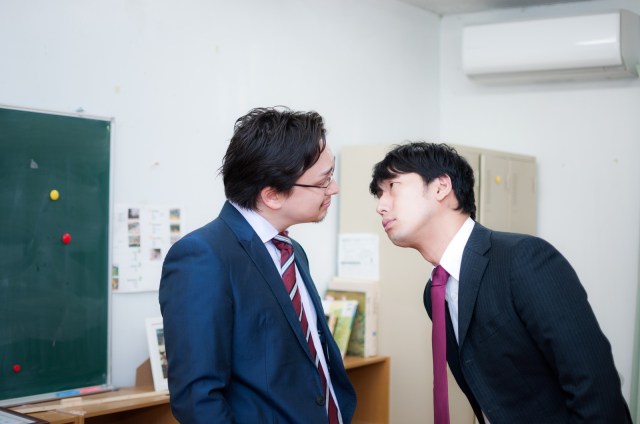
The term for incident in Japanese, “jiken,” has connotations of physical altercations or run-ins with the law—all things that educators understandably don’t want their students to be associated with. However, it’s a bit of a reach to say that a haircut will jump-start a fight, and so Ikegawa asked for, but never got, data showing that kids with two block hairstyles have a higher chance of getting into trouble.
An undercut itself seems harmless, but admittedly the cut is part of more flashy hairstyles such as mohawks and pompadours—both which are associated with delinquency in Japan. Though what one considers delinquent is subjective to the individual, so what better way to assess the actual realities of having this haircut than asking someone who’s had it for five years? And so our reporter Seiji Nakazawa decided it was best to ask his coworker P.K. Sanjun, who has been rocking his two block hairstyle for quite a while.
 Contrary to what the Tokyo Metropolitan Board of Education has said, P.K. is no troublemaker and we’d go as far to say that P.K. is a particularly conscientious guy. Whether it’s taking extra steps to self-flagellate himself for bumping into a blind pedestrian or bringing his child to work in order to shed light on the hardships of paternal childcare in Japan, P.K. isn’t really what we call an individual with delinquent tendencies.
Seiji: So how long have you had this hairstyle for?
P.K.: It’s been about 5 years.
Seiji: Any reason why you decided to get a two block hairstyle?
P.K.: I guess if I have to have a reason, I thought it was a simple but pretty sick-looking hairstyle. It’s also really easy to upkeep; I only have to head to the barber once every two weeks for a 1,000-yen cut. (US$9.30) Oh, not to mention it’s pretty easy to wash too!
Seiji: I see! There’s really no inconveniences to be had if it’s a cut that can be maintained with 1,000 yen. By the way, ever encounter… say, any nasty incidents just by having this haircut?
▼ An understandable, candid raise of the brow from P.K.
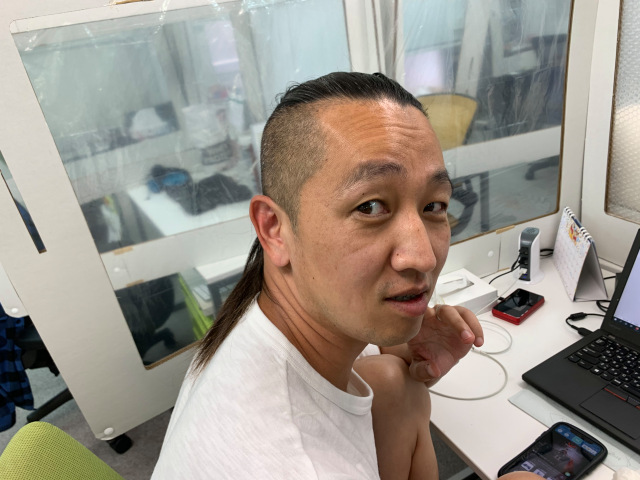
P.K.: Not at all. I mean, in the past five years maybe some stuff has happened, and I’ve had run-ins, but I never really thought of my haircut as the main reason.
Seiji: Gotcha! Thanks for your time for today’s interview.
So who would’ve known? Maybe it isn’t about your physical appearance. None the less, in the Tokyo Metropolitan Assembly’s published minutes from the meeting in which Ikegawa posed his question, Fujita is quoted as saying:
“School rules have only one objective and that is to maintain community standards. Even though some schools within the city don’t have fully outlined rules, at the bare minimum there are stipulations written such as rules to wear only indoor shoes at school.
While whether or not one’s physical appearance causes one to become involved with incidents or accidents is dependent on the location, and that all students are responsible for their own interactions with fellow students, please understand we set these rules as a necessity.”
So despite Ikegawa’s sharp line of questioning and P.K.’s example of upstanding citizenship, it seems that students won’t be able to rock undercuts at public schools anytime soon. At the very least, however, let’s hope there are no other insane curveball rules such as this one school which mandated their students to participate in cult-like prostration sessions in front of teachers.
Reference: Tokyo Metropolitan Assembly
Top image: SoraNews24
Insert images: Pakutaso, SoraNews24
● Want to hear about SoraNews24’s latest articles as soon as they’re published? Follow us on Facebook and Twitter!
[ Read in Japanese ]