No more heavy ball baskets or stacks of cash, but the same ol’ sensory rush with a modern flair.
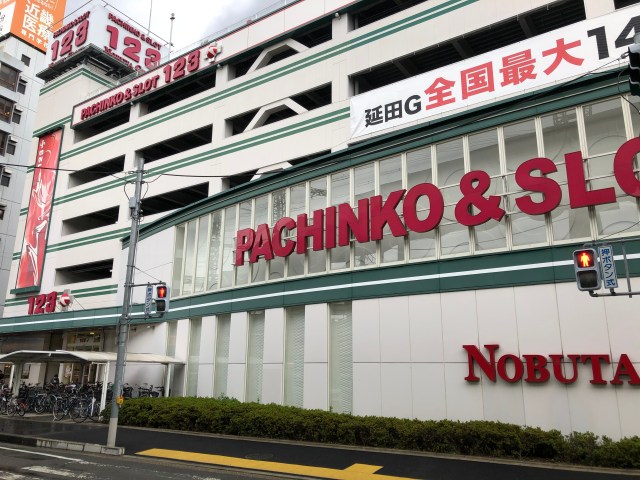
While wandering the streets of a Japanese city, there’s a chance that during your stroll through a tranquil neighborhood suddenly some automatic doors will open near you, unleashing a torrent of flashing lights and thundering sounds out of seemingly nowhere. You’ve just found one of Japan’s pachinko parlors, a hypnotic and massive gaming spectacle that is beloved by some and hated by others.
Long considered to be an industry in a slow decline, these gaming halls actually recently experienced their first total revenue rebound in a decade, although this tech-based revival is creating a divide between the thriving mega chains and struggling neighborhood parlors.
▼ Machines often use enticing visuals from popular culture to draw in more players.
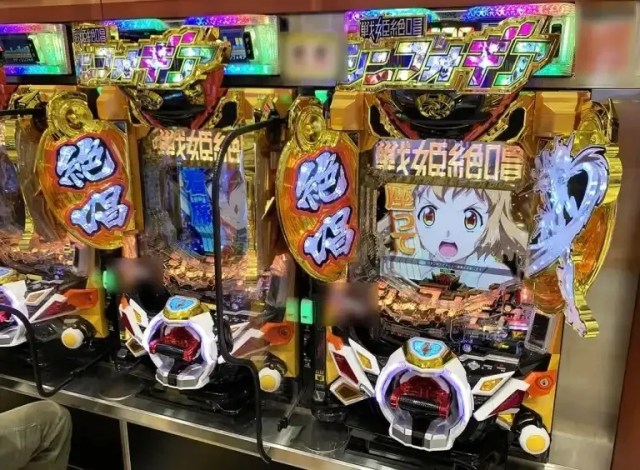
For unaware visitors, pachinko parlors might look like shopping centers or innocent video game arcades, but it’d be a mistake to stroll right through the front door with kids in tow looking to win some prizes from a claw machine. Under Japanese law, parlors are strictly 18-and-over venues, and despite appearing to be a fusion of an arcade and pinball arena, offer a very different experience.
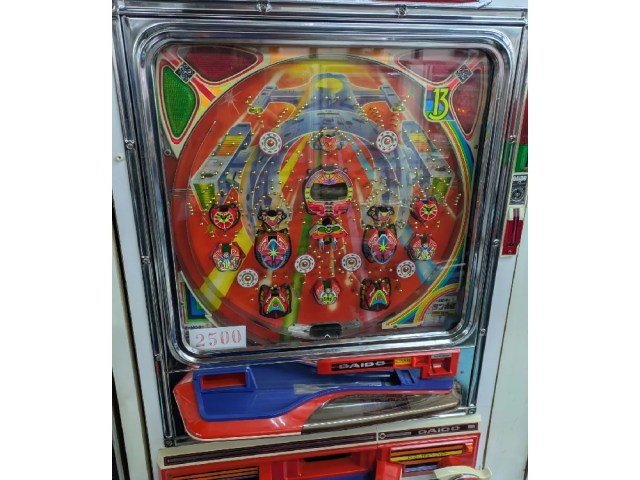
Traditional pachinko is like a vertical pinball game mixed with a slot machine, where players fire small metal balls into a densely pinned board. If a ball hits a target, it triggers the slot reel on a digital screen, and winning spins trigger payouts of more metal balls. It’s not uncommon to see successful players surrounded by dozens of plastic baskets that are overflowing with thousands of these balls. Pachinko parlors also typically have pachislot machines, which are Japan’s answer to the slot machine where players press physical buttons to stop the spinning reels, with winning combinations also paid out in metal balls.
▼ A retro machine showing off the numerous pins embedded inside.
Pachinko is not strictly speaking “gambling” in the eyes of Japanese law, due to the lack of monetary payouts, and instead players will exchange the multitudes of steel balls for a commemorative item and leave the parlor in happy spirits with their little present. Turning around a street corner, they will head to a little window where they will “sell” the item they received and get cash for it in return, leaving the whole industry in a very gray area.
However, in 2024, Japan’s pachinko industry pulled in over 11.7 trillion yen (US$71 billion) in revenue, a five-percent increase from the previous year and the industry’s first annual gain in a decade. This figure completely dwarfs the country’s national horse racing, boat racing, and bicycle racing markets (all of which have legally sanctioned gambling) combined. That 11.7 trillion yen was a five-percent increase over the previous year, and the first increase for the industry in a decade. Since 2015, overall industry revenue has shrunk by more than ten trillion yen, and the total number of registered companies in 2024 alone dropped by 10.1 percent since the previous year. Smaller, family-owned parlors are bearing the brunt of this change, frequently facing bankruptcy as they struggle to afford the expensive equipment upgrades required by modern gaming laws, driving players toward mega-chain parlors. Despite this, the continuing strength of the pachinko industry as a whole has been thanks to two major technological advances.
First is the introduction of Smaslo (Smart Pachi-Slot) and Smapachi (Smart Pachinko) machines in late 2022. These machines eliminate the need for players to manually load balls or tokens into the machines, instead tracking an individual’s winnings/assets digitally while physical balls still continue to bounce around inside the machines themselves. This frees up developers to create richer, cinematic animations based on anime and pop culture franchises, which help to pull in a brand-new generation of players. With Smapachi machines, players still get the mesmerizing visual of metal balls cascading down the board, but they’re now all in a sealed environment, so they no longer have to touch them or haul heavy baskets to the counter.
The latest game-changer for the pachinko scene, finalized and introduced in 2026, is PPPAY, a dedicated cashless payment system, which allows players to forego the need to bring in wads of thousand-yen bills and instead simply tap their smartphones or debit cards at the counter or right from their seat to load credits. This is seeking to turn what was traditionally a very cash-heavy pastime into a smoother, more modern experience.
Both Smaslo and PPPAY have not just been implemented without consideration of wanton spending, as both systems incorporate precautionary limits. Smaslo machines have set an upper limit on the number of net tokens gained in the “yuri kukan” (“advantageous zone”), an internal mode where machines are permitted to actively help players win payouts by telling them what to press, as well as a daily cap on overall payouts, after which gameplay is halted. PPPAY on the other hand, sets the spending limit at 20,000 yen per day and 80,000 yen per month.
While the expectation is for the pachinko market to continue to shrink gradually, efforts such as these and the total sales suggest that the industry is far from entering its declining phase. Whether you love it or hate it, pachinko is a pastime that has been a part of Japanese culture for many years, and the shift to modern technology will most likely see it continue for several years to come. For adult tourists looking to experience the novelty of pachinko, stepping into a parlor will provide a sensory rush seldom seen elsewhere, but it’s no different than heading into a casino: the house will always eventually win and you run the risk of walking out with no money and a possible addiction to watching balls bounce around in front of your eyes.
Source: JCast News via Livedoor via Otakomu
Photos ©SoraNews24
● Want to hear about SoraNews24’s latest articles as soon as they’re published? Follow us on Facebook and Twitter!