
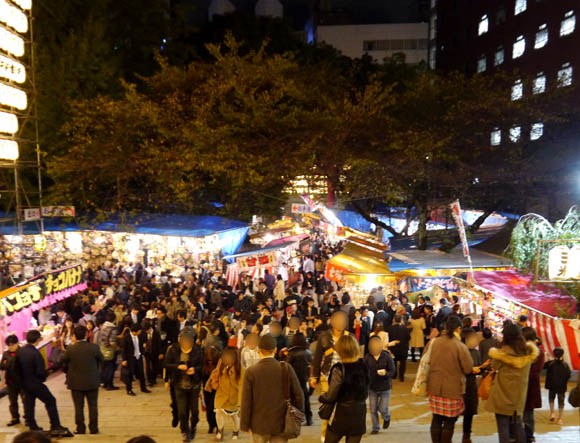
Tori no Ichi is an open-air market festival held in Japan on the day of the Rooster in November, as determined by the Chinese calendar. At the festivals, markets are set up in front of or near to Shinto shrines, and charms- most often decorated bamboo rakes called kumade- that are said to bring the owner good fortune in the coming year are sold to visitors.
Kumade literally means “bear hand”, since, when you think about them, rakes are shaped rather like a large hand with claws. Rakes were chosen generations ago as a sign of good luck since they can be used to draw things– in this case wealth and good fortune– towards us, and the practice of buying ornamental rakes has been common in Japan since the Edo period (1600-1867).
Wanting to check out the lively festival and ask for continued success for the website next year, our reporter Mr. Sato headed over to the famous Hanazono shrine in Shinjuku to purchase a kumade on behalf of RocketNews24.
However, having never purchased one of the charms before, he discovered that he had more than a couple of things to learn…
Our reporter arrived at the heaving market knowing that he wanted to pick up one of the good luck charms, but with so many on offer he had little to no idea of where to start.
“I should probably go for one priced at around 10,000 yen (US$125),” our intrepid Mr. Sato thought to himself as he made his way through the crowds. After all, the charm was intended to help with the continued success of the website, so he decided that it was better not to be too stingy!
But with little more than that figure in mind, he soon found himself floating around the market simply asking sellers “How much is this one? How about that one?” without paying much attention to the quality or lavishly decorated features of the kumade on display before him.
▼Ordinary rakes these are not…
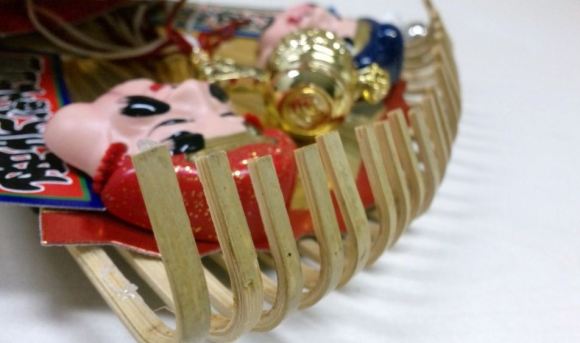
Thankfully, a generous stall merchant was around to offer a few nuggets of advice to our Mr. Sato:
- Work your way up
“Speaking to a shopkeeper, I soon found out that it’s better to start out small,” Mr. Sato tells us. Since these charms are intended to bring in good luck, it’s important not to buy one simply by looking at the price tags.
“With each year that passes, depending on how well business has gone, you should buy a slightly bigger kumade the next year as a way of asking for continued growth and good fortune. The size of the charm you choose should be based on your current situation.”
OK, so start small, and aim for expansion. Got it!
- No haggling, please!
When picking up your kumade, you might want to think twice about asking for a discount or trying to play one merchant off another.
“According to the shopkeeper I spoke with, it’s not a good idea to barter over things that are connected with bringing good fortune. By trying to drive a bargain and save money on their purchase, a person suggests that their dream isn’t all that important to them. Contrastingly, paying a shopkeeper a little cash for a good kumade is kind of like saying ‘thank you for helping me achieve my dream’ and likely to have a positive effect.”
- Thank you, come again!
“When I asked the store owner what I should do with the kumade next year, he told me in no uncertain terms to bring it straight back.”
As many of you may already know, when it comes to good luck charms in Japan, the idea is to return or replace them each year. If, for example, you bought a health charm on New Year’s day during a visit to a shrine, it’s common practice to return that charm to the same shrine the next year and buy a new one. No matter how attached you are to a charm, keeping it lying around the house for years on end is considered to be extremely bad luck. The same applies to kumade.
Of course, the more cynical among us might suggest that this is simply a ploy on the seller’s part to generate future business, but even if that were true, it’s quite nice to think that this promise to return the charm to its source would result in yearly encounters with the same people. Should both businesses remain in the same area for years, annual visits to the market to buy a new charm allow both buyers and sellers to catch up and see how the other is doing. Now that we come to think of it, there are few customs like this in the western world, and in a way it’s quite nice to think that we can form little relationships of this kind, checking in once a year and making a little tradition out of each visit to the shrine to show appreciation for the good we’ve received…
In the end, our reporter settled on a small 2,000 yen (US$25) kumade, for which he paid a generous 3,000 yen.
Although tipping is not a common practice in Japan, Mr. Sato later commented that “the extra was just as a sign of my gratitude,” which we can’t help but feel was a smart move as well as a nice gesture. He might occasionally dress up as a blue slime from the Dragon Quest games, but he’s all heart, our Mr. Sato…
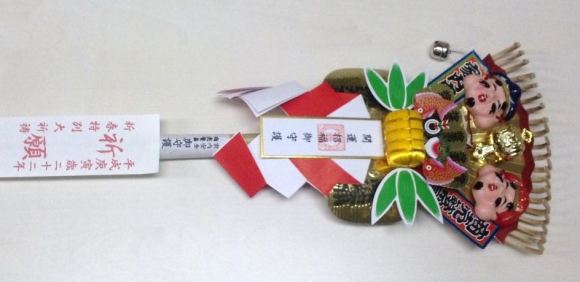
The second and final Tori no Ichi markets of the year will be held on 20 November (next Tuesday!) at shrines all over Japan. If you’re in the country be sure to head down and rake in some good luck for yourselves!
Title image: RocketNews24 Inset images: Qlife
[ Read in Japanese ]
 We pick up a new good luck charm at the Tori no Ichi Festival in Shinjuku
 One of Japan’s favorite traditional desserts almost breaks the spirit of SoraNews24’s Mr. Sato
 Usher good luck into your home this New Year with Totoro tenugui from Studio Ghibli
 Thanks to the shogun, this Tokyo Shinto shrine has good luck charms to help you win idol tickets
 We visit the only shrine in Japan where you can pray to the gods for good weather
 Drinkable pixels: 7-Eleven Japan creates new convenience store juice with “pixels” inside
 Public restrooms in Osaka to get in-stall video screens with ads
 Fake police phone scam also highlights dumb stereotype about how foreigners speak Japanese[Video]
 7-Eleven Japan releases a crazy new viral sandwich: Chocolate Sprinkles and Whipped Cream
 Stunning central Japan wisteria festival is like a purple fantasy straight out of a Ghibli movie
 The “Rakulet” adds a corrugated layer of luxury to cardboard toilets
 It’s Japanese commercial time! Watch the best ads from 2017 in one glossy 4K video
 Legendary pie shop Anna Miller’s is returning to Tokyo, bringing iconic waitress uniforms with it
 Japanese man grabbed by wild monkey, chased for hundreds of meters while jogging
 Interview with Yoshiyuki Tomino, the creator of Gundam
 Starbucks Japan releases new My Fruit³ Frappuccino at only 34 stores around the country
 Japanese onsen egg maker from 100-yen store Daiso needs to be on your shopping list
 Cherry blossoms begin blooming in Japan with record-early starts for sakura season
 Tokyo government organizes food truck event to clear out delinquent/homeless teen gathering area
 Nine amazing off-the-beaten-path cherry blossom spots in Japan for yaezakura and shidarezakura
 When will the cherry blossoms reach full bloom in Japan this year?[Forecast]
 Studio Ghibli unveils new Rollbahn notebook in honour of Howl’s Moving Castle
 Studio Ghibli adds new anime tumblers to its cool streetwear brand in Japan
 Universal Studios’ Sailor Moon theme park attraction is finally coming to America
 Starbucks Japan unveils new sakura cherry blossom collection for hanami season 2026
 Train station platform ramen store closes its doors on half a century of history in Tokyo
 Studio Ghibli releases Catbus pullback keychain that runs like the anime character
 Nine great places to see spring flowers in Japan, as chosen by travelers (with almost no sakura)
 Starbucks Japan releases first-ever Hinamatsuri Girls’ Day Frappuccino
 Studio Ghibli adds new Mother’s Day gift sets to its anime collection in Japan
 Virtual idol Hatsune Miku redesigned with look that adds new elements and brings back old ones
 Survey asks foreign tourists what bothered them in Japan, more than half gave same answer
 Japan’s human washing machines will go on sale to general public, demos to be held in Tokyo
 Starbucks Japan releases new drinkware and goods for Valentine’s Day
 We deeply regret going into this tunnel on our walk in the mountains of Japan
 Studio Ghibli releases Kodama forest spirits from Princess Mononoke to light up your home
 Starbucks Japan releases new sakura goods and drinkware for cherry blossom season 2026
 Japan’s newest Shinkansen has no seats…or passengers [Video]
 Major Japanese hotel chain says reservations via overseas booking sites may not be valid
 Put sesame oil in your coffee? Japanese maker says it’s the best way to start your day【Taste test】
 No more using real katana for tourism activities, Japan’s National Police Agency says
 Is it OK to buy multiple shrine charms in Japan, or will it make the gods angry at you?
 A visit to one of Japan’s motorcycle Shinto shrines
 Amazon Japan’s lowest-rated beckoning cat good luck charm is full of lies, might be cursed【Pics】
 Japan’s Newest and Cheapest Good Luck Charm: Bread Crust
 How Kyoto’s shrine of severing ties helped our reporter escape from a “black company”
 Hidden history, retro cafes, and a shoe shrine on Asakusa bus loop【Tokyo Loop Buses】
 Creator of Japan’s first pole dancing manga talks with our pole-dancing reporter【Interview】
 Mr. Sato retires from being the first person in Japan to buy iPhones, watches this guy instead
 Our Japanese reporter heads to Okinawa and a U.S. military casino to try and win it big
 10 things you should buy at 7-Eleven in Japan
 Why are disposable film cameras experiencing a revival in Japan? Mr Sato investigates
 Japan Extreme Budget Travel! A trip from Tokyo to Izumo for just 30,000 yen [Part 1]