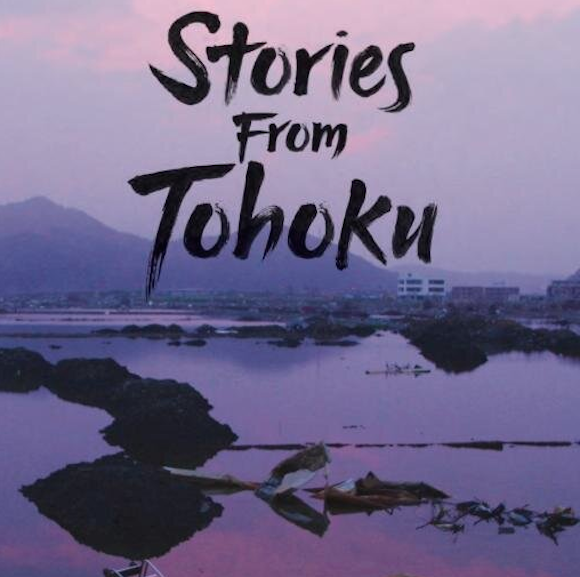
Filmmakers Dianne Fukami and Debra Nakatomi are sansei (third-generation Japanese Americans) from California who met while serving on the 2009 Japanese American Leadership Delegation, a cross-cultural program sponsored by the U.S.-Japan Council. When the triple tragedy of earthquake, tsunami, and nuclear disaster hit the northeastern region of Japan on March 11, 2011, Fukami and Nakatomi decided to make a documentary that told the stories of survivors.
They met a woman who managed to recover her old kimono and makes dolls out of the fabric; a struggling organic farmer in Fukushima; a cafe owner who cooked breakfast, lunch, and dinner to refugees in a shelter during the first six months after the disaster; and mothers in Fukushima who commute to a kindergarten an hour away so that their children can play outside.
Fukami and Nakatomi were impressed by the survivors’ gaman, the Zen Buddhist concept of endurance in the face of overwhelming challenges with dignity, and it reminded them of how their own families behaved during and after being interned in concentration camps throughout the US during World War II. During the filming, those stories intertwined with the stories of Japanese Americans from California who went to Tohoku to help in the recovery effort.
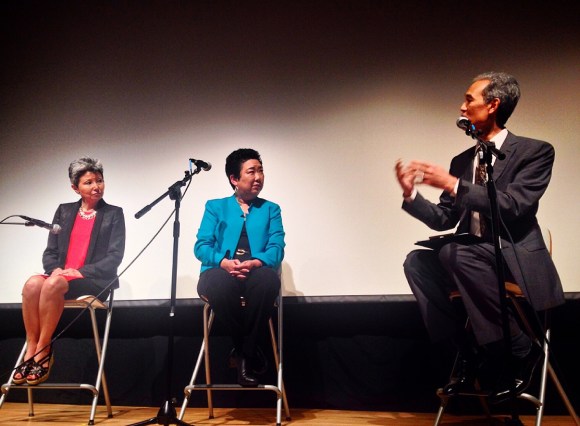
At the East Coast premiere of Stories from Tohoku, both Fukami and Nakatomi talked about the making of the film at a special screening hosted by Bank of Tokyo-Mitsubishi UFJ at Japan Society on June 25. Moderated by Japan Society board member and Reuters journalist Fred Katayama, the discussion focused not only on the beautifully rendered film, but on how making the film affected Fukami and Nakatomi as Japanese Americans.
“Every time I see the documentary . . . there are moments that grab my heart and bring tears to my eyes,” says Nakatomi, who closely identified with the farmer from Fukushima because her father had also been a farmer. “[Working on the documentary] made me reflective of what my parents went through [as camp internees].”
For Fukami, working on Stories From Tohoku wasn’t personal at first, but she soon “gained a deeper appreciation” for what it means to be Japanese American. As with Nakatomi, Fukami made connections between the situation of the 3.11 survivors and her own family’s internment.
“While shooting, we were panning the temporary housing,” says Fukami, “and you can’t help but see the barracks [in which WWII internees lived]. We kept hearing them say, ‘shikata ga nai,’ [It can’t be helped], and ‘gaman‘, so it resonated with me.”
The experience also had a profound affect on the subjects of the film, including 20 high school students who accompanied LA-based photojournalist Darrell Miho to Tohoku as volunteers from the Terasaki Foundation. These yonsei and gosei, in addition to helping the survivors, also embraced their Japanese ancestry. At least four of the students are returning to Japan, according to Nakatomi, two as members of the JET Program.
“That’s what separates this documentary from others out there,” says Katayama, “It reawakens the bonds, or kizuna, that Japanese Americans have for their heritage.”
▼ Fred Katayama discusses STORIES FROM TOHOKU with Debra Nakatomi (far left) and Dianne Fukami
In the film Miho says that he will probably return to the area every year for the rest of his life. What struck him about his volunteering stints is that survivors want people to visit the area, but most important, they don’t want people to forget them.
Nakatomi says 98,000 people are still living in temporary housing in Tohoku. “The median age of people we interviewed was I think around 72,” says Nakatomi, “So, it’s likely they will end their days in temporary housing.”
“When the media [are] there, the disaster is in the spotlight,” says Fukami. “The immediate issue of Tohoku is not on the top of their minds [elsewhere in Japan]. But we saw a sea change happen there, especially among the young people. Young entrepreneurs are starting to think, ‘Maybe we can reinvent Tohoku.’”
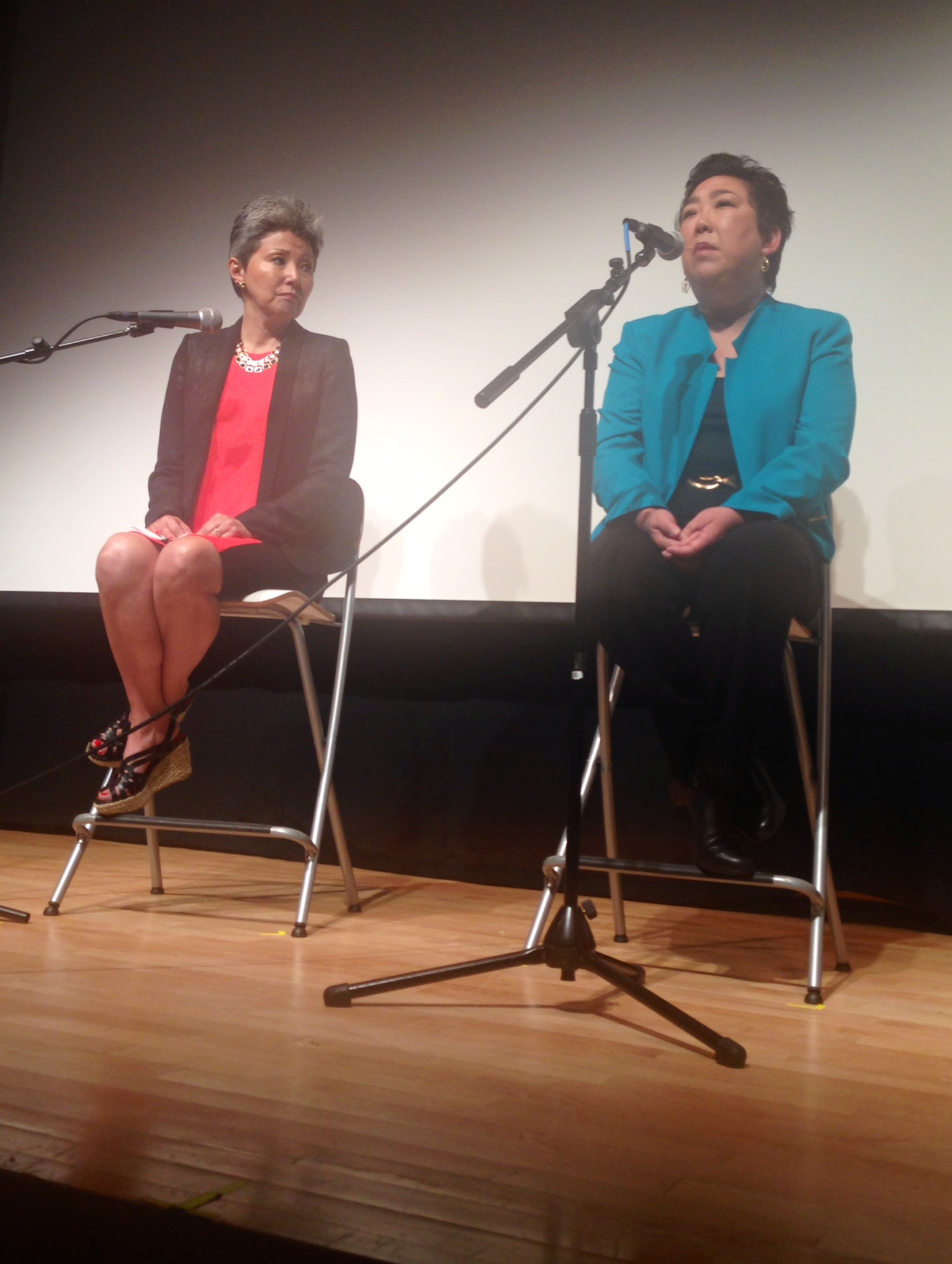
Debra Nakatomi and Dianne Fukami
Perhaps Stories from Tohoku can help move that reinvention forward; the documentary is making an impact. It is being translated into Japanese to expand distribution, and the filmmakers are entering it in film festivals. In fact, Stories from Tohoku was recently accepted to be screened during the Asian American International Film Festival in New York on July 27.
Fukami recently returned from Japan, where she screened the film in Tokyo, at Miyagi University, and for volunteers in the devastated town of Ishinomaki. During those screenings Fukami realized thatStories from Tohoku can teach the Japanese something about the US.
“Young people had never learned about the Japanese American experience in World War II,” says Fukami, so listening to Paul Terasaki and other Japanese Americans from California was eye-opening for them.
The doll maker in the film, Mrs. Abe, had the opportunity to visit another Mrs. Abe, the Japanese Prime Minister’s wife because someone who saw the documentary was touched by her story. Through Fukami’s company, Media Bridges, people are able to purchase Mrs. Abe’s dolls, with the proceeds going to rebuilding a school in Ishinomaki and to a new shop run by the Fukushima farmer featured in the documentary.
The filmmakers continue to keep in contact with the subjects of their film, but there are no plans for a sequel to Stories from Tohoku. The two are now in pre-production for a documentary on the life of former Secretary of Transportation Norman Mineta.
This article originally appeared on partner website JapanCulture•NYC