I spent two winter seasons working in the hospital emergency room (as a translator) in Niseko, a popular Hokkaido snow holiday destination for foreigners. While we had our share of broken bones from ski and boarding accidents, what impressed upon me most was the number of people who get ill while on vacation. There were just as many sudden illnesses as snow-related accidents–everything from gastrointestinal disorders to ear infections and first-time asthma attacks which too many times put people in the emergency room.
The good news is that most of these illnesses can be avoided, but different cultures pose different health risks and knowing what to watch out for beforehand can be tricky, if not impossible. In this article, I’ll share some tips on how to stay healthy while traveling in Japan in wintertime, based on my experience working with hundreds of foreigners who ended up in hospital on their vacations.
By following some simple (but not necessarily so obvious) rules, we aim to keep our snow-loving Rocketeers out of Japan’s hospitals and flying down the slopes in all their glory instead!
Many foreigners who come to Hokkaido to ski or snowboard are coming to Japan for the first time. Since the foremost attraction for them is some of the most awesome skiing in the world (waist-deep powder, off-piste skiing–say no more!), it’s understandable that such guests may not have thought much about the actual culture they’ll be skiing into.
Let’s start at the beginning then, booking your accommodation.
1. Japanese minshuku and ryokan
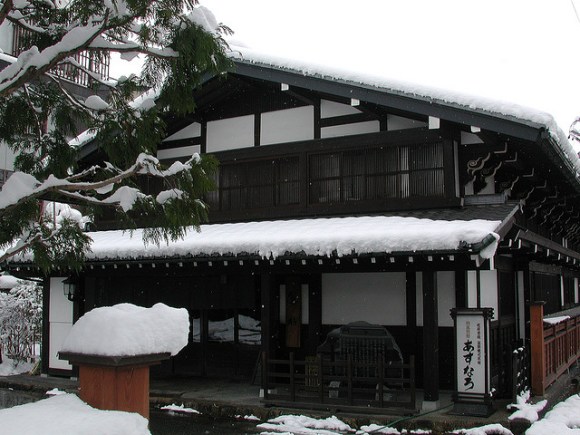
Staying in family-run minshuku and ryokan is a quintessential Japanese experience that everyone should partake in. Such places have several advantages over a hotel room, including a traditional Japanese ambiance (tatami mat rooms, futons, etc), home-cooked meals, and witnessing Japanese hospitality at its finest.
But other than some top-of-the-line ryokan, most traditional style Japanese accommodation involves shared bathing and washing facilities. This is fine as long as you’re prepared for it. But if you’re not careful, these communal facilities (showers, sinks, etc) can be like a super highway for the spread of bacteria and viruses, least not when they’re being used by people coming from all over the world. Dr. Wuthrich, an American doctor who works out of Jackson Hole, Wyoming says that staying safe from viruses can be as simple as carrying antibacterial wipes with you. “Wipe down faucets, flush toilet knobs, and towel hooks before using them,” she says. “The antibacterial wipes won’t kill all the germs, but most of them.”
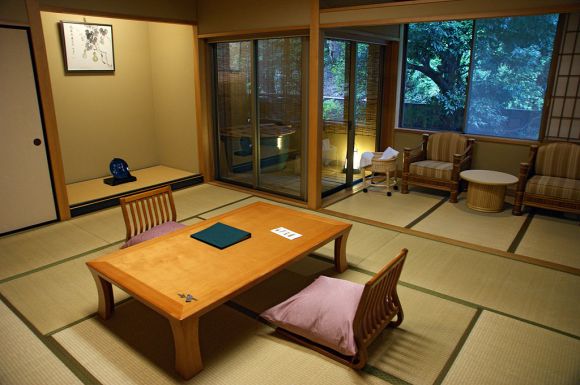 Wikimedia Commons (663highland)
But since many minshuku and ryokan are family-run (although not all), you’re subjecting yourself to the hygiene standards of the owners, not a professional cleaning staff.
▼I’ve never quite understood this, but communal body scrubbers can be found in accommodations throughout Asia, including Japan. No thanks.
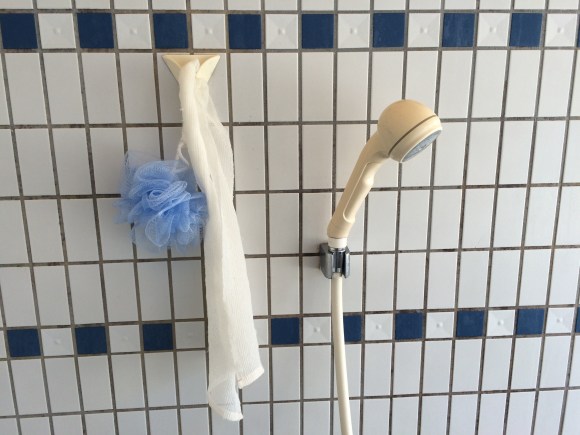
During my tenure in the Niseko emergency room, I had quite a few patients who had contracted the dreaded Norovirus. One of these patients told me, “I know exactly when I got it. I put down my toothbrush, turned on the water faucet, cupped the water and drank from my hands to rinse my mouth.” Unfortunately, the person who had used the sink before him had the virus. Within days, it had spread to over half the guests and the accommodation was shut down by the health department to be sanitized. Wow, right?!
I’ve never gotten sick at such a place myself, but if you catch colds easily or if you’re paranoid about getting sick, choose a studio apartment, rental condo or hotel room where the only people you share facilities with are those who you know don’t have a virus.
2. Asthma and respiratory illnesses
While in Niseko, I saw an inordinate number of cases of adults suddenly afflicted with asthma attacks, either on the slopes or while in their accommodation. When the doctor asked these patients if they had a history of asthma, most of them said they had had it as a child, but hadn’t suffered an attack since. A few patients said they’d never experienced an asthma attack before. What would prompt a sudden onset of asthmatic symptoms, or a recurrence, years later? The only thing I could see that connected these patients was that they were all staying in budget accommodation that wasn’t very clean. Maybe you know the places I mean–they haven’t changed the tatami mats in years, the bedding is ancient, the fusuma doors are stained and no one has bothered to wash the curtains or upholstery since smoking became prohibited in public places.
▼Avoid poorly maintained minshuku or ryokan.
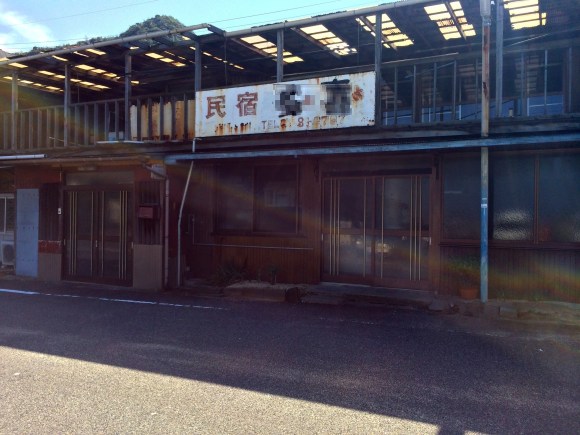
“Old accommodation is fine as long as it’s clean,” says Dr. Wuthrich, a previous resident of Japan. “Mites live in dirty bedding and carpet. Curtains are generally okay, but smoke and dust can still be a problem for those susceptible to asthma.”
Aging minshuku and ryokan are especially prevalent in Japan’s countryside but it’s surprising how many can still be found even in tourist areas. If you’re traveling around Japan on a two-week to one-month vacation and hit one of these places by mistake, it’s not as big a deal if you only have to suffer through one night. But on a ski trip, where people tend to stay in the same place for a week or longer, the monetary savings may not be worth the cost to your health.
▼Yep, if it’s dodgy on the outside, it’s probably dodgy on the inside too. Stained and torn fusuma doors.
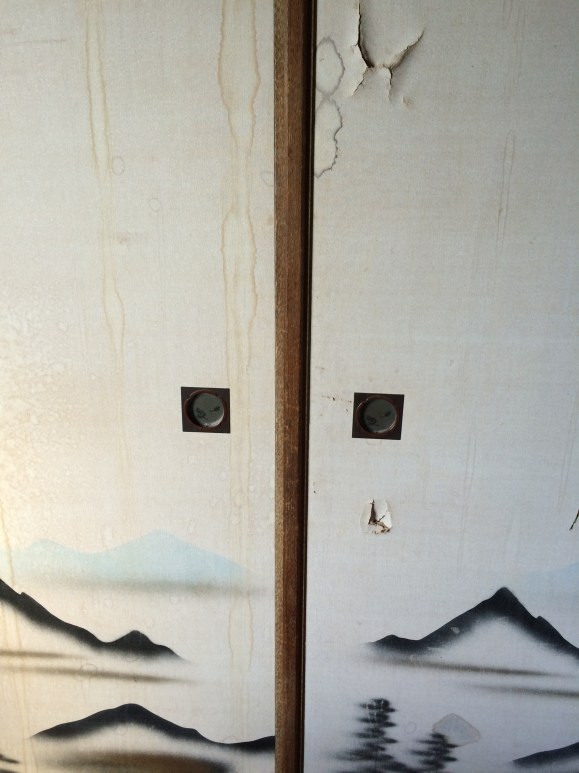
It’s easier to make this mistake than you’d think. I once called to make a reservation at a minshuku I had stayed at before, but since they were fully booked, they gave me the number of the only other place in town. Another time I unexpectedly ended up somewhere for the night and had to take the only place available. You get my drift, right? These places fill up last. Get your reservations in early so you’ll still have a choice of where to stay.
Rather than going for cheap, go for clean. Think of those ’60s-style motels with the neon signs along roadsides in the U.S. They’re cheap, they’re retro, but ..oh…um, well, maybe you shouldn’t stay there.
In situations like this, it’s probably best to follow the advice of the Japanese: You’re on holidays–treat yourself!
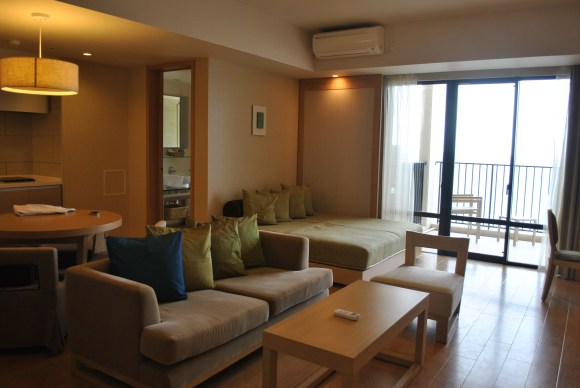
▼A rental condo and asthmatic’s paradise.
3. Slippers are okay if…
Upon entering any minshuku or ryokan, you’re likely to be met by a line of slippers set out for guests to easily slide their feet into after having taken off their shoes. Yes, they’re plastic and yes, they’re yucky! Most foreigners envision nasty fungal spores living inside these slippers, eagerly waiting to attach themselves to our vulnerable foreign toes. But wait, it turns out their actually okay, according to Dr. Wuthrich, “…as long as you wear socks.” Socks will protect you from most of the nasties.
▼The dreaded communal slippers!
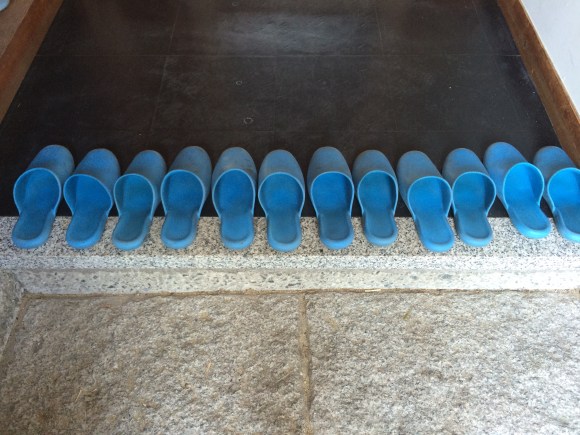
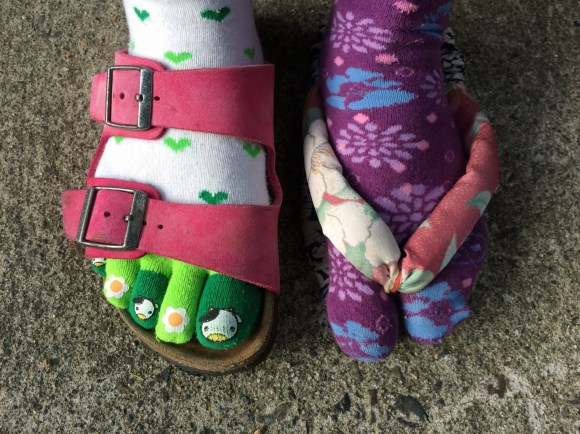
Of course, the Japanese know this which is why its considered polite to wear socks when you go to someone’s house. So keep those feet covered, whether it be summer or winter.
▼Besides, with all the cute socks available in Japan, we can’t imagine why you wouldn’t be wearing socks even in summer.
4. In the Onsen
Now that you’ve settled in to your nice, clean minshuku, ryokan, condo or apartment, and are lounging around in cute socks, it’s probably about time to hit the hot springs!
▼A typical Japanese onsen is heated to temperatures of at least 38 C (100.4 F).
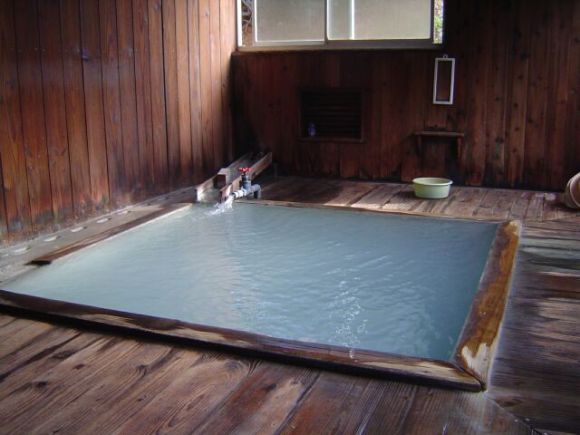
While everyone should try Japan’s legendary onsen hot springs, make sure you don’t dunk your head under the water. Not only is this considered rude, it can lead to ear infections and gastrointestinal problems (should you accidentally drink the water) and a week of lost skiing topped with a general feeling of misery. Japanese people would never put their heads under the water, but children getting into an onsen for the first time are likely to treat such a large body of water like a swimming pool. Also, do not enter the water if you have open cuts, sores, or lesions. And of course, bathe thoroughly using the showers before you get in.
5. Wash your hands
Yeah, we know. No, seriously, wash your hands!
Bacterial hand wash is everywhere in Japan. All public buildings have them and most places where money is exchanged will have a bottle sitting just ready to be squirted onto your filthy digits. Don’t just look at the bottles and marvel at how clean the Japanese are–use the hand wash! Use it before and after you handle money.
▼This hand sanitizer is sitting right next to the money tray (another admirable hygiene policy) , so you can’t miss it.
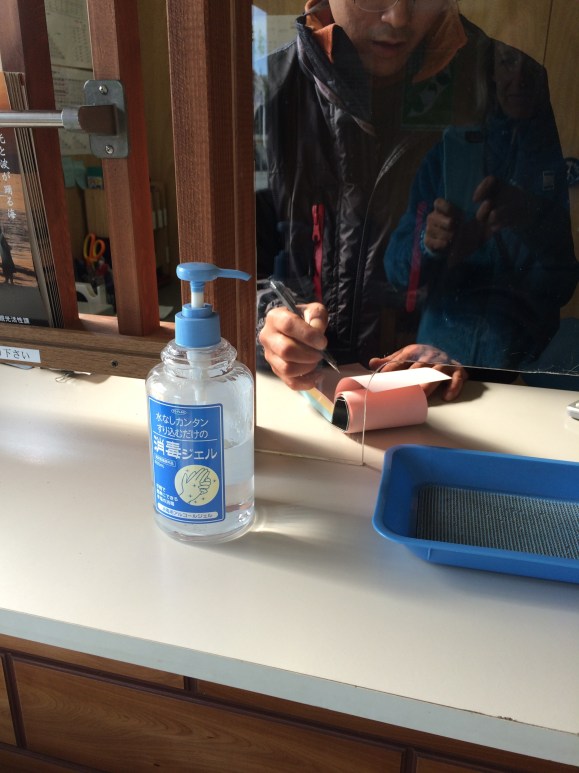
Many Japanese wash their hands immediately after coming indoors just to make sure that any germs aren’t brought inside and spread around the house. Now that’s thinking!
- Bonus tips for skiers and snowboarders:
In addition to the above, Dr. Wuthrich recommends that when at ski areas, use your gloved hands to open and close doors. If you have a choice, use sinks with sensor faucets. And if you really must touch a nasty curtain in that dirty minshuku booked by your spouse who hasn’t read this article, make a fist with your hand and slide the curtain to the side (or even use an elbow) rather than using your hands.
And lastly, she’s all for bowing rather than shaking hands.
Some of this advice may seem a bit extreme, but the worst that can happen by following it is–not getting sick. After all, this is your vacation, so treat yourself!
Now, get ready to fly down those slopes Rocketeers! And please share any of your own tips on staying healthy in Japan in the comments section below.
All photos © Amy Chavez/RocketNews24