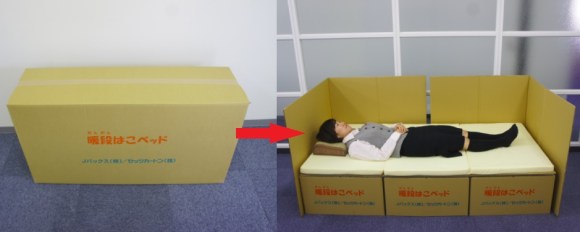
With the ability to withstand the weight of up to 20 people, this bed doesn’t mess around!
We’ve heard a lot about the recent devastating earthquake in Kumamoto, including various ways people are showing their support. While work is already underway to restore the region, it will still be some time until many of the hardest-hit areas are truly habitable again, and those who have had to flee their residences are now taking refuge in shelters until their homes are deemed safe enough to return to or alternate housing can be arranged.
Living in a shelter—though better than having no shelter at all—is not at all ideal for the long-term. As you can see in the video below, all that the disaster victims have to sleep on are thin mats and blankets on hard wooden floors. After days and weeks of sleeping in such conditions, you can imagine the aches and pains these people are waking up with each morning.
That’s where Japanese company J Pack has stepped in. Manufacturer of paper goods and cardboard packing since 1951, the company is providing beds to disaster victims made of the material they know best: cardboard.
The words “cardboard bed” may conjure up images of homelessness and living on the streets, but the beds provided by J Pack are really something else. They come delivered as a single box, but once assembled are the size of a real single bed, complete with storage space and partitions for privacy.
▼ Each bed comes as just a single box
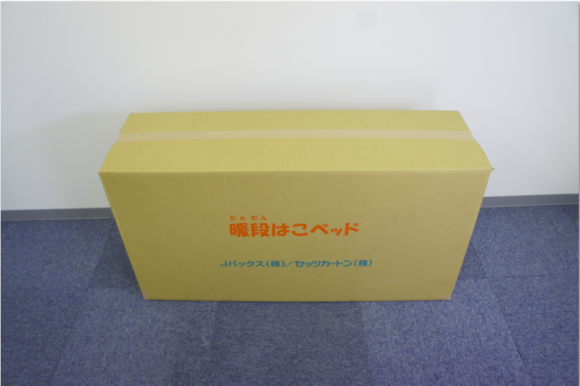
▼ Inside the box is everything needed to build a bed
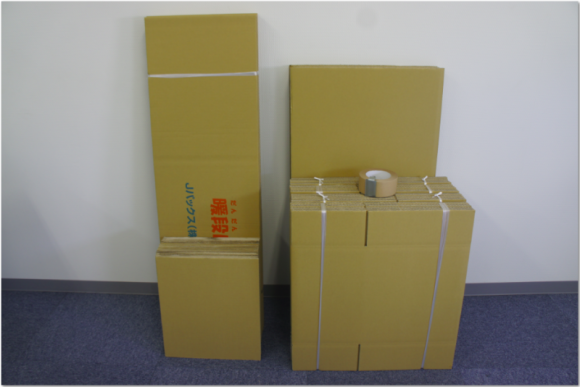
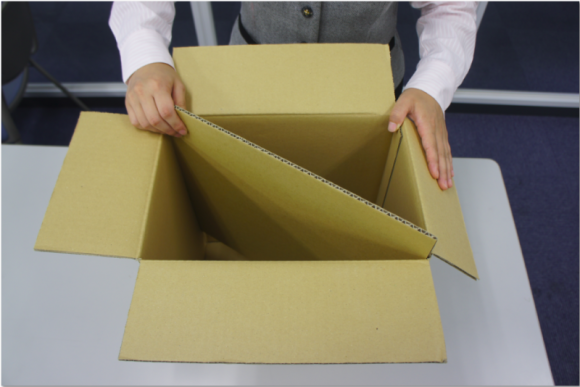
▼ Assemble each of the 24 small-sized boxes, taping the bottom and flipping over to insert a cardboard slab in at an angle.
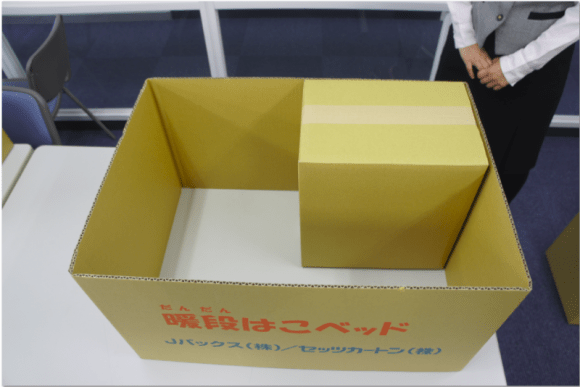
▼ Tape the boxes closed (or leave them un-taped is using for storage) and fit four into each cardboard frame.
▼ Align six of the filled cardboard frames together and lay two flat boards on top.
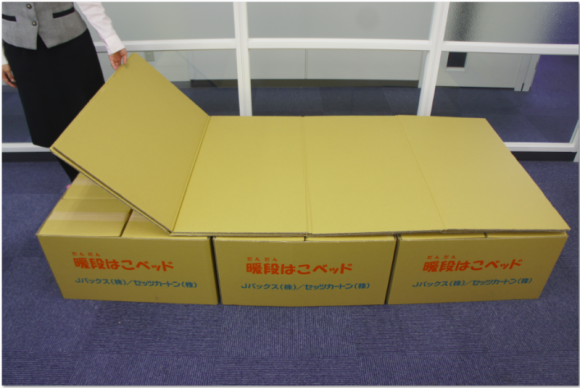
▼ Lay a mat on top, and the bed is complete. Each bed comes with two screens for privacy.
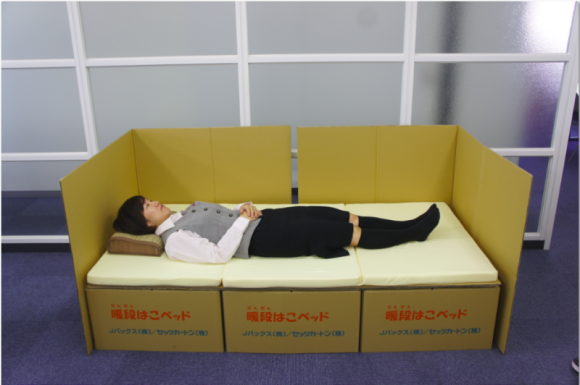
▼ Personal belongings can be stored inside the base boxes, which are easily accessible by lifting the flat mattress board.
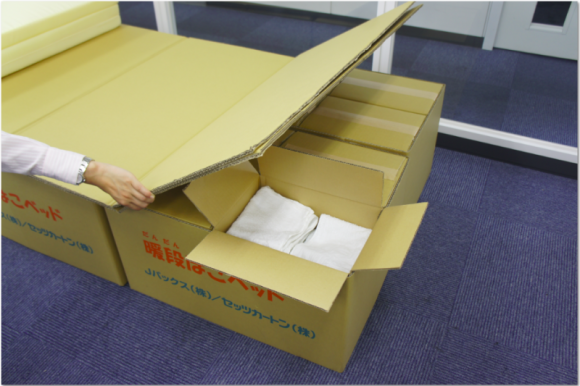
▼ These beds are seriously sturdy: they can withstand the weight of up to 20 people without collapsing.
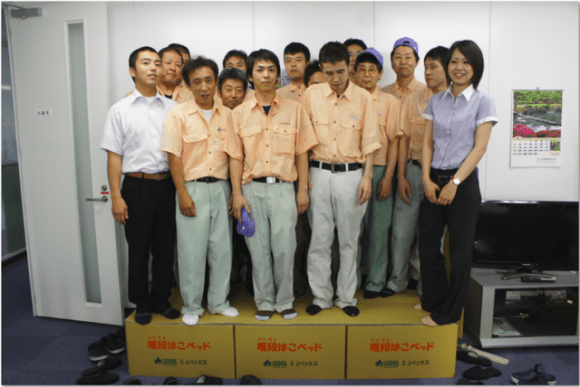
A simple, everyday item like cardboard may not seem like much, but to those who have lost their houses and have had to part with many personal possessions, these cardboard beds make a world of difference, getting them up off the cold, hard floor and giving them a softer place to sleep, storage space for personal belongings, and even a little extra privacy. Plus, with most of their items already packed inside the boxes, moving back home or to alternate living quarters is easy, and the beds are fully recyclable once they are no longer needed.
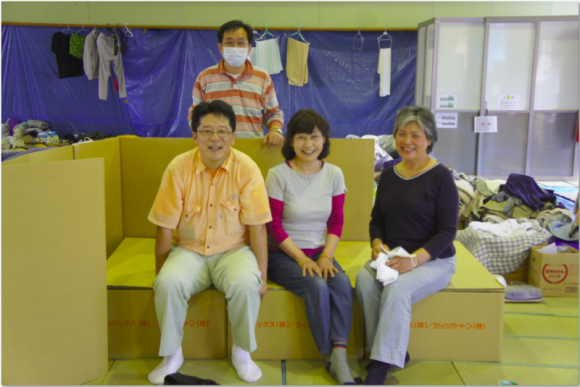
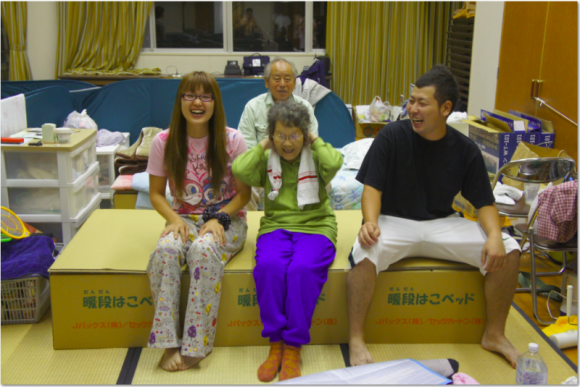
These cardboard beds were used after the Tohoku earthquake back in 2011, and are proving themselves again this time with Kumamoto earthquake refugees. We hope they will all get their own beds back soon, but it’s nice to see they have a decent alternative in the meantime.
Sources: Sankei West, J Packs, YouTube/ ANNnewsCH
Images: J Packs (Top image edited by RocketNews24)
 The “Rakulet” adds a corrugated layer of luxury to cardboard toilets
 Wisteria season starts early with blooming of Japan’s Great Wisteria in its beautiful garden
 Japan’s best conveyor belt sushi restaurant of seven years ago has now, finally, come to Tokyo
 Japanese government wants overseas anime market to roughly triple in 10 years, but are they crazy?
 Japanese trains in Sapporo might be better than those in Tokyo, thanks to one special feature
 Starbucks Japan releases FIVE new Frappuccinos in a day, and we try them all in 90 minutes
 Yoshina invites you to give the gift of beef bowls this Mother’s Day
 Mt. Fuji decorated with a 500,000-flower pink carpet is Japan’s ultimate spring view
 Tokyo turns its phone booths into free Wi-Fi hotspots, and here’s how to use them
 Fading Tokyo – Searching for signs of the Showa era as local neighborhoods evolve[Photos]
 Japan now has a special desk for people who work at home with a pet cat[Photos]
 Japan reportedly adding Japanese language skill requirement to most common foreigner work visa
 Lawson convenience store at popular tourist site is one of the most unusual in Japan
 30 Pikachus want to share a Tokyo hotel room with you that has separate Grass, Water, Fire spaces
 You can assemble a well-balanced team of Pokémon, them eat them, thanks to Japanese cake chain
 Man bites woman at cherry blossom park in Japan, dies shortly after
 7-Eleven Japan’s new baked-in-store sweet treat is only available in three parts of the country
 Starbucks Japan closing only Shinkansen platform branch for popularity-triggered renovations
 Pokémon and Ikea Japan cross over into each other’s worlds with collaboration events
 Famous Tokyo cherry blossom spot installs view-blocking screens to fight overcrowding[Video]
 Uniqlo announces new T-shirts for One Piece, Naruto and more for manga publisher’s 100th birthday
 Train station platform ramen store closes its doors on half a century of history in Tokyo
 Starbucks Japan releases new My Fruit³ Frappuccino at only 34 stores around the country
 Krispy Kreme releases Super Mario doughnuts in Japan for a limited time
 Japanese onsen egg maker from 100-yen store Daiso needs to be on your shopping list
 Survey asks foreign tourists what bothered them in Japan, more than half gave same answer
 Japan’s human washing machines will go on sale to general public, demos to be held in Tokyo
 Starbucks Japan releases new drinkware and goods for Valentine’s Day
 We deeply regret going into this tunnel on our walk in the mountains of Japan
 Starbucks Japan releases new sakura goods and drinkware for cherry blossom season 2026
 Studio Ghibli releases Kodama forest spirits from Princess Mononoke to light up your home
 Japan’s newest Shinkansen has no seats…or passengers [Video]
 Major Japanese hotel chain says reservations via overseas booking sites may not be valid
 Put sesame oil in your coffee? Japanese maker says it’s the best way to start your day【Taste test】
 No more using real katana for tourism activities, Japan’s National Police Agency says