

Common sense will actually keep you pretty safe when navigating the “etiquette minefield” of a job interview in Japan.
A long, long time ago, when young Californian Casey would mention that he someday hoped to live in Japan, he’d often have classmates and teachers tell him how incredibly difficult that would be due to the linguistic, financial, and cultural difficulties of living in the land of the rising sun. Not that they had ever lived there either, of course, but it was just obvious that Japan was cryptic and challenging enough to make things very unpleasant for anyone who didn’t grow up within its society.
But when the chance to move across the Pacific came, I took it, and discovered that in many ways, life in Japan isn’t nearly as hard as some people make it out to be. Which brings us to a business manners video from Bloomberg Asia, which describes job interviews in Japan as “an etiquette minefield for foreigners and locals alike.”
As it starts, we see a Caucasian man wearing a blazer, mismatched slacks, and a vest over a shirt that’s open at the collar. However, the video is quick to point out that, when job-hunting in Japan, “uniformity is paramount,” and so some quick video editing redressed him in a plain black suit with a white shirt, and a tie (noting that black and white are inappropriate tie color choices).
Yes, you will see almost all new job applicants dressed like this in Japan, which means, technically, that it could be called “uniformity.” However, you could also call it “wearing a non-flashy suit to your job interview,” which really doesn’t seem like such an odd bit of advice.
In general, Japanese business attire is more low-key in terms of color and patterns than what you’ll see in offices overseas. In just about any country, serious job-seekers avoid wearing gaudy fashions to their interviews, so simply applying that same logic to Japan’s more conservative baseline makes a plain black suit and plain white shirt pretty obvious choices.
▼ By the way, women can generally skip the necktie.

If you’re wearing a black suit, black shoes, as also specified in the video, are the obvious way to go. As for the tie color, pairing a white tie with a white shirt would look as odd in other countries as it does in Japan. Plus, white ties are indicative of wedding celebrations, and black ties funerals, which which is why they’re not recommended.
It’s worth noting than in Japan, the vast majority of white-collar workers graduate from college at 22 and start working right away, meaning that they’ll have an immediate need to buy a couple of suits before finishing school. Making one of those a plain black “recruit suit,” as the type shown in Bloomberg’s video is commonly called in Japan, is also a logical choice.
Once the video’s star is appropriately dressed, the next order of business in knocking on the interviewer’s door. This is actually an odd situation, since most companies will have a receptionist or other employee escort the applicant to the interview room.

But yes, Bloomberg is correct in saying that knocking three times is generally said to be the correct protocol when entering a Japanese office, with two knocks being for checking if a bathroom stall is occupied. However, mistaking one for the other is a bit like using your salad fork for your entrée. It’s a minor faux pas, but nothing that any reasonable person would feel so deeply offended by to consider this part of an “etiquette minefield.”
After giving his triple knock, the man in the video steps into the interview room, where the on-screen text instructs him first to “say ‘excuse me.’” While the man in the video says it in English, the proper Japanese phrase for this situation is “shitsurei shimasu,” and while it does translate to “excuse me,” it’s also the most common and polite way to ask for someone’s attention when entering a room in Japan, so this isn’t so much a cultural curiosity as it is just a matter of knowing how to speak Japanese. And if your interview is being conducted in English (like the man in the video’s apparently is), no reasonable Japanese interviewer is going to get bent out of shape if you enter and say “hello” instead of “excuse me.”
▼ “Damn, I am so hungover” is an opening gambit you’ll want to avoid, though.

Next, the video says, you should bow, and that advice is spot-on. “People in Japan bow as a greeting” seems to be pretty common knowledge, though, and is definitely the sort of thing you’ll already know if you’re applying for a job in Japan. And since it doesn’t require the physical proximity that a handshake does, it seems like common sense to do it as soon as you’ve got the interviewer’s attention.
The next point, walking around to the left side of the chair before sitting down, is held by sticklers to be respectful business etiquette in Japan (it’s related to an often-ignored concept of things being arranged in increasing importance from right to left). However, it’s something that even many Japanese people aren’t aware of, and isn’t going to make or break your interview.
The video then takes a moment to discuss bowing technique, wisely pointing out that in Japan, the preferred style s to bend at the hips and keep your back straight. It’s really no more complicated to remember than, for instance, that when giving a business handshake, you probably shouldn’t have your elbow flared out to the side if you want to give a respectful impression.

The numerical data Bloomberg provides, though, can be taken with a grain of salt. The video says you should bow at a 30-degree angle upon entering, and with a 45-degree angle upon leaving. If you can pull off that sort of precision, great, but you should also be aware that Japanese interview teams don’t include a technician with a protractor who measures the angle of applicants’ bows.
To paraphrase once more, 30 and 45-degree angles can also be thought of as “about half-way forward,” which just makes basic sense. If you bow, say, only 10 degrees, that’s obviously going to look more like a nod than a bow. Likewise, leaning forward so far that your torso is almost horizontal is going to look melodramatically silly. Bowing more deeply when you leave, though, is a classy move, since a deeper bow (again, logically) implies a deeper respect, and when you leave, you’re thanking the interviewer for having taken the time to see you.
Once in the chair, Bloomberg says it’s important to sit straight and not lean back. In other words, keep your posture attentive to show you’re taking the interview, and thus the position you’re applying for, seriously. Again…this doesn’t seem like something unique to Japan.
▼ In what country is this the recommended way to sit when you’re asking for a job?
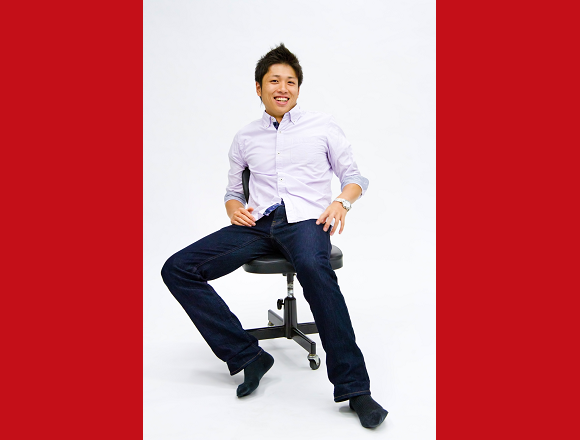
Men are advised to put a hand on each knee, and woman to fold them in their laps. Those are definitely good points to remember, and since some Japanese companies set up their interviews with a panel of interviewers seated in a row in front of the applicant, who may not have a desk in front of him or herself, it’s actually kind of nice to know there’s a set, “safe” thing to do with your constantly visible hands.
Finally, Bloomberg says “And never, ever be late, or you may as well have stayed home.” I’m sorry to repeat myself, but, again, this pretty much goes for every country in the world. If the very first impression you make with an interviewer is, “You know, I’d like this job, but how flexible are you about me really doing the things I’m supposed to?” you’re not getting hired.
▼ No point in running if the ship has already sailed.

So, let’s review the video’s advice:
1. Wear a suit
2. Don’t wear flashy clothes
3. Knock three times
4. Speak the language you’re being interviewed in
5. Greet the interviewer in the standard, polite manner for the country
6. Sit down from the left side of the chair
7. Don’t slouch
8. Put your hands on your knees (if you’re a man) or fold them in your lap (if you’re a woman)
9. Be on time
Really, only 3, 6, and 8 seem uniquely Japanese. As for the other two-thirds of the list? If you can’t keep those straight, your job-hunting difficulties probably aren’t going to be limited to jobs in Japan.
Source, featured image: Facebook/Bloomberg Asia
Top image: Pakutaso
Insert images: Pakutaso (1, 2, 3, 4, 5, 6) (edited by RocketNews24)
[ Read in Japanese ]
Follow Casey on Twitter, where he recalls that he did in fact wear a suit to his RocketNews24 interview.
 Rules of tea, business cards, and bowing – 10 Japanese business manners young people are tired of
 What’s the point? Young Japanese professionals list five business manners they find unnecessary
 Even Japanese people sometimes think bowing can be needlessly complicated, video shows 【Video】
 A piece of Japanese business manners that many Japanese people could do without
 Japanese business wear brand creates helpful graph to tell you what to wear at work
 Ramen restaurant in top Tokyo tourist neighborhood skips price gouging, but how does it taste?
 7-Eleven Japan releases a crazy new viral sandwich: Chocolate Sprinkles and Whipped Cream
 Krispy Kreme releases Super Mario doughnuts in Japan for a limited time
 Godiva now makes tofu in Japan, and sakura chocolate tofu too![Taste test]
 “Online streamer” tops dream job poll for young Japanese kids, older kids not so interested
 Studio Ghibli releases the My Neighbour Totoro tea caddy, with a magical self-closing lid
 Fake police phone scam also highlights dumb stereotype about how foreigners speak Japanese[Video]
 Can you make butter by running with a pouch filled with cream? Let’s find out[Taste test]
 Hey, Japanese taxi driver! Take us to the best sakura site in Yamanashi Prefecture!
 Studio Ghibli adds folding fans to its anime specialty store in Japan
 Japanese onsen egg maker from 100-yen store Daiso needs to be on your shopping list
 Starbucks Japan releases new My Fruit³ Frappuccino at only 34 stores around the country
 Tokyo government organizes food truck event to clear out delinquent/homeless teen gathering area
 Cherry blossoms begin blooming in Japan with record-early starts for sakura season
 Nine amazing off-the-beaten-path cherry blossom spots in Japan for yaezakura and shidarezakura
 Stunning central Japan wisteria festival is like a purple fantasy straight out of a Ghibli movie
 Create a tiny Ghibli anime world on your bookshelf with new miniature papercraft art kits
 Japan now has a “for foreign tourists only” Mt. Fuji sightseeing train[Video]
 When will the cherry blossoms reach full bloom in Japan this year?[Forecast]
 Starbucks Japan unveils new sakura cherry blossom collection for hanami season 2026
 Train station platform ramen store closes its doors on half a century of history in Tokyo
 Studio Ghibli releases Catbus pullback keychain that runs like the anime character
 Nine great places to see spring flowers in Japan, as chosen by travelers (with almost no sakura)
 Starbucks Japan releases first-ever Hinamatsuri Girls’ Day Frappuccino
 Studio Ghibli adds new Mother’s Day gift sets to its anime collection in Japan
 Virtual idol Hatsune Miku redesigned with look that adds new elements and brings back old ones
 Survey asks foreign tourists what bothered them in Japan, more than half gave same answer
 Japan’s human washing machines will go on sale to general public, demos to be held in Tokyo
 Starbucks Japan releases new drinkware and goods for Valentine’s Day
 We deeply regret going into this tunnel on our walk in the mountains of Japan
 Studio Ghibli releases Kodama forest spirits from Princess Mononoke to light up your home
 Starbucks Japan releases new sakura goods and drinkware for cherry blossom season 2026
 Japan’s newest Shinkansen has no seats…or passengers [Video]
 Major Japanese hotel chain says reservations via overseas booking sites may not be valid
 Put sesame oil in your coffee? Japanese maker says it’s the best way to start your day【Taste test】
 No more using real katana for tourism activities, Japan’s National Police Agency says
 Four factors frustrating foreigners fighting for jobs in Japan
 Tokyo companies’ late-night overtime habits exposed in time-lapse YouTube video channel【Videos】
 No gender, photo, or first name – Japanese company makes major shakeup to job application forms
 Meetings and more meetings: Foreigners list the pros and cons of working at a Japanese company
 “The one and only way to make people in Japan take more vacation time”
 Japan’s hellish job hunting process “shuukatsu” gets animated, terrifies netizens 【Video】
 Frustrated foreigner living in Japan calls Japanese punctuality a half-truth
 Here’s why you should never take “almost no overtime” at face value when job hunting in Japan
 Which jobs in Japan have the most and least overtime? Survey investigates
 Japanese office worker gets fired, retaliates by making sushi out of business suit and iPhone
 Is work more important to Japanese salarymen than their girlfriends? Survey investigates
 20 signs that a woman should think about quitting the Japanese company she works for
 Four frustrating “middle-aged man rules” that dictate life in a Japanese office