
Sounds that you just want to close your eyes and savor.
A few months ago we looked at the top five most annoying sounds in Japan, but now it’s time to look at the more pleasant side of the sound wave: Japanese sounds that we can’t get enough of.
That’s why today we’re counting down the top five nicest sounds in Japan. We want to keep the list as Japanese-specific as possible, so even though Japan has its fair share of nice-sounding bubbling brooks and temple bells, those can be found all over the world, thus keeping them off this list.
We also want to concentrate on the day-to-day soundscape of Japan — sounds that you hear often enough that you might ignore them after a while, but will hit you with a hard pang of nostalgia when you remember them later.
So let’s get to it! Starting off with…
Honorable Mention: Walking signal sounds
This one is only an honorable mention because they exist in other places in the world, but in Japan they’re so prevalent that they at least deserve a mention.
For those who have never experienced walking signal melodies for themselves, they’re the sounds that play when the green pedestrian light comes up and its okay to cross the street. The sounds vary by location, but these are some of the most popular:
▼ The piyo piyo “bird tweets” and kakkō “price scanner” sounds are classics.
It’s impossible not to smile and remember your time in Japan hearing these.
▼ Some walking signals play whole songs.
One common one is the appropriately-titled Tōryanse (“You May Cross”).
▼ Another one is Kokyō no Sora (“Sky of my Hometown”).
It makes me feel like I’m inside an NES game.
Ostensibly the walking signal sounds are there to give blind people a non-visual way to know it’s okay to cross, but I have a theory that they’re also supposed to encourage people to wait for the signal. I know I’m always happy to wait those few extra seconds to cross the street safely if it means I can hear those sweet street signal sounds.
#5. “Irasshaimase!”

Moving on to the things that you usually only hear in Japan, why not start with one of the most well-known: the word for “welcome to our shop,” irasshaimase.
Chances are if you’re anywhere within earshot of an employee when you walk into a store or restaurant, you can bet that you will hear an irasshaimase within seconds of entering. Sometimes it can set of a chain reaction of other employees further away saying irasshaimase as well, so that you hear it echo around the store like the very shelves and walls themselves are welcoming you.
▼ You can hear a constant flow of irasshaimase at shopping centers.
Sometimes store clerks can get a little overzealous with their irasshaimase and say them too loudly or too often, turning it into something rather unpleasant, thus bringing it down a few pegs on the list.
But when it’s done well, nothing beats a good irasshaimase to make you feel right at home and ready to spend some cash.
#4. Suzu wind chimes
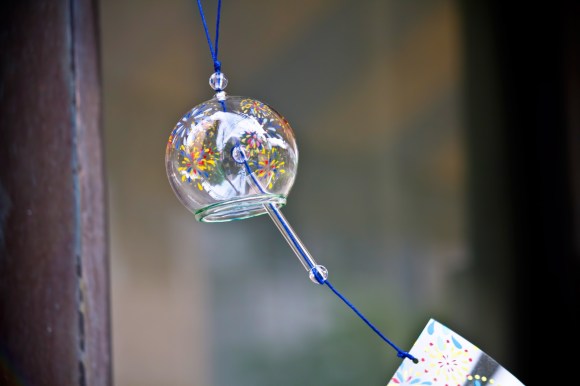
Ahh, just thinking about suzu wind chimes makes me remember hot summer days.
Suzu wind chimes are made out of a variety of materials, but often glass or metal, and they have a long string attached to a paper card that blows in the breeze. When the wind hits it, it makes a pleasing ringing sound, like this:
You tend to hear suzu wind chimes most often in the summer. As a Japanese friend explained to me, it’s because “the sound of the wind chime makes you feel cooler in the heat.” And, as crazy as that sounds, I feel like he’s right. The chimes are like little sprays of cold water for your ears, making those hot, humid Japanese summers a little more bearable.
People often hang them up outside their homes on balconies, and when you get more than one going at a time, you can get some really refreshing melodies:
▼ If these bells started a band, I’d buy their CD.
#3. Announcement chimes

I don’t know what it’s like in other countries, but announcements at stores, schools, and train stations in the U.S. tend to range anywhere from static you have to strain to hear to unintelligible garble.
In Japan though, it’s quite a different story, and part of that may be due to the chimes that play before and after pretty much every announcement.
If you’ve never heard the legendary “four tone” chimes before, then take a listen to this recording of a library announcing that it’s closing and everyone needs to leave.
▼ With those soothing chimes bringing in and out the announcement,
I’m not even mad about my late fees anymore.
The chimes signaling the start and end of an announcement aren’t anything spectacular, but honestly they make a huge difference in understandability. In the U.S. whenever I hear an announcement in a public place, by the time I’ve even realized I’m supposed to be listening it’s usually already halfway over.
But in Japan as soon as I hear those four tones, my brain switches itself into announcement-understanding gear, and I never miss a word. They’re extremely helpful, and they make you feel like the announcer actually wants your attention to convey a message, rather than just mumble through some words as quickly as possible.
▼ Phew, that announcement might’ve actually been understandable.
Good thing I had my hand over my mouth the entire time.

And while we’re on the topic of chimes, another nice sound is the chimes for class changes at Japanese middle/high schools. Unlike the buzzers or bells that we have in the U.S., the classic kin kon kan kon “Big Ben” chime is quite pleasant. It’s more of a “okay, time to change!” rather then “GET MOVING YOU PRISONERS!”
▼ The school chime for those who’ve never heard it. We imagine it’s slightly
less pleasant for those who actually went to school with it though.
#2. Train station jingles
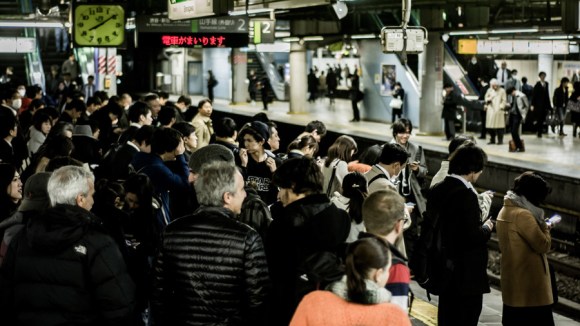
Riding the train can be an audial nightmare. Train wheels scraping against steel, bells clanging, people coughing and yelling and screaming…
…but not in Japan. In Japan, riding the train is altogether quite a pleasant experience. Of course there are some of the usual train sounds that can’t be helped like the wheels and the engines, but other than that, train stations really do their best to make it overall much more enjoyable on the ears
And one part of that is the jingles. Some train stations just use a generic chime or buzzer, but some of the bigger ones play a short customized tune unique to that station a few second before a train closes its doors to pull out.
▼ Songs from stations on the Yamanote line that encircles downtown Tokyo. Not sure
why they play the first one three times, but you get to enjoy it thrice as much!
The jingles are perfect for waking you up when you get to your station if you happened to fall asleep on the train as many Japanese passengers do.
And these jingles are a big deal too. Last year Disney took over six Tokyo train stations and replaced the usual jingles with Disney and Star Wars songs instead, and it was awesome.
▼ You can listen to all of them here. I would’ve particularly loved
to hear The Imperial March (at 1:05) when I got off a train.
And the #1 nicest sound in Japan is…
.
.
.
.
.
.
.
.
.
.
1. Cicadas
朝顔の支柱に蝉が止まっていて、近づいても逃げませんでした。孫が蝉取りしたいと言っていたのに残念です。 pic.twitter.com/NkOWuQJfKK
— ベルフラワー (@bellflower112) July 29, 2016
Oh yes. If you’ve been to Japan in the summer, then you knew that this one had to be at the top.
Cicadas can be a bit polarizing — most people love them, but some people hate them. However, even the haters have to admit that their sounds are just as much a part of Japanese summer as fireworks, festivals, and watermelon smashing at the beach.
If you’ve never heard cicadas chirps before, then take a listen to this video that shows off the different calls that different cicada species have:
▼ And if you’ve ever wondered what they look like when they
make their sounds, now’s your chance to see them close up too.
Even if you’ve never been to Japan, if you’ve ever watched an anime that took place in the summer, chances are you heard cicada sounds going on in the background. The cicada sounds are such a part of the Japanese soundscape for summer that it just wouldn’t be summer without them.
Most people find the sounds of the cicadas relaxing, and if you do a search for “study sounds” or “relaxing sounds” on Japanese YouTube, a bunch of videos come up that include cicadas as background noise.
So, for your listening pleasure, we present here the only video of relaxing noises you’ll ever need: ten hours of cicadas.
▼ Brew yourself some mugicha (buckwheat tea), grab yourself
a sensu (Japanese fan), and it’s like you’re in Japan in the summer.
So there you have it, the top five nicest sounds in Japan. Did we miss any of your favorite Japanese sounds? Let us know in the comments and feel free to add any words you learned from last week’s top five confusing Japanese Internet slang words.
Top image: PAKUTASO (edited by SoraNews24)
W.T.F. Japan will be back next Thursday. In the meantime, give me a follow on Twitter and let me know if there’s any topics you’d like to see covered. See you next week!