
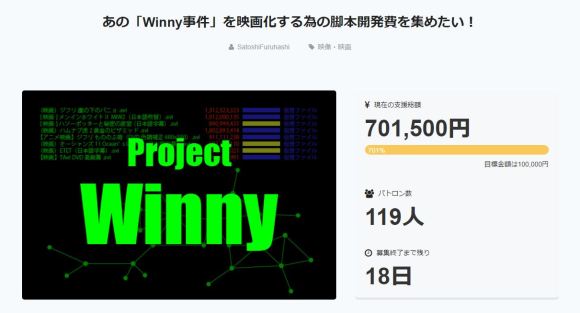
After its crowdfunding target is smashed, writing begins on the story of how Japan stifled its own IT development in the name of combating file-sharing.
Although it feels almost like yesterday, a lot of young people may not even be familiar with the name Winny in Japan. At around the turn of the millennium, when the file-sharing craze was in full swing, a university instructor came up with Winny — fully anonymous peer-to-peer (P2P) file sharing software.
「Winny事件」の思い出…金子勇(47氏)を映画化 https://t.co/Hj0tkxK5TN pic.twitter.com/uKOqNv8HI9
— にわいしアンテナ (@niwaisiantena) February 6, 2018
Although somewhat lost in the crowd of WinMXs (Winny’s namesake), Bearshares and eDonkeys overseas, Winny was the go-to file sharing app for Japan shortly after its release in May of 2002. However, most of those users would ultimately get it to transfer music and other copyrighted media to each other, spelling bad news for its creator.
● Project Winny
This February, IT entrepreneur Satoshi Furuhashi began a crowdfunding campaign to begin writing the script for a movie about the rise and fall of Winny and its creator Isamu Kaneko. In a matter of days it surpassed its 100,000 yen (US$919) target and as of this writing has surpassed 700,000 yen ($6,400).
The movie will try to put a human face on the creation of Winny and also show how its technology led to current trends like cryptocurrency. More importantly though, it will show how the legal system in Japan strangled visionaries like Kaneko and created a poisonous environment for innovation.
On his crowdfunding page, Furuhashi describes the project as a Japanese Social Network, referring to David Fincher’s 2010 movie following the creation of Facebook along with the involvement of Napster co-creator Sean Parker.
While that’s a great pitch for producers, considering how things went for Kaneko, “Anti-Social Network” would be a more apt description.
● The Bizarro Sean Parker
By the time Winny was released, the American pioneer of file sharing, Napster, had already jousted with music associations and was dissolved after filing for bankruptcy. And as its cofounder Sean Parker was already free to venture into the future jackpot of social networking services, the file-sharing controversy continued to swirl over Napster’s successors.
Eventually it wafted over to Japan’s shores and Winny became public enemy number one. However, unlike Napster’s unabashed promotion as a music file sharing network, Winny never publicly endorsed sharing copyright protected media. Also unlike America’s sue-first-settle-then-ask-questions-later approach to the matter, Japan took an even harsher stance by filing criminal charges, leaving little to no room for negotiation.
▼ It’s really hard to leverage your tech prowess with a court of law.
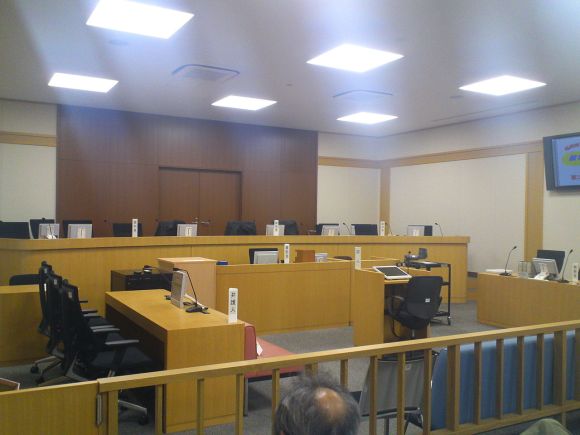
Parker had to deal with paying off settlements to the music industry, but Kaneko was carried off in handcuffs for his engineering prowess. In trial, lawyers debated over whether simply creating a P2P platform is tantamount to accessory to copyright infringement. It was a case that went to the Supreme Court and took seven years to resolve with Kaneko finally being judged innocent.
At the end of 2011, Kaneko was cleared of all charges against him. At that same time, Parker had been president of Facebook and just watched Spotify launch after investing $15 million into it. He is currently estimated to be worth over $2 billion.
Kaneko spent his time tangled in court consulting another digital content distribution platform and also doing some lecturing and research in high speed computing at Tokyo University. However, the legal system was locked in a standoff with P2P in Japan causing any serious development to grind to a halt. Two years after his innocence was declared, he died of a heart attack in 2013.
● A country where nail that sticks up isn’t hammered down
The stories of Parker and Kaneko are a pretty stark example of the difference in environment and opportunity that the U.S. and Japan provide for their technological pioneers and the results they each lead to.
▼ Furuhashi provided a timeline following the two file sharing
trailblazers’ career paths, showing the harsh differences.
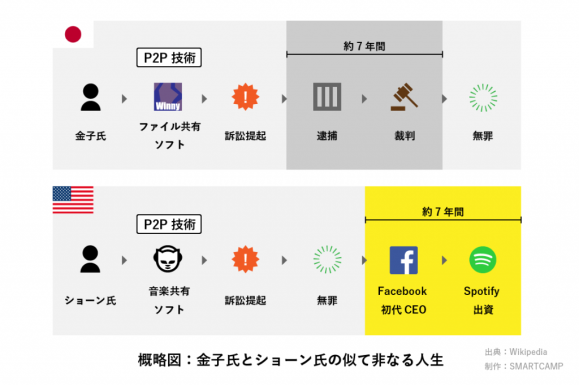
Furuhashi sees the Winny incident as a pivotal moment in the business climate of Japan, and one that had set it back greatly just as IT technology was expanding at an alarming rate. As an entrepreneur himself, he feels the environment in Japan is still too constraining and conservative to foster the growth of new ideas. “I want Japan to be a country,” writes Furuhashi on his crowdfunding page, “where the nail that sticks up isn’t hammered down.”
In addition to monetary support, moral support for this story is strong online:
“This is a blunder of justice that lingers in our history.”
“For some reason Japan is really cold-hearted with engineers from emerging industries. That’s why we’re getting overpowered by a rising Korea and bleeding our assets.”
“It’s a blemish on the legal system, that they’d punish a developer for moral problems of the users.”
“That arrest set Japan way back on taking advantage of P2P technology.”
“There are too many cases of science and tech getting killed in Japan. This is a movie that should be made.”
“Let’s make one about TRON [The Real-time Operating system Nucleus] while we’re at it!”
In addition to the film itself, Furuhashi hopes to incorporate related technologies in its development, such as incorporating virtual currency into its production and ticket sales as well as a P2P distribution system.
But the project is mainly the message that needs to be heard. As one user commented, there are too many cases of stunted growth such as the fact that as of 2017 only 16% of Japanese people use an on-demand video service.
Then there’s also Japan’s mobile phones, once lauded as the greatest in the world, that were swiftly trumped by the relative flexibility and freedom of foreign-developed smartphones. Examples are, sadly, too easy to come up with.
Source: Campfire/Project Winny, IT Media, Hachima Kiko
Images: Campfire/Project Winny, Wikipedia/Saya10
 Movie about Japan’s file sharing pioneer Winny coming in March 2023
 Japanese Government and Industries Battle Copyright Infringement by Hiding Strongly Worded Letters on P2P Networks
 Three people become first arrested in Japan for posting 10-minute movie recap on YouTube
 Krispy Kreme releases Super Mario doughnuts in Japan for a limited time
 Uniqlo announces new T-shirts for One Piece, Naruto and more for manga publisher’s 100th birthday
 Japan’s ministry of economy reminds us to “use sound judgment” before buying toilet paper
 Japan now has a “for foreign tourists only” Mt. Fuji sightseeing train[Video]
 A secluded British mansion in Chiba is a hidden holy land for afternoon tea lovers
 Starbucks Japan releases new sakura goods and drinkware for cherry blossom season 2026
 Tokyo Metro adds platform display showing where least crowded parts of the next train will be
 Create a tiny Ghibli anime world on your bookshelf with new miniature papercraft art kits
 The top 5 ice creams you should try at Family Mart convenience stores in Japan this summer
 Japan’s budget chain restaurant Saizeriya might just be the perfect first date location
 Starbucks Japan releases new My Fruit³ Frappuccino at only 34 stores around the country
 Tokyo government organizes food truck event to clear out delinquent/homeless teen gathering area
 7-Eleven Japan releases a crazy new viral sandwich: Chocolate Sprinkles and Whipped Cream
 Nine amazing off-the-beaten-path cherry blossom spots in Japan for yaezakura and shidarezakura
 Stunning central Japan wisteria festival is like a purple fantasy straight out of a Ghibli movie
 Studio Ghibli releases the My Neighbour Totoro tea caddy, with a magical self-closing lid
 Japanese onsen egg maker from 100-yen store Daiso needs to be on your shopping list
 Starbucks Japan unveils new sakura cherry blossom collection for hanami season 2026
 Train station platform ramen store closes its doors on half a century of history in Tokyo
 Studio Ghibli releases Catbus pullback keychain that runs like the anime character
 Nine great places to see spring flowers in Japan, as chosen by travelers (with almost no sakura)
 Starbucks Japan releases first-ever Hinamatsuri Girls’ Day Frappuccino
 Cherry blossoms begin blooming in Japan with record-early starts for sakura season
 Studio Ghibli adds new Mother’s Day gift sets to its anime collection in Japan
 Virtual idol Hatsune Miku redesigned with look that adds new elements and brings back old ones
 Survey asks foreign tourists what bothered them in Japan, more than half gave same answer
 Japan’s human washing machines will go on sale to general public, demos to be held in Tokyo
 Starbucks Japan releases new drinkware and goods for Valentine’s Day
 We deeply regret going into this tunnel on our walk in the mountains of Japan
 Studio Ghibli releases Kodama forest spirits from Princess Mononoke to light up your home
 Japan’s newest Shinkansen has no seats…or passengers [Video]
 Major Japanese hotel chain says reservations via overseas booking sites may not be valid
 Put sesame oil in your coffee? Japanese maker says it’s the best way to start your day【Taste test】
 No more using real katana for tourism activities, Japan’s National Police Agency says
