
Vague phrasing and fuzzy logic leads to swift backlash.
Nichiigakkan has a number of companies under its corporate umbrella, and one of them is Sunny Maid Service, which provides housekeeping services in Japan. But while Nichiigakkan is headquartered in Tokyo, all of Sunny’s maids are Filipino.
On its website Sunny extolls the virtues of its Filipino employees, describing them as cheerful and energetic, and even boasts that their housekeeping skills are “accredited by the Philippine government.” That’s all quite complimentary, but Sunny was recently criticized for taking things too far when it said that yet another advantage to having a Filipino housekeeper is because customers wouldn’t have to “care” about them in the same way they would a Japanese housekeeper.
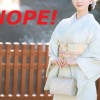
▼ A claim that simultaneously hurts the heart and the head.

Before we add any more logs to the fire that Sunny has been roasted on, let’s take a look at the specific phrase the company used: kizukai. Translated literally, kizukai means “to use energy,” but it’s a mental or emotional energy that’s being described, and generally in the sense of making accommodations for someone else, often in a preemptive sense. For example, let’s say you and a friend just finished eating lunch, and you’re thinking about ordering a slice of cake for dessert. But then you remember that your friend is on a diet, so you decide not to order the cake, to avoid making your friend feel bad or giving them any extra temptation to have to fight off. That’s an example of kizukai.
In part of its advertising, Sunny said that one of the merits of its Filipino housekeepers is:
“Because they are foreigners, they won’t drag you into prying conversations, and you don’t have to worry about them seeing your mail or other documents you have in the house. With a Japanese housekeeper, you can’t help feeling conscious of them and worrying, but with our staff, there’s no need for kizukai.”
Sunny was quickly criticized by many who saw the statement, and perhaps much of the problem stems from the quick transition from things the customer wants (i.e. to avoid prying conversations or having their mail/documents looked at by a housekeeper) to the use of kizukai. Again, although there’s often a tiring nuance to kizukai, it still usually corresponds to “care about,” because it refers to thinking about someone else’s situation and doing things for their ostensible benefit. To give one more example, if you want to go out with your friends, but you stay home to take care of your sick spouse without being asked, that’s kizukai.
But there seems to be a missing step in Sunny’s scenario between not caring about your foreign maid and avoiding conversation/mail-snooping, one which could leave the door open to some unpleasant interpretations. Is Sunny saying that it’s OK to completely ignore its staff as they clean your house, not even saying a simple hello, because foreigners don’t need to have their presence acknowledged? Is the reason they won’t look at your mail because they’re not smart enough to read Japanese?

Those don’t seem to have been Sunny’s intended messages, though, since after receiving complaints it promptly removed the passage about kizukai from its advertising and issued an apology through Nichiigakkan’s website, saying:
“Recently, the language used in advertising related to our company Sunny Maid Service made people feel uncomfortable. We deeply apologize.
In response to the feedback we received, we have taken down the advertisement. Going forward, we will work to improve the language used in our company’s advertising.”
Maybe to see what Sunny was going for, you have to flip things around and consider what sort of kizukai might happen with a Japanese housekeeper. A shared cultural background would mean more common experiences and frames of reference to draw from, and some customers might feel more compelled to make small talk with a Japanese maid by asking things like “Where did you buy your ehomaki for the Setubun celebration?” or “What obi style are your children planning to use for their Seijinshiki ceremony?” Likewise, even without purposely trying to read personal papers that are lying about, a Japanese housekeeper, whose native language is Japanese, might instantly comprehend their contents even after just glancing at them by accident, so clients might feel the need to put each and every paper out of sight before a Japanese housekeeper comes over, thinking it would be rude to be shifting them around while he housekeeper is already in their home.
Of course, the counterargument is that the above scenarios are all tied into linguistic and cultural elements, but many foreigners living in Japan adapt to the country’s language and customs. Sunny itself even boasts that its Filipino staff, who can also provide meal preparation services, are trained in Japanese cooking styles.
Taking into consideration that Nichiigakkan owns not one, but two chains of English schools in Japan (Gaba and Coco Juku Jr.), it’s hard to frame the entire organization as being anti-foreigner. Still, if Sunny wants to let potential customers know that its Filipino housekeepers are discreet and unobtrusive, it would probably be simpler for them to focus on those specific benefits that their maids provide, and leave any assumptions about what customers may or may not feel culturally compelled to do out of the discussion.
Sources: Nichiigakkan, IT Media, Sunny Maid Service
Top image: Pakutaso
Insert images: Pakutaso (1, 2)