What’s the most appropriate clothing for renovating a property in Japan?
Last year, we became the proud owners of a cheap house in the Japanese countryside, which we purchased for the dirt-cheap price of US$9,100. Ever since then, we’ve been prepping the place for some much-needed renovations with the help of a friendly worker called Imazu from construction firm Hobien, and one thing we noticed about him was how he always seemed so well dressed for the job.
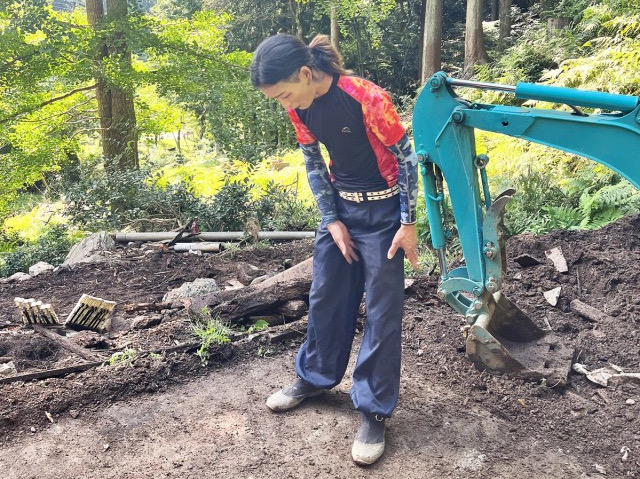
Dressing for the job is a big thing in Japan, even on building sites, where workers seem to have a whole fashion sense of their own. You’ll often see builders up on scaffolding, wearing long trousers that billow out from the knee, and tabi boots with a split that separates the big toe from the rest of the toes.
▼ Imazu (pictured below) also wears billowy trousers, known in the business as “knickerbockers”.
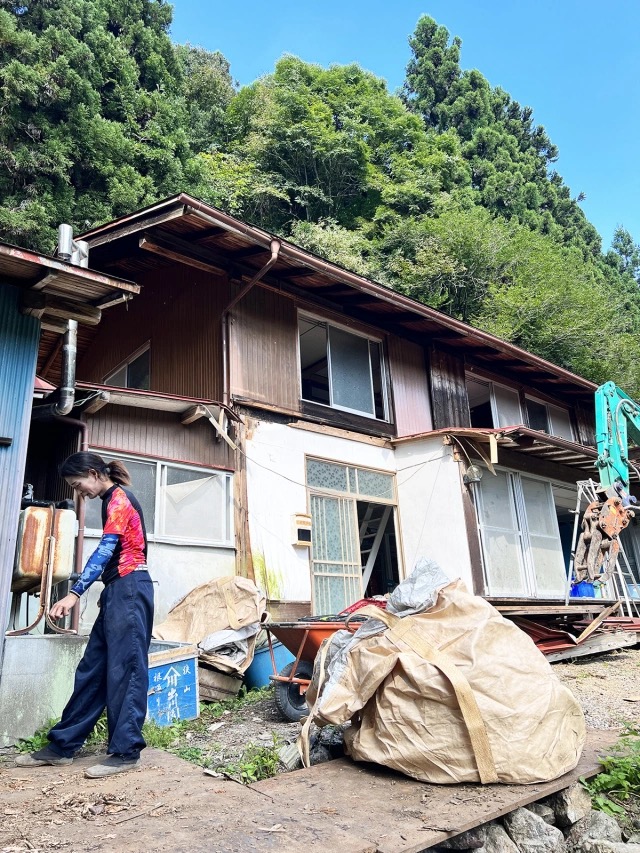
Our boss Yoshio, who usually wears jeans while working at the SoraHouse, was curious to find out what the best outfit would be for renovating a home, so after seeing Imazu in his heavily woven knickerbockers, he asked him:
▼ “Why do you wear those thick trousers?”
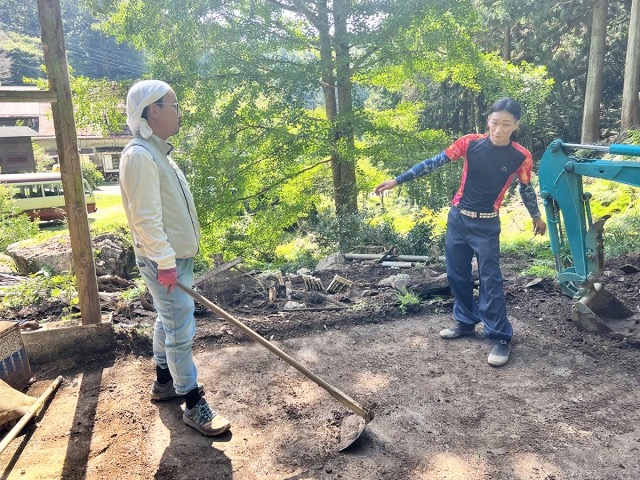
Yoshio was expecting Imazu to start listing all the benefits of wearing knickerbockers, but to his absolute surprise, Imazu said:
▼ “These trousers are full of disadvantages.”

According to Imazu, whose main job is landscaping, the trousers tend to get caught in branches, which often hinders his work.
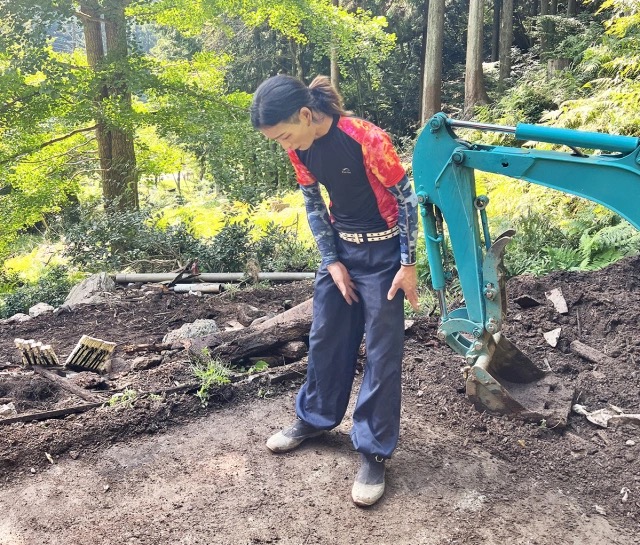
Of course, Imazu did say the trousers benefit workers in other industries, such as construction, where the extra material is said to act like a cat’s whiskers, alerting the wearer to low-level obstacles that might get in their way.
However, in Imazu’s line of work, the best type of trousers for the job are actually thinner, tight-fitting ones, which Imazu often wears while working on the SoraHouse.
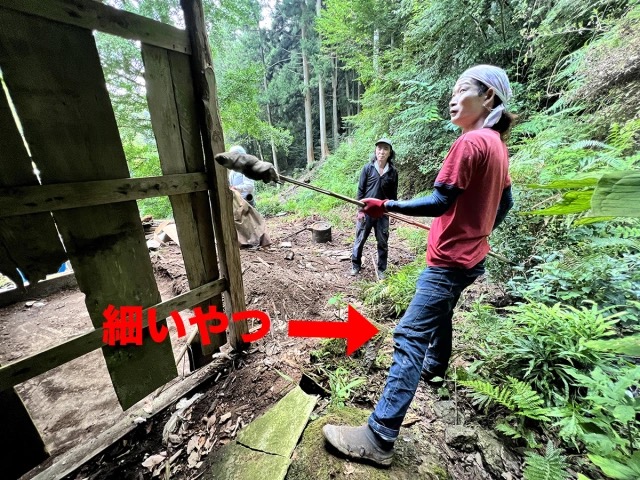
Imazu says he bought the knickerbockers when he was starting out and unsure about what to wear, but after years of experience he’s come to realise that they’re not always useful for his line of work. However, seeing as he now owns a pair of knickerbockers and doesn’t want them to go to waste, he still wears them occasionally, for days when he’s out of the bushes and spending most of his time on the digger.
Imazu made his preference for pants clear with this statement:
“Tighter pants with thinner cloth are really the best for me — they don’t get caught on branches, and they’re stretchy so they’re easy to move around in.”
So maybe jeans weren’t a bad choice for working on the SoraHouse after all. But what about footwear?
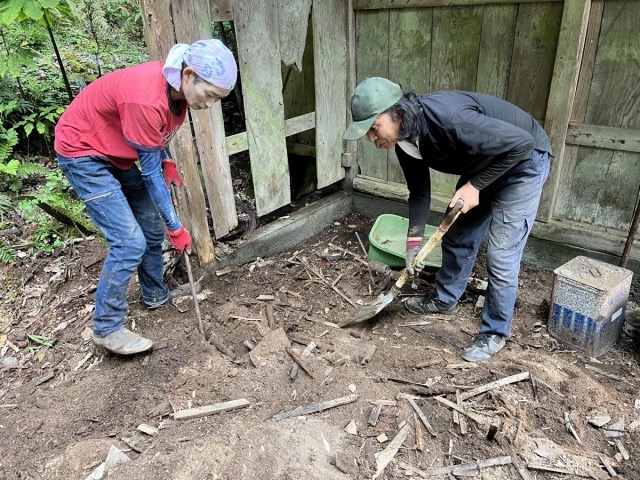
Imazu says he wears proper work shoes, which protect his feet when working on old buildings like ours. However, he’s not averse to traditional tabi boots, which a lot of workers wear, saying:
“Tabi have thin soles, so it’s easy to get a feel for the ground. In some situations, it can be dangerous if you don’t immediately sense that something’s amiss on the ground, so there are many people who choose to wear tabi.”
The split between the big toe and the rest of the toes on a tabi boot helps to provide extra flexibility and stability, making them particularly useful for workers who climb ladders and work on scaffolding throughout the workday.
After discussing the pros and cons of trousers and footwear, Yoshio and Imazu decided to get back to work, but when they pulled on their work gloves, they realised they actually had one thing in common.
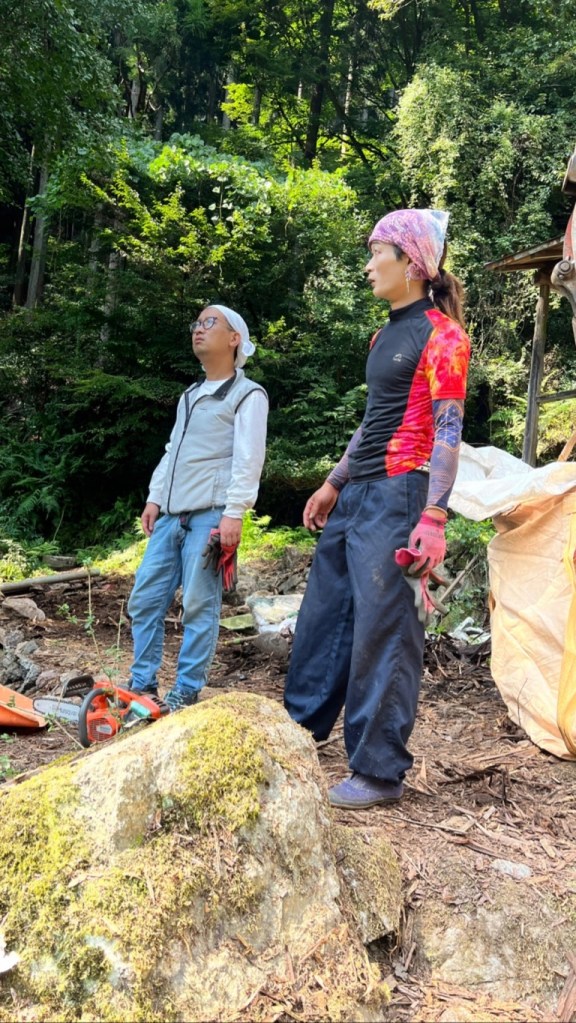
▼ They were both wearing the same brand of gloves!
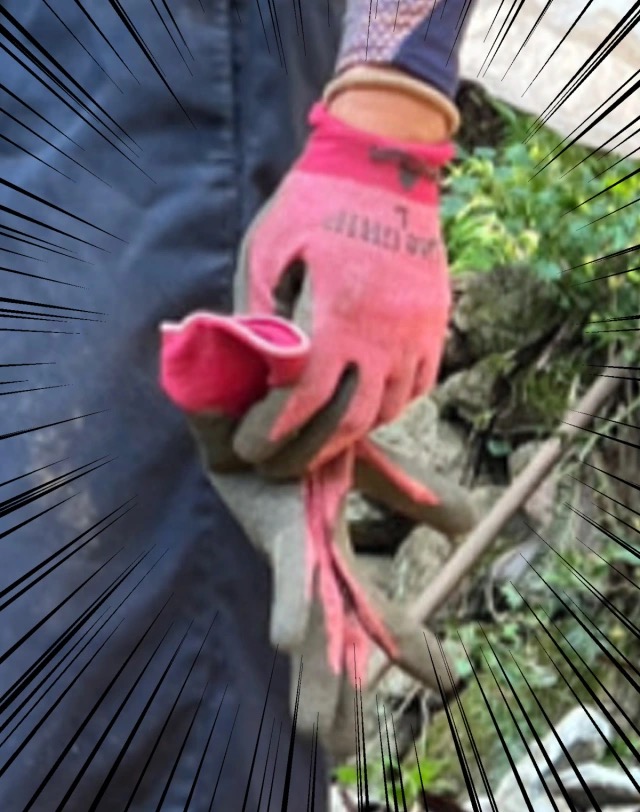
These gloves were actually recommended to our reporters as a reliable brand by Imazu’s boss, Mr Ogawa, when he came to give us an estimate on demolishing our shed.
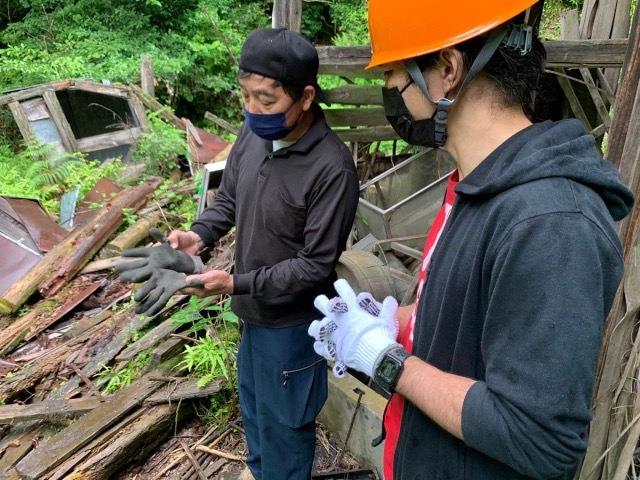
The Showa-brand gloves are used by all workers at Hobien, regardless of their specialisation, so they’re good for all kinds of work.
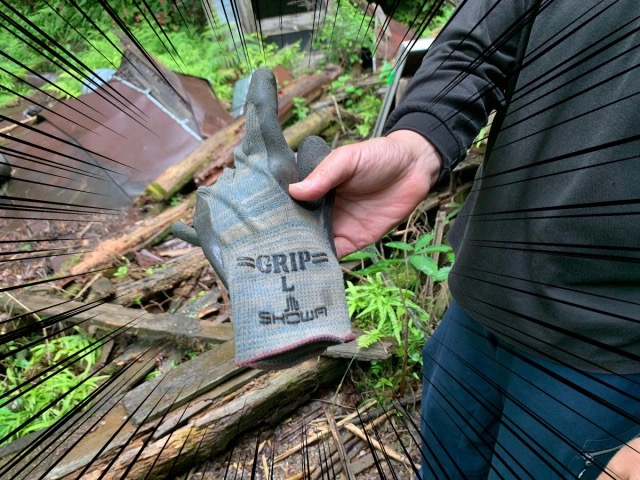
So although our city slickers, who are more suited to sitting at a desk rather than a digger, might look like total newbies when it comes to their workwear, at least they’re one of the gang when it comes to their glovewear.
We’re glad to know we won’t have to invest in heavy knickerbockers and tabi boots to work at the SoraHouse, but we’re now thinking we should at least swap our sneakers for some worker’s boots, for safety’s sake. And for all our sakes, we might get Masanuki to wear something other than a swimming costume next time he visits.
Photos ©SoraNews24
● Want to hear about SoraNews24’s latest articles as soon as they’re published? Follow us on Facebook and Twitter!
[ Read in Japanese ]