
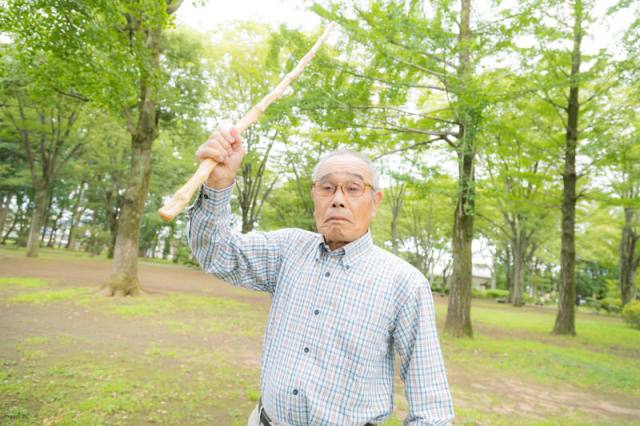
Tell your late spouse’s family how you really feel. Tell them with a divorce.
The meddlesome in-law is a classic domestic crisis that goes back as far as the dawn of humanity, according to The Flintstones. And though it’s more of an anecdotal situation that’s difficult to quantify with precision, there are enough anecdotes to suggest in-law animosity is still an issue in many Japanese families, so much so that there’s actually an official process for severing one’s ties with a deceased spouse’s family in Japan.
It’s commonly known as a “posthumous divorce” (shigo rikon), which is a rather misleading name because a deceased spouse is not actually getting divorced. Japan has the same “till death do you part” mentality as most places, so it’s legally impossible to divorce a dead person.
▼ “Look, I know this isn’t the best time, but I’ve been thinking and it’s just not working out between us…”
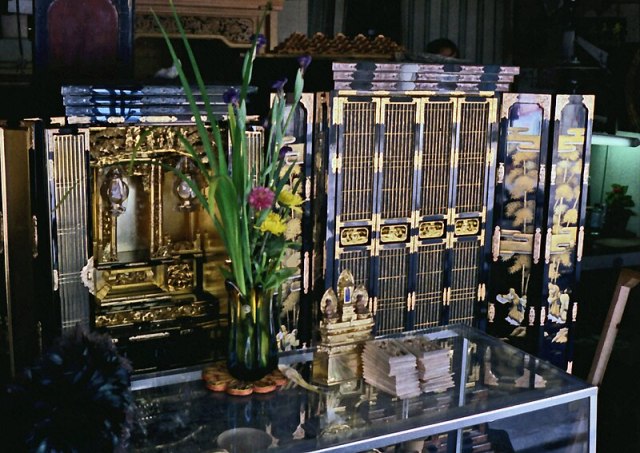 Image: Wikipedia/Enshuritsu 3 percent
Posthumous divorce’s technical but less popular name is a “notification of marital relationship termination” (inzoku kankei shuryo todoke) which means one is officially severing ties with the family of a deceased spouse. What’s particularly strange about it is that it doesn’t really serve any purpose for a vast majority of people aside from a government-approved official statement that someone finds their in-laws unbearable.
Traditionally, there have been certain expectations that Japanese children, first-born sons in particular, that they should take care of their parents when they become too old to do so for themselves. First-borns are also expected to inherit the family home, grave, and other assets passed down through generations.
However, in the case that a first-born passes away, these things usually go to another person in their family’s bloodline rather than the first-born’s spouse, so getting a posthumous divorce rarely affects that situation. There are cases where a first-born might specifically leave these inheritances to their spouse in their will, at which time the person seeking the posthumous divorce would have to arrange a successor in the late spouse’s family first.
Even if the spouse is living with the in-laws at the time of the death, they would no longer have a legal obligation to take care of them. It becomes more of an ethical situation whether or not to continue doing so.
Posthumous divorce also has no effect on the person’s legal relationship with their late spouse. They can still choose to keep the spouse’s surname and are still eligible for all inheritances, pensions, and insurance policies as they were before the posthumous divorce. They can even still have their own remains placed in their spouse’s family grave since their legal relationship to the late spouse is still fully intact.
In addition to all that, a posthumous divorce can be obtained unilaterally and the in-laws will receive no notice of it from the government. Only the spouse of the deceased can file for this too, the late spouse’s family cannot sever ties in this way.
▼ It’s a relatively easy process that just requires filling out a few applications at the nearest city office
 Image: Pakutaso
Since very little is actually accomplished by this, it begs the question not only of why anyone would want to get a posthumous divorce but why the number of posthumous divorces is increasing.
According to data from the Ministry of Justice, the number of annual posthumous divorces averages around 4,000, compared to an average of less than 2,000 during the late ’90s. Many of these cases have the divorce used as a tool when spouses are dragged into inheritance disputes or other problems by order of the deceased’s will. However, there is recently a growing group of people in the same situation as a 53-year-old woman in Tokyo who described the process of legally cutting ties with her in-laws as a “tremendous feeling of liberation.”
She describes her married life as being constantly irked by the slights made by her mother-in-law, but driven by a sense of traditional duty to put up with them for her husband’s sake. However, once her husband passed, her mother-in-law’s behavior continued until she could take no more and filed for “divorce” from her.
While it worked out well for that woman, it should be noted that a posthumous divorce is not a restraining order and doesn’t necessarily mean the in-laws are forced out of your life forever. This is especially true in cases where grandchildren are involved because their legal ties to their grandparents are not affected by this process at all and remain firmly intact. In that way, it seems likely that a posthumous divorce could simply work to amp up acrimony with in-laws rather than end it.
Nevertheless, it is a legal instrument that exists in Japan for those who want to send a firm message to surviving in-laws they can no longer tolerate. After all, it’s a problem that is sure to plague humanity well into the 21st century, according to The Jetsons.
Source: Sozoku Asahi, The Sankei Shimbun, Yahoo! Japan News, e-Stat
Featured image: Pakutaso
● Want to hear about SoraNews24’s latest articles as soon as they’re published? Follow us on Facebook and Twitter!
 Japan may finally abolish law that bans women only from remarrying soon after divorce
 Yakuza video game even in Japan allows fans to both marry and divorce their 2-D crushes
 Survey Reveals that 65.5% of Japanese Male Office Workers Have Considered Divorce
 What do you do when your mother-in-law secretly kisses your husband while you sleep?
 Should people in Japan be allowed to keep their surnames after getting married, survey asks
 Japan’s best conveyor belt sushi restaurant of seven years ago has now, finally, come to Tokyo
 Wisteria season starts early with blooming of Japan’s Great Wisteria in its beautiful garden
 Starbucks Japan releases FIVE new Frappuccinos in a day, and we try them all in 90 minutes
 Japanese trains in Sapporo might be better than those in Tokyo, thanks to one special feature
 Fading Tokyo – Horikiri Station, the Arakawa River, and Kinpachi-sensei[Walking course]
 Lawson convenience store at popular tourist site is one of the most unusual in Japan
 7 great places to see Mt. Fuji from without having to climb it
 We test Daiso’s new storage container to see if it keeps rice fluffy even after freezing
 Japan’s Baby Bird Reincarnation sofa bed — So cozy you won’t want to go back to being a human?
 We try an unusual buffet of dishes made from wild game at a roadside stop in Chiba
 Japan reportedly adding Japanese language skill requirement to most common foreigner work visa
 Mt. Fuji decorated with a 500,000-flower pink carpet is Japan’s ultimate spring view
 30 Pikachus want to share a Tokyo hotel room with you that has separate Grass, Water, Fire spaces
 You can assemble a well-balanced team of Pokémon, them eat them, thanks to Japanese cake chain
 Man bites woman at cherry blossom park in Japan, dies shortly after
 7-Eleven Japan’s new baked-in-store sweet treat is only available in three parts of the country
 Starbucks Japan closing only Shinkansen platform branch for popularity-triggered renovations
 Pokémon and Ikea Japan cross over into each other’s worlds with collaboration events
 Japan now has a special desk for people who work at home with a pet cat[Photos]
 Famous Tokyo cherry blossom spot installs view-blocking screens to fight overcrowding[Video]
 Uniqlo announces new T-shirts for One Piece, Naruto and more for manga publisher’s 100th birthday
 Train station platform ramen store closes its doors on half a century of history in Tokyo
 Starbucks Japan releases new My Fruit³ Frappuccino at only 34 stores around the country
 Krispy Kreme releases Super Mario doughnuts in Japan for a limited time
 Japanese onsen egg maker from 100-yen store Daiso needs to be on your shopping list
 Survey asks foreign tourists what bothered them in Japan, more than half gave same answer
 Japan’s human washing machines will go on sale to general public, demos to be held in Tokyo
 Starbucks Japan releases new drinkware and goods for Valentine’s Day
 We deeply regret going into this tunnel on our walk in the mountains of Japan
 Starbucks Japan releases new sakura goods and drinkware for cherry blossom season 2026
 Studio Ghibli releases Kodama forest spirits from Princess Mononoke to light up your home
 Japan’s newest Shinkansen has no seats…or passengers [Video]
 Major Japanese hotel chain says reservations via overseas booking sites may not be valid
 Put sesame oil in your coffee? Japanese maker says it’s the best way to start your day【Taste test】
 No more using real katana for tourism activities, Japan’s National Police Agency says
 Japan: one of the few countries in the world where married couples must have the same surname
 The odd phenomenon of some Japanese husbands making their wives put their socks on for them
 Four more things women are banned from doing in Japan【Women in Japan Series】
 Poll finds support to let women inherit imperial throne as Japan faces possible succession crisis
 Japanese teen wins right to change name from “His Lordship the Prince” to something less flowery
 Married couples in Japan must have the same surname, so does Mr. Sato regret taking his wife’s?
 Japan Supreme Court rules it’s constitutional to require married men and women have same surname
 Japan’s Princess Aiko won’t have tiara made for her, in consideration of hard economic times
 Still a ways to go, but animal welfare in Japan is improving by leaps and bounds
