With Japan consistently appearing in the lowest ranks for gender equality in industrialised nations, the adoption of Prime Minister Abe’s recent bill to promote the role of women in the workplace has been a welcome development in what remains a traditionally patriarchal society.
What the headlines fail to mention, however, are the archaic laws entrenched in the country’s Civil Code that continue to hold women back, including same surname requirements upon marriage, and differences in the minimum marriageable age and re-marriage prohibition period for both sexes.
The UN Committee on the Elimination of Discrimination Against Women has again called for a revision of Japan’s current laws, slamming the country for being one of the few industrialised nations where it remains illegal for married couples to have different surnames.
Despite ratifying the Convention on the Elimination of All Forms of Discrimination against Women in 1985, Japan is yet to pass any revisions on glaring inequalities in their Civil Code. While revisions have been presented to the Committee for Discussion of the Legal System for fourteen years now, there has been no progress in respect to the following three points of contention: Article 731, which sets the marriageable age for men at 18 and women at 16; Article 733, which prohibits only women from remarrying within six months unless a woman is pregnant before the divorce; and Article 750, which states a husband and wife must have the same surname upon marriage.
 Image: Viator
Two landmark cases, contesting the constitutionality of Articles 733 and 750 have been taken to the Supreme Court, with hearings to begin on November 4 this year. A woman in her 20s from Okayama initially filed her case with the District Court in 2013, suing for 1.65 million yen (US$13,734) in damages due to the discriminatory nature of the Civil Code after she had a daughter with her new partner and was unable to remarry nor register her new child’s birth. According to Article 772 of the Civil Code, which is also under review for revision as it pre-dates the advent of DNA testing, a child born within 300 days of divorce is still considered to be the legitimate offspring of the former husband.
Image: Wikipedia
The other case, contesting the constitutionality of the same-surname requirement, has been brought to the Supreme Court after the Tokyo District Court ruled against five people seeking a total of 6 million yen ($49,952) in damages. The plaintiffs believe the law denies equality for all and impinges on the dignity of individuals, which is in direct violation of the Constitution.
 Image: Wheelhouse Studios
During the Edo Period (1603-1867), commoners were not allowed to have surnames; the legal obligation for married couples to take on the same surname came about during the Meiji Era (1868-1912). In 1996, the Justice Ministry’s Legislative Council recommended introducing a system which would allow women to choose whether they wanted to retain their maiden name or taken on the surname of their husband. Conservative lawmakers continue to oppose any changes, fearing it would be detrimental to family values and society.
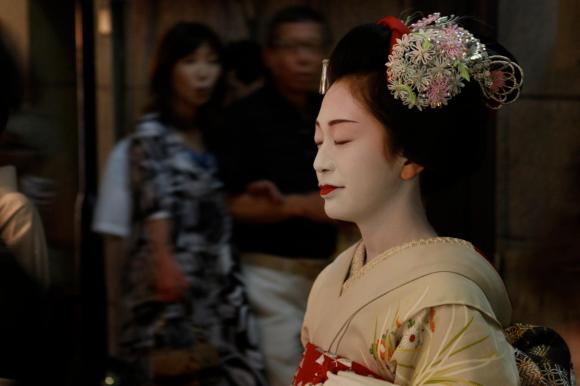
Image: Flickr/Nikita
With more women joining the workforce in line with Prime Minister Abe’s push to promote women in the workplace, a recent poll shows 48 percent of people support a change to the surname law. Many women feel that the same-surname requirement violates their privacy, as a name change can reveal sensitive personal events such as a divorce or re-marriage. As a result, there are a large number of women who continue to use their maiden name at work, which causes confusion.
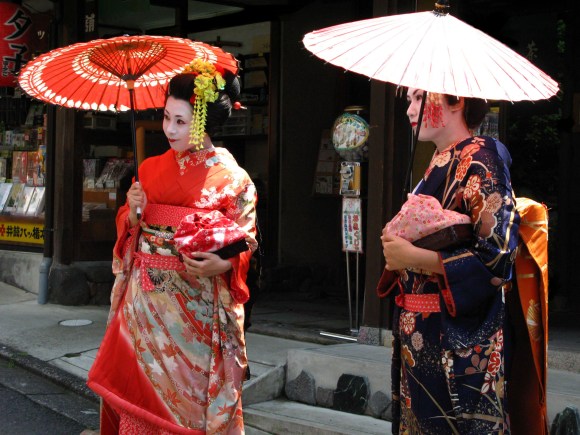
Image: Flickr/Alberto Carrasco-Casado
While there is a loophole for Japanese citizens married to non-Japanese citizens, who don’t necessarily have to have the same surnames due to the difference in foreign legal laws, Japanese couples have no choice but to abide by Japan’s regulations. With the U.N. Committee on the Elimination of Discrimination again calling for Japan to modernise its discriminatory laws, we hope women across the nation will soon be able to enjoy equal rights and the power of choice, bringing the country up to the forefront of the modern world, where it thoroughly deserves to be.
Source: Niconico News
Top Image: Japan Crush