
Journey into the history of a 1,000-year-old tradition to uncover why this dangerous delicacy continues to have its place on the dinner table.
New Year’s marks an important cultural shift for Japanese people. Everything good and bad that has happened throughout the year resets as the new year begins, representing a personal rebirth and giving everyone a fresh start. In hopes of inviting good fortune for the year ahead, many traditions have been introduced and continue to remain in Japanese culture. One of these traditions, while well-intentioned, involves a lethal risk that has persisted for centuries: the eating of mochi (glutinous rice cakes).
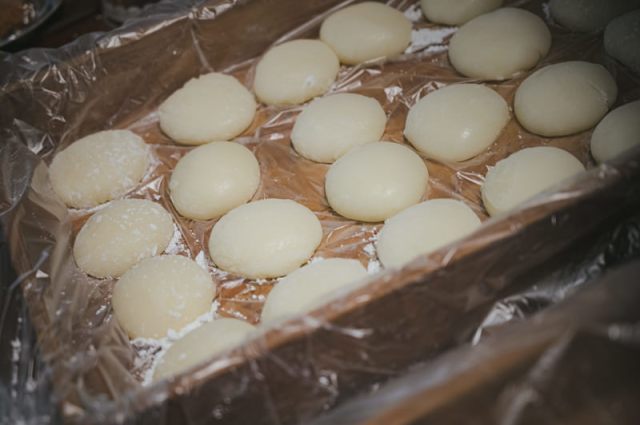
This tradition of consuming mochi originated from the simple act of eating rice in order to gain vitality for the coming year. Rice has always been regarded as sacred in Japan, containing divine energy and life-giving properties. Yet this very same rice, in the form of mochi, is now regarded as one of Japan’s most dangerous foods.
▼ Delicious but deadly
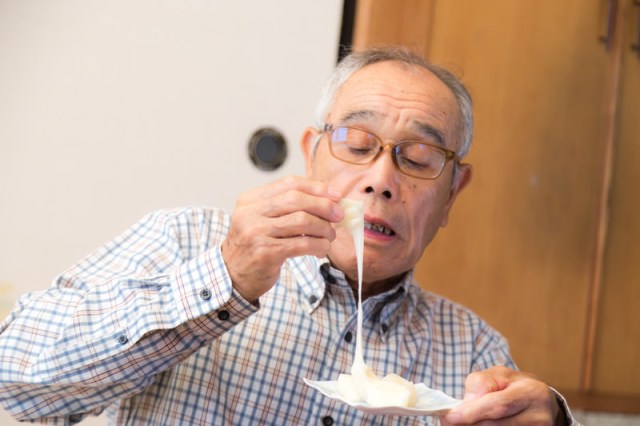
Due to its sticky and chewy texture, if the piece of mochi you swallow is too large, it can lead to choking, asphyxiation, and ultimately death. The Tokyo Fire Department announced that this year between New Year’s Day and 3 p.m. on January 2 seven people were taken to hospital for choking on mochi. Among these seven people, two elderly gentlemen passed away, one in his 70s and the other in his 80s.
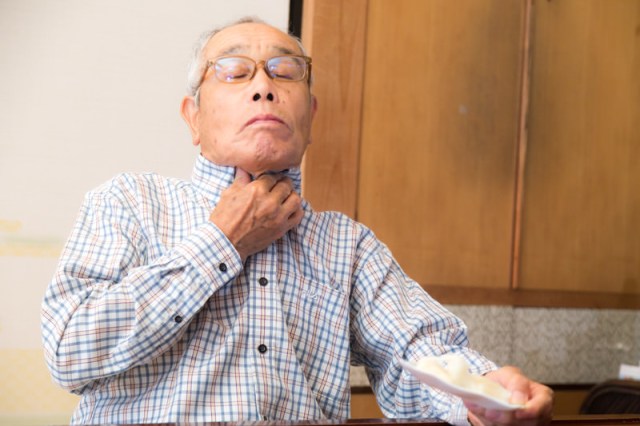
Knowing that it can be such a lethal food, especially when you don’t have as many teeth to chew it sufficiently before swallowing, why is it that Japanese people continue to put their lives on the line by eating mochi?
Nowadays, mochi can come in many forms, but traditionally New Year’s was celebrated with a type called kagami mochi. While it can have different levels of decoration, at its base there are two round rice cakes stacked with the smaller one on top of the larger one. The name “kagami” (mirror) comes from the shape of these rice cakes, which was inspired by ancient bronze mirrors. These mirrors were thought to house spirits and the two of them together represent elements like the sun and moon, or yin and yang, and signifies harmony and good fortune.
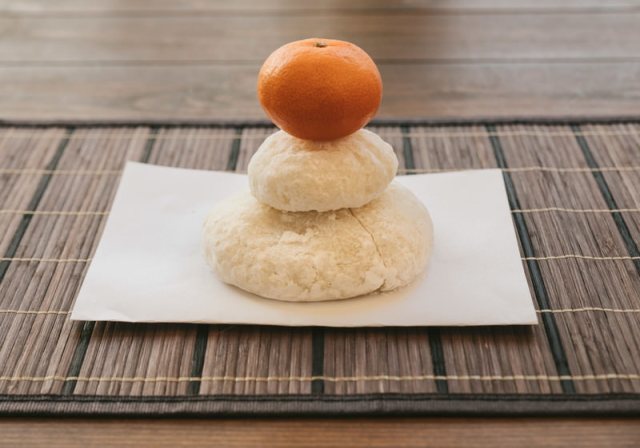
Japanese people still continue to put out kagami mochi as it serves as a vessel for Toshigami, the Shinto Year God, and is thought to bring blessings and prosperity. When Toshigami visits he also grants each person a new year of life in the form of a year spirit, or toshidama. Over time, this became otoshidama, the tradition of giving money to children for New Year’s.
In order to welcome Toshigami into their homes, Japanese would traditionally clean their houses from mid-December, generally finishing around December 28. They would also decorate with other items such as kadomatsu, a decorative display of pine and bamboo cuttings. Pine trees, being evergreen and having strong vitality and rapid growth, have long symbolized longevity and auspiciousness.
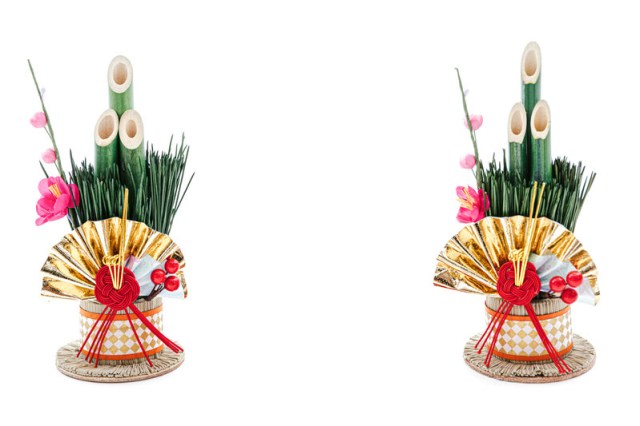
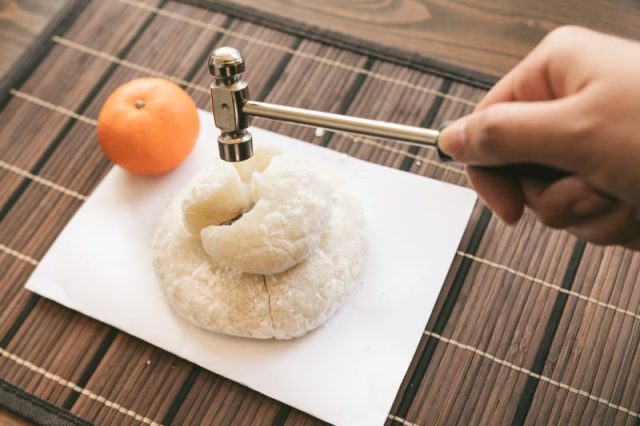
The period during which the kadomatsu is displayed is known as matsu no uchi, at the end of which Toshigami will leave the house. The kagami mochi offering becomes imbued with blessings from the deity and consuming it is believed to transfer the god’s power and good fortune to those who eat it. This is done through a tradition called kagami biraki, literally meaning “mirror opening”, when the hard kagami mochi is broken into smaller pieces with a wooden mallet or by hand.
▼ Smash up those divine blessings! What could go wrong?
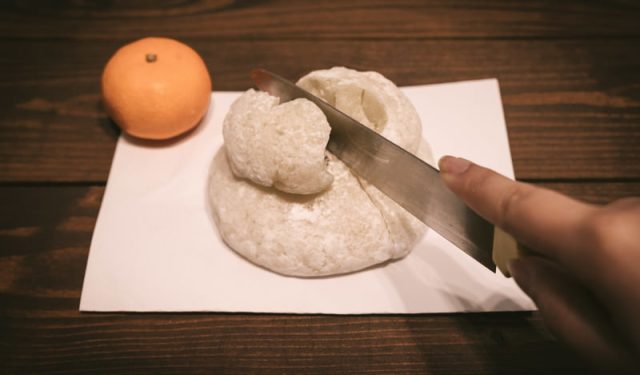
The use of sharp objects, such as knives, and using words like “cut” or “break,” are all seen as being unlucky and are avoided.
▼ Remember: no knives.
The ceremonial eating of kagami mochi actually stems back to Japan’s Heian period, spanning the years 794 to 1185. It started with the imperial ritual of hagatame no gi, or the teeth-hardening ritual. For the people of the Heian era, the more teeth someone had then the healthier they were, leading to longer lives. So, people offered hard foods they believed would strengthen teeth to the emperor, like kagami mochi, with the hope of elongating his life.
Later, in the Sengoku (15th and 16th centuries) and Edo (1603-1868) periods, samurai also had a similar tradition. During the New Year, they offered a mochi similar to kagami mochi to their armor, in a ceremony known as gusoku iwai. Armor and weaponry were seen as the soul of a samurai warrior, so it was done to show veneration.
▼ That helmet definitely looks hungry for mochi to me.
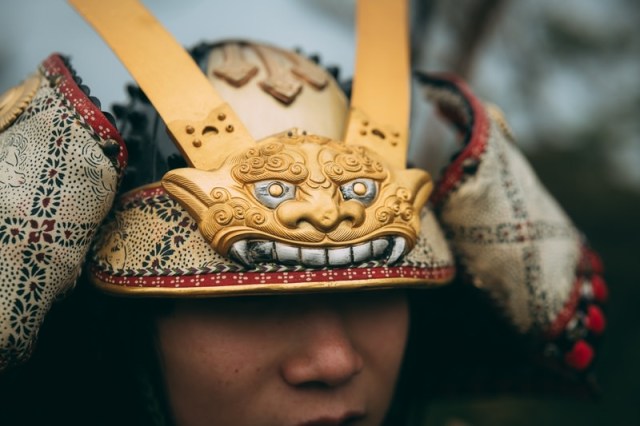
The tradition of using a wooden mallet and the date of kagami biraki comes from the gusoku iwai ceremony. Originally held on January 20, it shifted to January 11 following the shogun Tokugawa Iemitsu’s death. The period of matsu no uchi was similarly impacted. Now, matsu no uchi in the Kanto region ends on January 7, with kagami biraki on January 11. On the other hand, in the Kansai region, both are on January 15.
With mochi being so deeply woven into Japanese history and tradition, it’s no wonder that Japanese people continue to consume it, despite the risks it poses. Nowadays, the traditional way of eating mochi for New Year’s is in a soup called ozoni. There are countless regional variations of the dish, highlighting local ingredients and traditions.
▼ Saitama’s version of ozoni
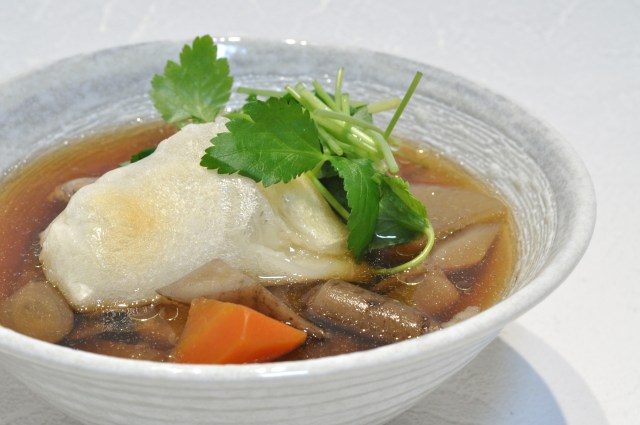
Regardless of what dish the mochi comes in, it remains a hazard. To prevent accidents you should cut the mochi into small bite-size chunks and drink some liquids before eating to help lubricate your throat. If it does get stuck in someone’s throat:
- Immediately call the emergency number 119.
- Try to make them cough or vomit
- If they can’t cough, tilt their chin and firmly strike their back between the shoulder blades.
Whether you want to enjoy it in the traditional way, or try out a new recipe, remember to eat safely and be mindful of small children and the elderly, who are more likely to suffer from an accident.
Despite its dangers, the enduring presence of mochi at New Year’s is proof of the extent that Japanese people will go to preserve tradition and connections to the past, even if it means risking a hospital visit.
Source: Yomiuri Shimbun, Government Public Relations Online, FNN Prime Online, Saison Life Research, All About, World Folk Song
Top image: Pakutaso
Insert images: Pakutaso (1, 2, 3, 4, 5, 6, 7, 8), Wikipedia Creative Commons
● Want to hear about SoraNews24’s latest articles as soon as they’re published? Follow us on Facebook and Twitter!