Sometimes, the Japanese language is a pain in the butt. Seriously, how is it that in the millennia over which it evolved, no one ever said, “Hey, guys, why don’t we come up separate words for ‘leg’ and ‘foot’?”, which are both ashi in Japanese?
But speaking Japanese isn’t all frustrating head-scratchers. As we’ve talked about before, it also has some handy, expressive terms and phrases that don’t have direct English equivalents. So today we’re dipping back into our Japanese dictionaries for another batch of words we’d love to import into English.
Do you find yourself living in the now, enjoying the time and money you have presently without worrying so much about putting away for the future? According to one economist, the language you speak may play a role in how well you’re able to save money. Speakers of Norwegian or Japanese, for example, are more likely to save more money per year, and have more money saved up by the time they retire, than are speakers of, say, English or Greek.
But what is it exactly that differs between these languages, and most importantly, what relation does that have to money?
Learning a foreign language is hard. Even if you master all the vocabulary and grammar, there’s still no guarantee that you’ll ever achieve a native-like accent. For Japanese learners of English, differentiating between the “l” and “r” sounds and pronouncing the “th” sound correctly can be tricky them no matter how many years they’ve been practicing.
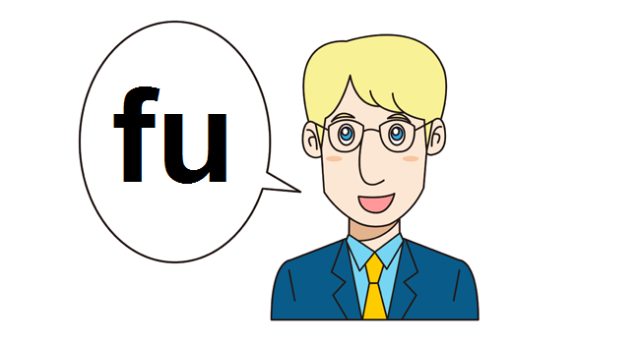
But have you ever wondered what it’s like the other way around? What sounds do we English speakers make that sound strange when we speak Japanese? Well it turns out the sound that we mess up the most is one you might not have expected: “fu”.
Here at RocketNews24, we spend a lot of time talking about language–particularly Japanese and English in Japan. It’s no secret that English is a difficult language to learn, and not just for folks from Japan. Part of the reason for the difficulty arises from the numerous variations English has–from American to Australian to Singaporean. But one country in particular that stands out is the Philippines, which the BBC recently called “the world’s budget English teacher.” While it’s not exactly the most complimentary title, it certainly is true that the country takes English as one of its official languages (along with Filipino, which is basically a standardized form of Tagalog). Of course, in a country with around 170 living languages, it should be expected that Philippine English is quite a bit different from English in the US or the UK.
Like many people who moved to Tokyo in their youth, most of the time I’ve spent in Japanese taxi cabs has been directly preceded by heavy drinking. In the country’s urban centers, people primarily get around by train and subway. However, both of them stop running around midnight (for now?), at which time you can see a mass of people stumbling towards the station like Cinderella if she’d spent less time on the dance floor with the prince and more at the ball’s open bar. Once the trains stop, they don’t start again until about five in the morning, and since staying out all night drinking only seems like a good idea until your buzz wears off at around 2:30 a.m., if you missed the last train the only way you’re getting home is by taking a taxi.
Like taking a cab ride anywhere else in the world, the drivers use radios to communicate with the dispatcher and other cars in the fleet. I could never understand what Japanese taxi drivers were saying to each other, but the reason why isn’t because I was liquored up (OK, so it wasn’t only because I was liquored up). It turns out cab drivers in Japan have a whole set of jargon and code words that you won’t find in any textbooks. Read More