
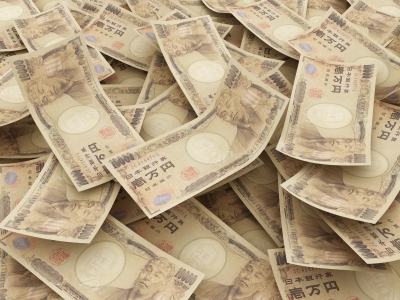
Do you find yourself living in the now, enjoying the time and money you have presently without worrying so much about putting away for the future? According to one economist, the language you speak may play a role in how well you’re able to save money. Speakers of Norwegian or Japanese, for example, are more likely to save more money per year, and have more money saved up by the time they retire, than are speakers of, say, English or Greek.
But what is it exactly that differs between these languages, and most importantly, what relation does that have to money?
As it turns out, our language has an effect on the way we see the world. To give a simple example, in English, we can refer to a specific sibling as either “my brother” or “my sister” without consideration for their age in relation to ourselves. But in Japanese, there is no singular word for “brother” or “sister”, so speakers must convey whether the sibling they are referring to is an older brother or sister (ani or ane, respectively) or a younger brother or sister (otouto or imouto), even in the case of twins. Then there are the words used for other people’s siblings, but that’s another story…
While English speakers might not see the necessity of always indicating whether a sibling is older or younger, in a society like Japan that places more emphasis on age and hierarchy, it’s only natural to make that distinction.
▼I may be only four minutes older, but I’m still your elder!
 Image: artur84 at FreeDigitalPhotos
In this same way, economist Keith Chen believes that whether or not a language differentiates between present and future tense has an effect on how we view time and, in turn, how likely we are to put money aside for the future.
In English, we have different verbs to help us distinguish between past, present, and future. Using Chen’s example, we would say, “It rained yesterday”, “It’s raining today”, or “It will rain tomorrow”, to indicate when exactly the rain has happened, or will happen. But in futureless languages such as German or Japanese, there is no future tense. To say in Japanese, “Ame ga furu” translates simply as “It rains”. In order to indicate the future tense, you need to attach a time-related word like “tomorrow” (ashita) to indicate when the rain will happen, thus making the sentence, “Tomorrow it rains” (Ashita ame ga furu).
Chen theorizes that the lack of a future tense makes the speaker feel like the future is closer to the present, while the presence of a future tense does the opposite, making the speaker more aware and concerned about the now, as opposed to the later. He claims in his research to have found a correlation between speakers of futureless languages and their likelihood to be better savers.
▼Futureless languages display higher average savings overall when compared to futured languages
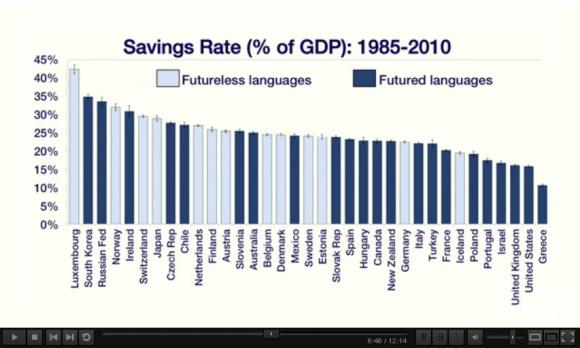 Image: DigitalCast
Even after controlling for various cultural, economical, and religious factors, Chen still found that futureless language speakers are 30 percent more likely to save in any given year, and are going to retire with about 25 percent more in savings.
He admits his theory that there is a relation between language and one’s inclination to save is a fanciful one, but claims he has yet to find anything to disprove it. If you’re starting to think it might be in your best interest to begin studying a futureless language, we won’t stop you – being multilingual is awesome, and does have many other benefits, whether this includes Chen’s theory or not. But if you are mostly just concerned about your future savings, it might be easier to change your attitude and thoughts about time instead.
Source: TED Talks (DigitalCast) via NAVER Matome
Featured image: David Castillo Dominici at FreeDigitalPhotos