For the 15 minutes or so just before work officially begins each morning, most Japanese offices are filled with shouts–or mumbles, for those who haven’t had their coffee yet–of “Ohayou gozaimasu!” While it’s hardly unusual for workers to greet each other with a “Good morning” anywhere in the world, the importance that aisatsu, or greetings, have in Japanese society can often seem bewildering. After countless sleepless nights wondering just why it was so important to be sure to say hello to everyone in the office, we decided to do some research!
Now, obviously, every country and every society has some form of greetings. You say “Hi!” to your neighbors when leaving for work, you nod politely at co-workers when passing in the hall, and you offer customers help when they enter your store. But in Japan, it can sometimes seem that greetings have been elevated to the importance given to bacon in some Western countries.
For example, even when leaving work, people will generally pause at the door, give a slight bow, and say good-bye, usually with a “sakini shitsurei shimasu,” or “Excuse me for going ahead.” And when passing someone in the hall, it’s nearly impossible to slip by without at least mumbling out the trailing end of “otsukaresama desu,” which could roughly be translated as “You’ve been working hard,” though it might be closer in function to, “‘sup, bro?” if you happened to live in a frat house.
So, where does this use of strict, set greetings come from?
▼ Where everything begins: At school!
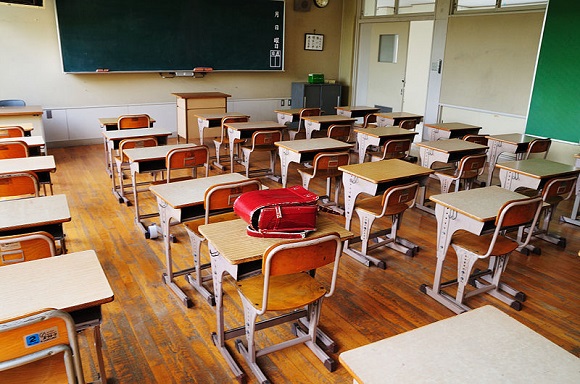
Perhaps unsurprisingly, the importance of proper greetings is taught from a young age, with the proper aisatsu stressed even to kindergarten and elementary school students. One example came from a Japanese co-worker here at RocketNews24, who said that in school, he was sure to greet every passing adult or classmate in the school halls. While this might not seem at all strange at first, we do mean every adult or classmate–which could turn a trip from one classroom to another into a non-stop greeting session that would wear out even a seasoned politician.
And this wasn’t the result of a few idle remarks from teachers. Japanese schools, in addition to the standard curriculum, also have “moral education classes,” which can touch on topics ranging from racial discrimination to the importance of enthusiastic greetings! In fact, the Ibaraki Prefectural Board of Education website offers an outline for a class on enthusiastic greetings for teachers. The class isn’t designed merely to teach students to say hi, but also includes segments on how to greet others. The outline even includes a section for discussing why students should greet others with loud voices. It’s not enough, you see, to simply say good morning–you have to say it loud, proud, and really mean it.
So, as you can see, aisatsu are something that permeates the social consciousness (and we promise that will be the first and last time we use that phrase today) of Japan from a young age. Even so, we have to wonder if everyone in Japan actually thinks it’s all really that important.
We decided to take to the source of all human knowledge–the Internet–to find out!
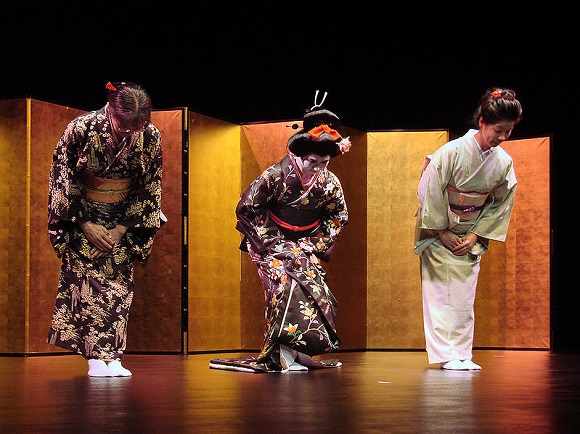
▼ Well, she’s certainly got the humility down!
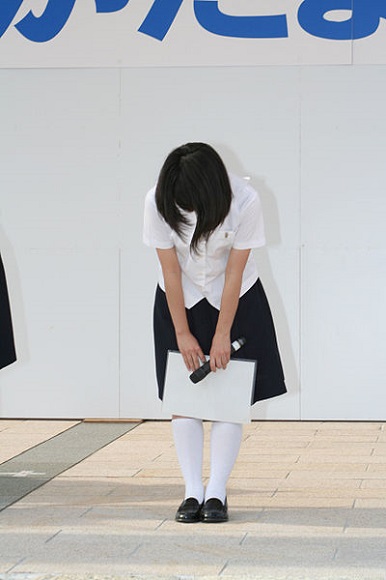
Nowadays most students aren’t quite as fastidious about greeting each other, and we found one entry on Yahoo! Japan Chiebukuro, the Japanese version of Yahoo! Answers, by a frustrated high school student asking, “Aren’t people who don’t offer proper greetings trash?” The majority of the answers to this question were, as you might hope, “No!” However, most of the responses did agree that aisatsu were certainly important and that everyone ought to be greeting others in the hall.
Another Chiebukuro user posted a question asking how to simply explain to her two elementary-school-aged sons the importance of aisatsu. After an incident where her husband got angry after their children were unable to greet their grandparents over video chat, she was struggling to come up with a way to explain why greetings were important. The most popular answer was that “greetings make others feel happy, since it shows that you acknowledge them.”
In an entry on OK Wave, a question and answer site similar to Chiebukuro, a poster brought up the issue of men in their mid-to-late-20s who seemed unable to give proper greetings at part-time jobs. For the poster, this seemed unforgivable and he or she wrote that the people around the men looked down on them and felt they were incapable of dealing with others, adding that no matter how great their abilities were, they were effectively worthless without these basic skills. One of the most interesting responses agreed, laying out three reasons for the importance greetings: 1) If you greet someone at work and after which there is a long silence, it’s much less awkward than if you hadn’t greeted them at all, 2) When dealing with someone you’re not sure about yet, greeting them will encourage them to help you at work, and 3) Whether or not you greet others at work can have a big impact on the atmosphere, and those who don’t will end up with everyone feeling uneasy around them.
▼ Do you think they’re talking about convenience store workers? Naw, couldn’t be!

Another similar question on Chiebukuoro was written by an adult honestly wondering, “This is a bit embarrassing, but I still don’t really understand why greetings are so important.” This person added that “I have often heard that aisatsu are very important once you get a job or enter society, but I wonder if they’re really that important.” Explaining his point further, the person wrote, “I get introducing yourself, I suppose,” but continued to say, “I don’t see why people need to stop working for introductions. Or why we ought to go around and introduce ourselves after moving house.”
The answers, we felt, did a good job of explaining how many Japanese people think about greetings. One person responded by saying that “greetings can give a place a happier atmosphere, and that greeting others become an opportunity to talk and get communication between two people.” Another reply added that “greetings are proof that we bear others no ill will and accept them” and that “they improve one’s own image.”
In addition to work and school, greetings play an integral part of the traditional Japanese marriage ceremony–even behind closed doors.
▼ Please…no more pictures…pleeeease!!
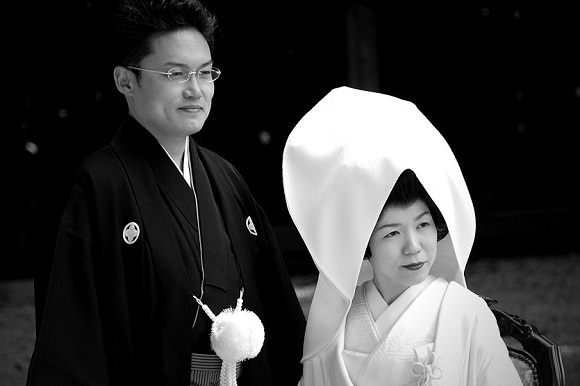
“Shinzoku shoukai,” literally “introduction of relatives,” is a common procedure wherein the families of the bride and groom are formally introduced. This is usually done before the ceremony when both families are brought into a room with a folding screen or sliding doors down the middle. Family members will be seated in a row before the screen or doors are pulled back and allowed to stare at each other uncomfortably for a moment before introduction begin. Depending on the size, either each person will rise and “greet” the other family or the fathers will stand and introduce their family members. This will often happen regardless of whether or not the families have met previously, though it is not necessarily required and may be done in an open room or even outside depending on the timing. Based on a number of OK Wave discussions, it seems that though these formal greetings and introductions are traditional, they’re not really essential. In fact, one future bride found that her soon-to-be husband wanted to skip the whole thing due to a poor relationship with his own family. We can’t help wondering if maybe he should have been cheerier with his greetings in the morning!
While the importance and rigidity of greetings in Japan may be a bit baffling to foreigners and Japanese people alike, the best option seems to be: Just do it! When in doubt, you can always mimic others and repeat after them–just don’t try showing “Irasshaimase!” back at the workers in stores. Unless you’re aiming for a few thoroughly puzzled looks.
References: Ibaraki Prefectural Board of Education, Yahoo! Japan Chiebukuro (1, 2, 3, 4), OK Wave (1, 2, 3), Kekkonshiki Navi, Kekkon Recipe
Images: Wikipedia (1, 2, 3, 4, 5)