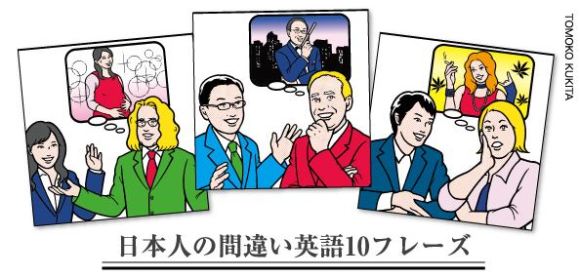
Learning a second language is never easy, especially when there are so many things like context, nuance, and cultural connotations standing in the way. The key to conquering these hurdles, though, usually lies outside the pages of a textbook, and the Japanese Government addresses this issue by employing thousands of foreigners to assist English teachers in its education system every year. So where would a foreigner start when correcting a student on the finer points of English as a second language? One of the easiest ways would be to take a look at this collection of commonly misused phrases and their simple fixes, put together by David Thayne, the head of AtoZ English.
This is your Throwback Thursday article of the week, your peek into the archives of RocketNews24 featuring articles from back when our site was just getting started. Enjoy this blast from the past!
While admittedly kind of amusing for us native speakers, Thayne’s book serves as a great guide for Japanese students of English by presenting examples of frequently uttered sentences that may surprise or shock native English speakers. Each entry follows the same pattern: First, a typical Japanese phrase is given, followed on the next line by the 「危険」(“Danger!”) tag, and the English translation of that sentence as many Japanese would say it. Below that, the offending English is translated back into often abrupt or confusing Japanese, thus allowing the speaker to realise exactly how awkward or misleading their words may sound to a native English speaker. Finally the オススメ (Recommendation) line offers a more natural-sounding English phrase that is less likely to offend or confuse the listener. It’s a simple but surprisingly effective system.
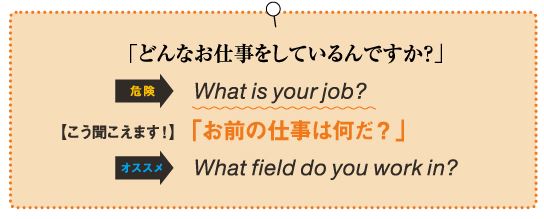
Although grammatically correct, asking “What is your job?” is considered too straight, with the much broader “What field do you work in?” preferred, as it allows for people who are temporarily unemployed to answer without feelings of embarrassment.
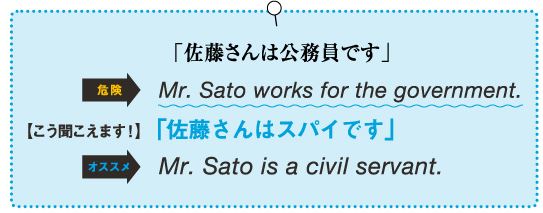
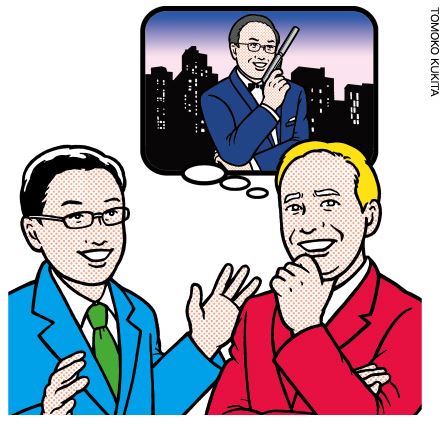
While the first sentence is quite matter-of-fact, there’s a danger that the person hearing this comment will take it to mean that Mr Sato is a spy. Much like James Bond “works for the government” rather than being a civil servant. Besides, as we all know, it’s impossible to define Mr Sato with a mere job title.
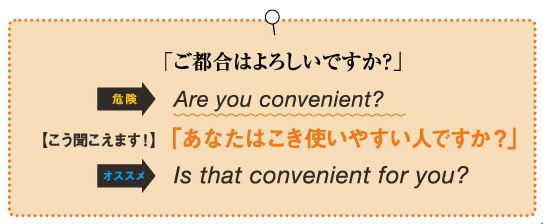
“Are you convenient?” is an understandable mistake when literally translated from the Japanese equivalent. However, having the person as the subject here changes the implication to “Are you someone I can push over and hand all my dirty work to?”.
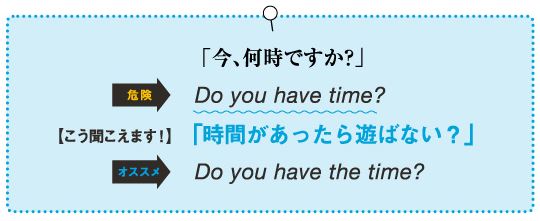
When asking for the time, Japanese usually use the phrase “What time is it now?” which is an almost direct translation of the Japanese “Ima, nanji desuka?” (lit. “Now, what time is it?”). But to sound more natural, students are encouraged to use the more common, “Do you have the time?”. The only problem is the tendency to drop “the” from the sentence, which changes the meaning entirely.
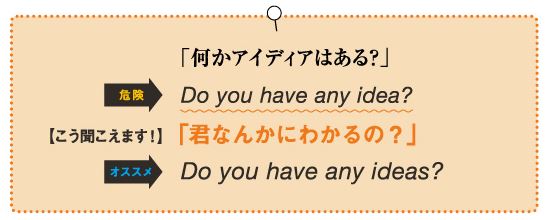
Oh the difference a single letter can make! The lack of definite plurals in the Japanese language makes this a common mistake but it’s one that could get you in trouble if said to the wrong person.
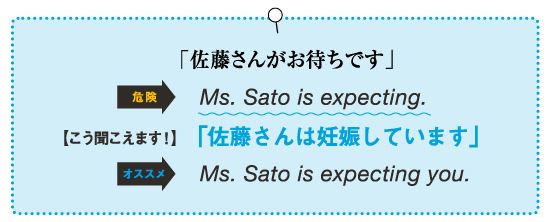
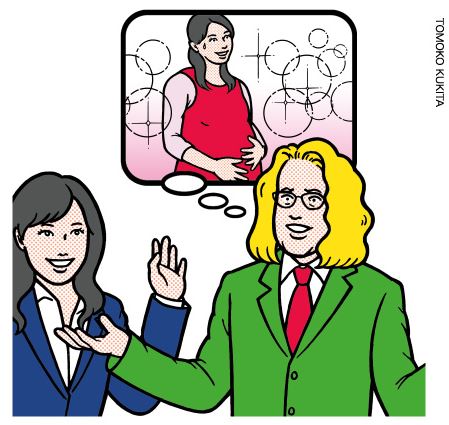
Leave off the last word and you run the chance of horrifying native speakers and earning the wrath of a non-pregnant woman…
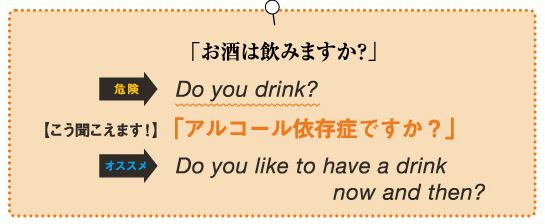
Drinking with colleagues is one of the few times Japanese people feel it’s okay to drop their guard and relax. So questions about drinking habits is often a sign they want to connect. Softening a somewhat accusatory question like “Do you drink?” is a better way to make friends.
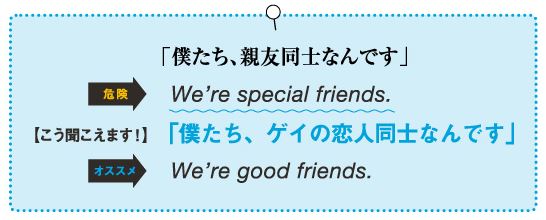
“Special” can be a sensitive word according to the context in which it’s used. While it’s a word with traditionally positive connotations, there’s a lot of risqué subtext at play when used in sentences like this, which Thayne’s book warns Japanese speakers of English to avoid. After all, in some cases a sentence such as, “We’re special friends,” may as well be followed by a nudge and an exaggerated wink in some native English speakers’ minds.
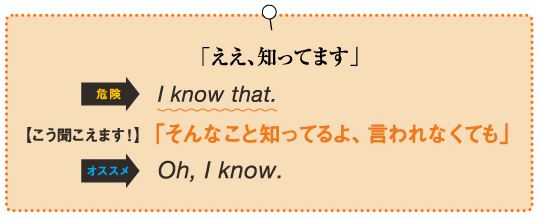
Here’s another example of a sentence that’s correct grammatically but flawed in its usage. Unless you do actually want to appear like a pompous know-it-all.
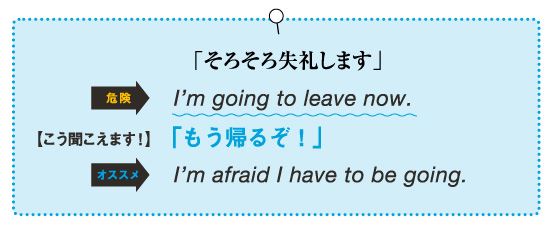
Past, present and future tenses are important topics to cover when studying, but saying “I’m going to leave now” in the real world won’t earn you many friends. Conceal your desire to leave with the more etiquette-friendly, “I’m afraid I have to be going”.
Whether you’re teaching English in Japan or giving tips to a Japanese friend, these sentences can be a good starting point for improvement. It’s also a great way to discuss cultural quirks and funny experiences. Just be sure you choose your words carefully!
Source: Courrier Japon