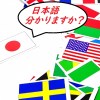
How many of you have ever heard of the Japanese word ‘wasei eigo’? A direct translation into English would be “Japanese-made English”, but put more simply the word refers to English words that, after a little tampering, have been adopted into the modern Japanese lexicon and used on an everyday basis. Despite having their origins in English, wasei eigo words often have quite different meanings to those on which they are based. Consequently, Japanese visitors to English-speaking countries using terms like “baby car” and “key holder” — words that are thought to be “English” in Japan — are often met with raised eyebrows and blank stares from native English speakers.
So come with us now as we look at the top 20 wasei English words that cause Japanese people trouble when they break them out while abroad.
It perhaps doesn’t help that the majority of these words, when pronounced in “katakana English” and with a Japanese accent, sound even further removed from their English originals, but we’re sure you’ll agree that even in their written form some of them are bound to cause confusion in English-speaking countries. The Japanese pronunciations are written in italics alongside each word.
1.) Salary man, OL (Office Lady) sararii man
During a trip abroad, it is not unusual to be asked about one’s occupation. Many Japanese believe that the word ‘salary man’ is used as an everyday English word referring to men who work in an office. It is also believed that ‘OL’ refers to women working in the same environment. However, while such connotations are true within Japan, in an English-speaking country, the word ‘office worker’ is used regardless of the sex. While ‘salary man’ may feel natural from a Japanese speaker’s perspective, in an English-speaking country the same word defines a male worker who is in receipt of a salary.
2.) Key holder kii horudaa
When visiting a tourist attraction, it is common to buy a key ring, or key chain as a souvenir, however the Japanese English word for these trinkets is ‘Key holder’. The word ‘key holder’ itself is not completely incomprehensible, however the most natural would obviously be ‘key ring’ or ‘key chain’.
3.) Cooler kuuraa
In Japan, the English word ‘air conditioner’ is referred to as ‘cooler’. In the US this word may well be confused with a refrigerator in a shop or store. In the UK, meanwhile, telling hotel staff that the kuuraa is broken would result in polite smiles at best.
4.) Gasoline stand gasoriin sutando
Particularly for those using a rental car, knowing where to be able to refill your gas tank is essential. However in Japan, the term “gasoline stand” is used in place of the terms “gas station” in the US, or “filling-station” or “petrol station” in the UK, Australia and Singapore. While “gasoline stand” is not entirely incomprehensible, it is likely to require a moment’s thought on the part of the listener.
5.) Free size furii saizu
In Japan, the phrase ‘free size’ is one, which refers to clothing that doesn’t adhere to a specific measurement but is rather designed for anyone regardless of his or her body size. In an English-speaking country, the phrase most frequently used is ‘one size fits all’. In this sense, when asking a question, the most natural form would be ‘Is this one-size-fits-all?’
6.) Baby car bebii kaa
The term ‘baby car’ is also a Japanese English phrase and refers to the English words stroller, pushchair or baby carriage; i.e. the thing you push a “baby” around in that looks sort of like a “car”.
7.) Potato fry poteto furai
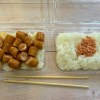
In Japan, ‘potato fry’ is a food that is an accompaniment to a hamburger or a snack to be eaten with alcohol, however in English the same phrase is referred to as ‘French fries’ (US) or ‘chips’ (UK).
8.) Morning call mooningu kooru
The phrase ‘morning call’ is one which defines being woken up by the hotel staff at your preferred time. ‘Morning call’ is a phrase that has taken root in Japanese society, nevertheless the phrase used abroad carrying the same meaning and used much more commonly is ‘wake-up call’. Hopefully hotel staff would be able to put two and two together, though and realise that a “call” in the “morning” could mean only one thing!
9.) (Hotel) front furonto
When staying at a hotel, asking “Where is the front?” is another phrase that Japanese people often use. This does, in fact, refer to the front desk or hotel reception.
10.) Guard man gaado man
The security guard who stands in front of a high-class building or bank is referred to as “guard man” in Japanese English.
11.) Claim kurehmu
Making a complaint against someone or something is known in Japanese English simply as a ‘claim’, however among native English speakers the word ‘complaint’ is used. For example, a Japanese person might say that they would like to “make a claim” to the hotel or restaurant manager.
12.) Mug cup magu kappu
Although not completely incomprehensible, the addition of the word “cup” at the end of “mug” seems rather unnatural. Japanese use this word to distinguish between a mug and a small (non-wine) glass or tumbler which, somewhat confusingly, they refer to as a cup, or “koppu”.
13.) Note persocon nooto pasokon
The advances in portable computers in recent years has resulted in a natural increase in travelers bringing their laptops with them abroad. The word for laptop computer in Japanese English is ‘Note persocon’ which is an abbreviation of ‘notebook personal computer’. Of all the Japanese English words we’ve looked at so far, this is perhaps the one that is most strikingly different to its original English counterpart.
14.) Order made oodaa meido
The Japanese English phrase ‘order made’ is one that refers to the English ‘made-to-order’, or ‘custom made’.
15.) Jet coaster jetto koosutaa
This is a term that refers to arguably the most popular attraction at theme parks, the roller coaster. Still, we suppose they do feel like being strapped to a jet…
16.) Take out teiku auto
Depending on the part of the world you’re in, asking for a ‘take out please’ at a restaurant or fast food establishment could be met with some puzzled looks. This is the term that, along with the pre-existing and perfectly decent Japanese phrase 「持ち帰り」 mochikaeri, is used by Japanese people to refer to “to go” (US) or “take away” (UK) food, often failing to convey the same message when used in English-speaking countries.
17.) Coin laundry koin randorii
In Japan the phrase “coin laundry” is used to refer to what is commonly known abroad as “laundromat” or “launderette”.
18.) Game center gehmu sentaa
Another phrase which is quite different to that used among native English speakers is ‘game center’, referring to video arcades. Although not completely incomprehensible using this term abroad could create some confusion.
19.) Consent konsento
This is a weird one. The English word power outlet (US) or plug socket (UK) is known in Japan as a “consent”, making this one of the most incomprehensible wase eigo words out there. If a Japanese speaker asks you where the consent is, they’re not asking for permission to do something…
20.) Decoration cake dekorehshon kehki
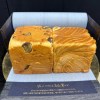
Decoration cake is a combination of the word ‘decoration’ and ‘cake’ which in Japan suggests a cake with lots of decoration, the phrase often used abroad is “fancy cake” or simply “really pretty cakes”. But there again, what cake doesn’t look incredible? Well, perhaps except this one.
Well there you have it! The top 20 Japanese-English words that leave many Japanese dazed and confused when they try to use them abroad! Having reading the above, what were you’re impressions of the word differences? Were there some words that were more, or perhaps less comprehensible than suggested above? Let us know what you think!
Source: Eigo Kyouzai Lab