Dr. Timothy Mousseau, professor of Biological Sciences at the University of South Carolina and researcher for the Chernobyl and Fukushima Research Initiative, presented new findings to the International Ornithological Congress in Tokyo last week that suggest radiation contamination around Fukushima Daiichi, even at low levels, is negatively impacting biodiversity and wildlife populations.
Mousseau and his collaborators have been monitoring radiation levels at 1,500 sites and bird populations at 400 points across Fukushima over the last 3 years. The lay of the land and dispersal patterns of radioactive matter have created a very heterogenous situation in the Fukushima exclusion zone, meaning areas of high radiation lie right alongside areas of low radiation. By controlling for other environmental factors, the scientists can apply a rigorous statistical analysis to predict what the population in a particular area should be.
Using this method, Mousseau et al have found both the number of birds and the variety of species drop off as radiation levels rise, and more importantly, that there is no threshold under which the effect isn’t seen.
This is counter to what both the Japanese government and the United Nations Scientific Committee on the Effects of Atomic Radiation have said regarding low-level radiation. In a report on the situation in Fukushima released in April, UNSCEAR said, “Exposures of both marine and terrestrial non-human biota following the accident were, in general, too low for acute effects to be observed,” although the report goes on to hedge that “changes in biomarkers cannot be ruled out.” Indeed, Mousseau and the Wild Bird Society of Japan report seeing partial albinism in Fukushima birds, a condition rarely seen outside of Chernobyl (see photo above).
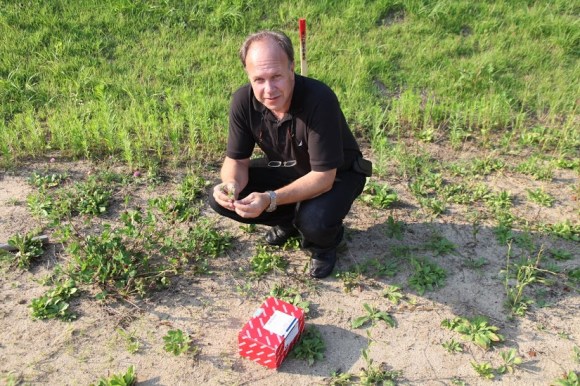
▼ Mousseau collecting samples in Fukushima
Citing years of research in Chernobyl and meta-analysis of studies on areas with naturally occurring radiation, Mouseau says, “Contrary to government reports, there is now an abundance of information demonstrating consequences, in other words, injury, to individuals, populations, species, and ecosystem function stemming from low-dose radiation.”
What we need now, he continues, is more funding for research into what this means in the long term, for the flora and fauna of Fukushima, as well as for the people who live alongside them.
Source: Timothy Mousseau
Images: Courtesy Timothy Mousseau


Fukushima Prefecture Produces First Thesis on the Effects of Internal Radiation Exposure: Children of Fukushima Unaffected?
Radiation fears as report shows Fukushima fir trees to be growing strangely
New study shows wildlife thriving in areas evacuated after Fukushima nuclear meltdown【Video】
Massive manga collaboration bringing 100 years of Shueisha manga to Uniqlo T-shirts【Photos】
Starbucks Japan releases new drinkware and goods for Valentine’s Day
Does a poopy butthole translate to lottery-winning riches in Japan? The results are in!
Cup Noodle Sodas: Culinary innovation or beverage abomination?
Godiva Dessert joins the cute crepe game in Harajuku
Golden Bomber cosplays Japanese glam rock in their new music video【Video】
We try an unusual buffet of dishes made from wild game at a roadside stop in Chiba
Only 100 Limited Edition Matcha Green Tea Moon Pies On Sale, Cost More Than You Can Imagine
Beautiful Japanese race queen goes from trackside to driver’s seat as she becomes pro drifter
We visit the 24-hour male-only sauna just outside of Hakata Station and ponder a strange sight
Starbucks Japan releases new Frappuccino and latte for Valentine’s Day
Our 52-year-old pole dancing reporter shares his tips for achieving your New Year’s exercise goal
Ramen restaurant’s English menu prices are nearly double its Japanese ones, denies discriminating
Giant hotel rooms in Osaka reflect the new non-niche face of travel in Japan.
Japanese women showing rebounding interest in giving Valentine’s Day chocolate【Survey】
Totoro cream puffs and Catbus cookies are finally available in downtown Tokyo
Princess Mononoke magnets return just in time to treat yourself to awesome anime decorations
10 times to avoid traveling in Japan in 2026
What’s inside Starbucks Japan’s fukubukuro lucky bag for 2026?
Starbucks Japan ready to get Year of the Horse started with adorable drinkware and plushies【Pics】
7-Eleven Japan starts new temporary luggage storage service in over 300 branches
Disillusionment at Tsukiji’s tourist-target prices led us to a great ramen restaurant in Tokyo
Starbucks teams up with 166-year-old Kyoto doll maker for Year of the Horse decorations【Photos】
Tokyo’s Tsukiji sushi neighborhood asks tour groups to stay away for the rest of the month
Survey asks foreign tourists what bothered them in Japan, more than half gave same answer
Japan’s human washing machines will go on sale to general public, demos to be held in Tokyo
We deeply regret going into this tunnel on our walk in the mountains of Japan
Studio Ghibli releases Kodama forest spirits from Princess Mononoke to light up your home
Major Japanese hotel chain says reservations via overseas booking sites may not be valid
Put sesame oil in your coffee? Japanese maker says it’s the best way to start your day【Taste test】
No more using real katana for tourism activities, Japan’s National Police Agency says
Starbucks Japan reveals new sakura drinkware collection, inspired by evening cherry blossoms
Updated cherry blossom forecast shows extra-long sakura season for Japan this year
Leave a Reply