Often life-altering events can inspire incredible artistic endeavors, and while the Great East Japan Earthquake is a tragic day for many people, that tragedy can inspire amazing creativity. One particular 89-year-old is using his skills to turn melancholy scenes into hopeful invigorating masterpieces.
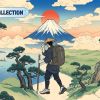
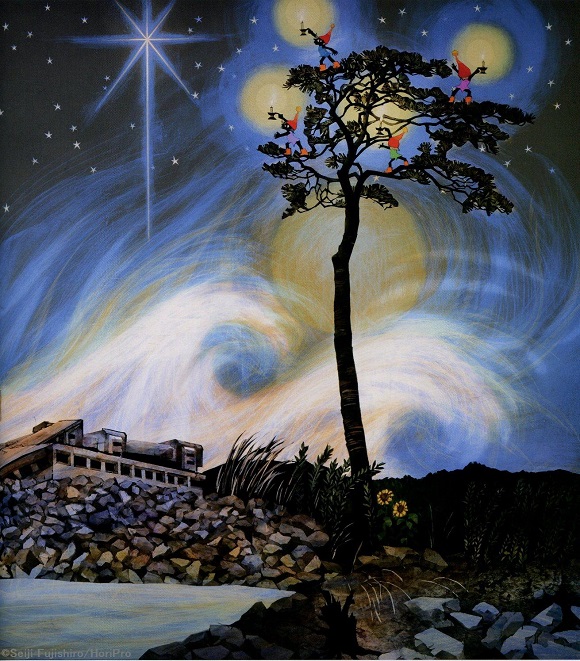
Already well-known for delighting children with his character Keroyon, the frog who drives a red convertible, Seiji Fujishiro is probably most famous for his shadow art. These brilliant pieces of work show amazing scenes populated by his signature silhouetted elvish characters. Recently, he has turned his attention to the affected areas of the Tohoku region and has created astounding art from some iconic images created by the disaster.
Visiting the Tohoku area six times over the course of a year, Seiji Fujishiro created nine breathtaking works of art. Blending his signature shadow art with the places most devastated by the earthquake and tsunami, he creates vivid scenes of revival and hope for the region.
 Image: Fujishiro Seiji Fan Page
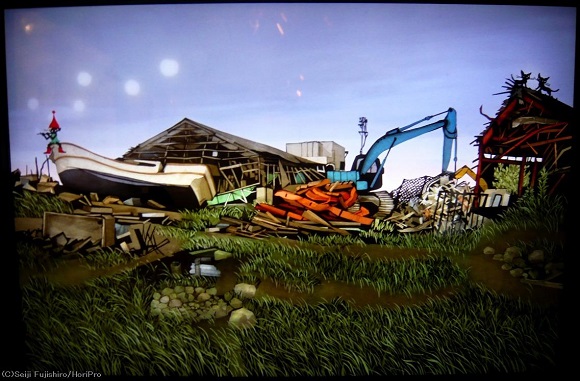 Image: Fujishiro Seiji Fan Page
Fujishiro visited Kesennuma, the location of the much-photographed beached ship, the day after a huge snowfall. The seemingly tranquil scene of snow and ship is interrupted by the vivid damage of nature to the vessel and the small but poignant light of Fujishiro’s familiar elf sitting atop of it. He said he was so nervous when drawing this picture because the snow was making his paper wet which made it impossible to erase anything.
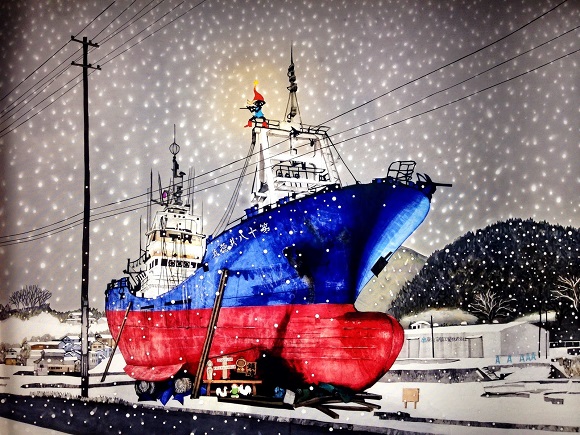 Image: Kinsentansa
The hot, summer heat of Japan was also included as an element in his art when he visited Minami-Sanriku. One of the only buildings to survive the disaster was the Crisis Management Department building. The invading waters tore away the walls and interior, leaving only the skeletal structure standing. Such a reminder of all that was lost is remarkably transformed into a vision of recovery with cranes and elves populating the scene.
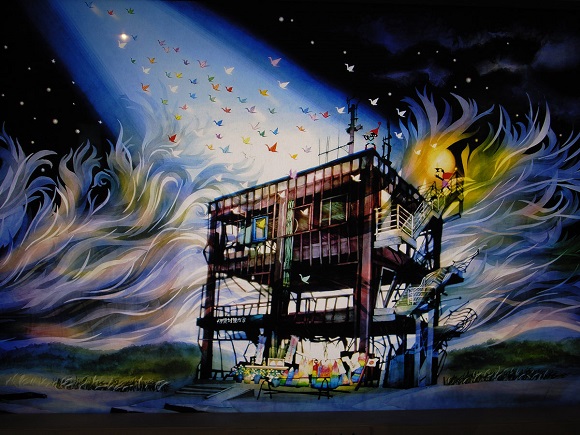 Image: eeldog
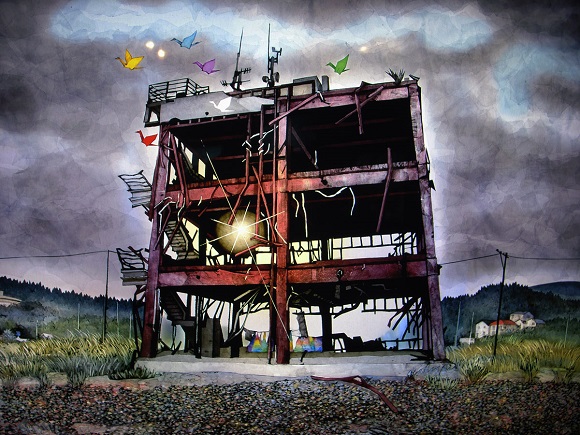 Image: eeldog
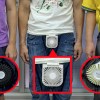
But it wasn’t only the weather that Mr. Fujishiro faced. He also visited the site of the crippled nuclear reactor, adorning himself in white protective gear and sporting a dosimeter, a device that measures exposure to ionizing radiation. Even when the dosimeter alarm went off, he remained at the site to continue his work.
 Image: Kaze no Tayori
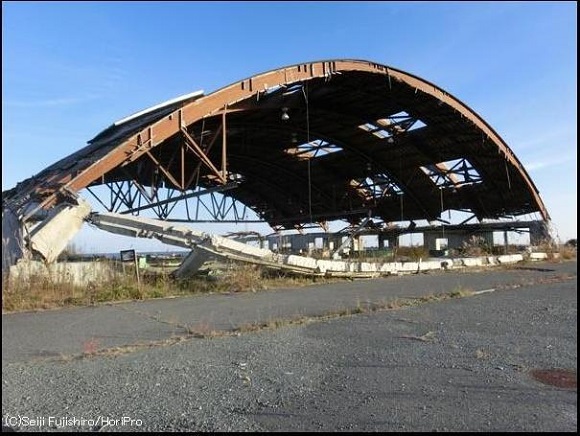 Image: Kaze no Tayori
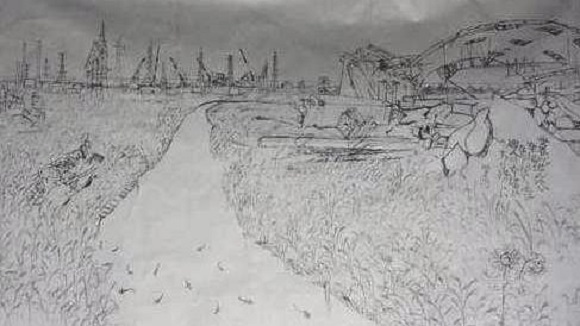 Image: Kaze no Tayori
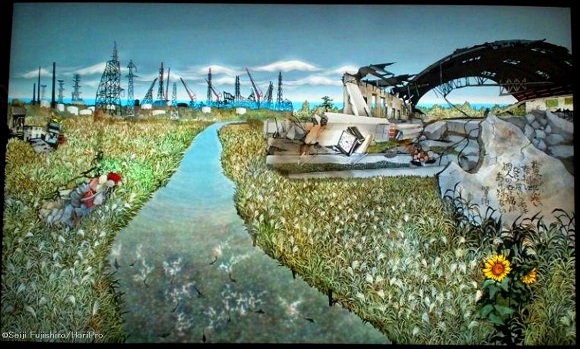 Image: Fujishiro Seiji Fan Page
Seiji Fujishiro’s new book Hikari no Inori was released on September 27, 2013. It features his amazing work for Tohoku relief and many of his other inspiring pieces of art and chronicles his journey over 70 years as an artist. It’s clear right from the beginning that Seiji’s wishes of recovery and revival are included in each of his pieces. We hope there are plenty of years left for Mr. Fujishiro’s art to continue to grow and encourage us all.
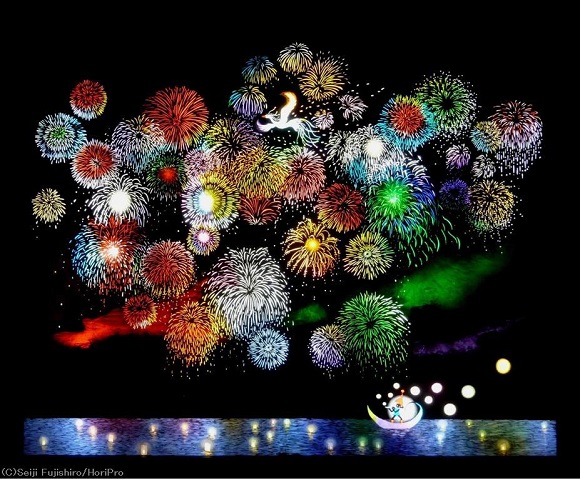 Image: Fujishiro Seiji Fan Page
Source: Matome Naver
Top Image: Fujishiro Seiji Fan Page
All images copyright of Seiji Fujishiro