
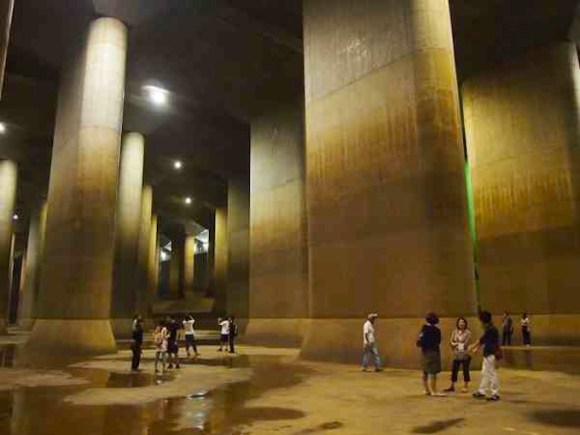
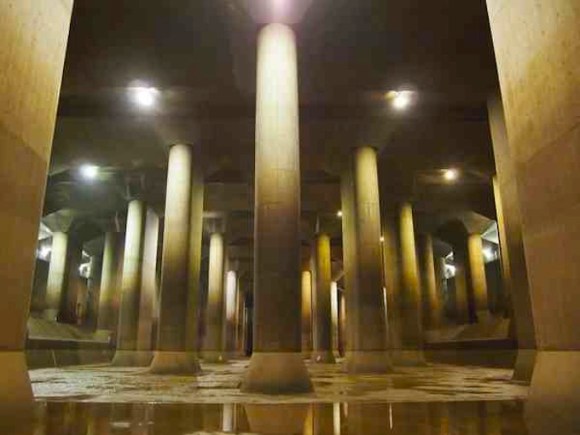
Deep beneath the ground, 19 miles north of Tokyo, lies a truly incredible feat of engineering. The G-Cans Project is the largest storm drain on earth, a colossal series of underground silos and tunnels, built to protect Tokyo from flooding during typhoon seasons. Its main hall (actually an enormous water tank) is held up by 59 columns each 25 metres high, and is known as the “Underground Temple”.
The facility is free to visit by guided tour, and the folks at Another Tokyo, a Japanese website introducing off-the-beaten-track places from around the country, recently went to check it out. This is what they found!
G-Cans (Shutoken Gaikaku Hōsuiro, or the Metropolitan Area Outer Underground Discharge Channel) is located in Kasukabe in eastern Saitama. The area is historically prone to flooding, and the G-Cans facility collects storm water from no less than five different rivers. It cost over 200 million yen (US$2 million) and took 17 years to construct, being completed in 2009. Due to its epic proportions and all-round underground spookiness, it has also been used as the setting for TV shows and commercials.
The facility is accessible via the underground exploration museum “Ryukyukan” (龍Q館). Tours are free, but must be booked in advance.
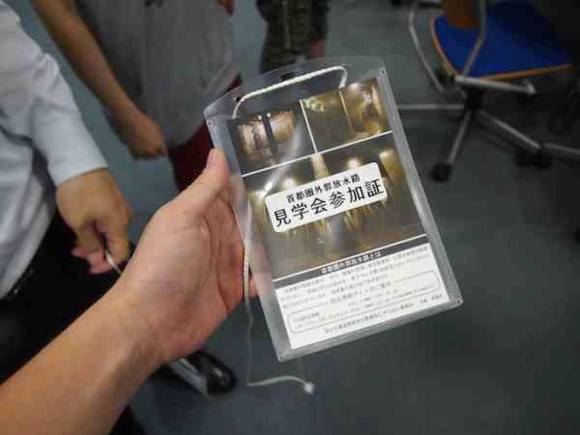
▼ Your ticket doubles as a souvenir postcard!
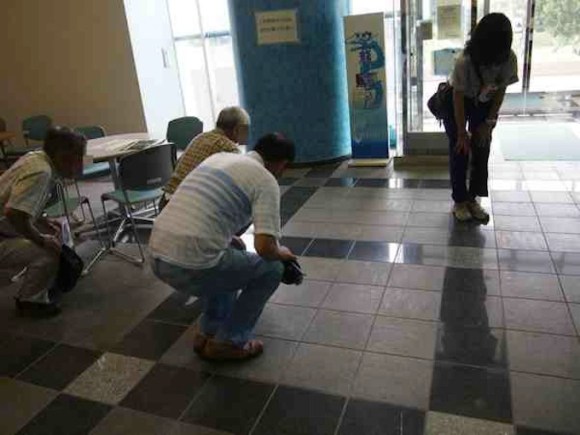
▼ This being Japan, there’s also a group stretch session before making the descent.
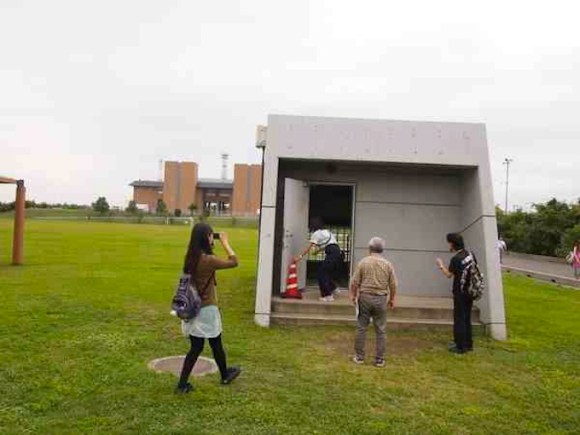
▼ Entry is via this unassuming door in the corner of the grounds.
And you’re in!
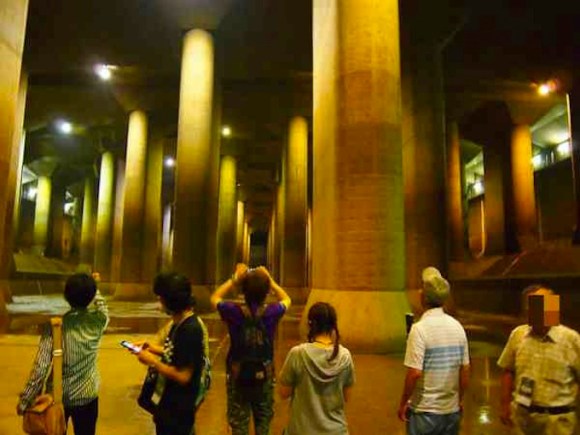
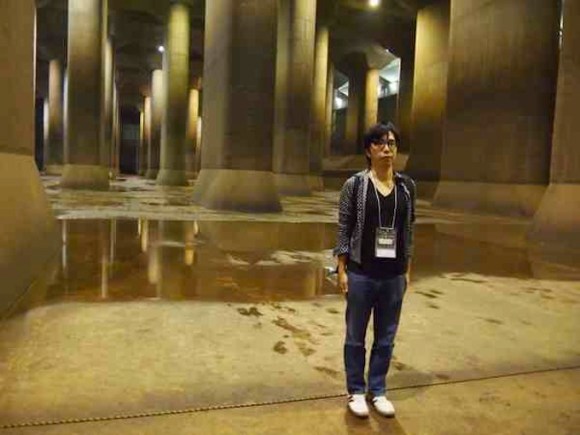
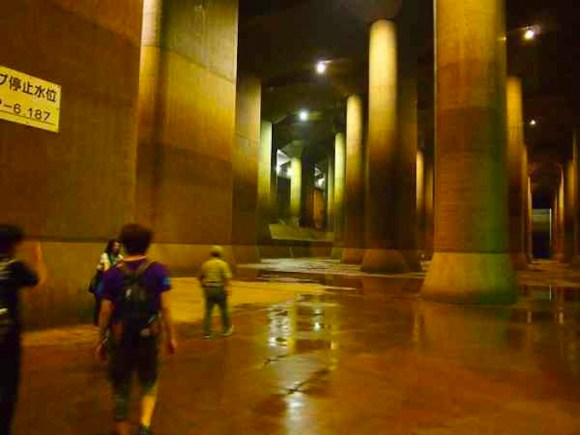
The facility is made up of five concrete containment silos, 65 by 32 metres, connected by 4 miles of tunnels. It’s this main water tank, the so-called “Underground Temple”, which is the real showstopper though. At a height of 25 m, and stretching for 177 m, the visiting people are dwarfed by the sheer scale of it.
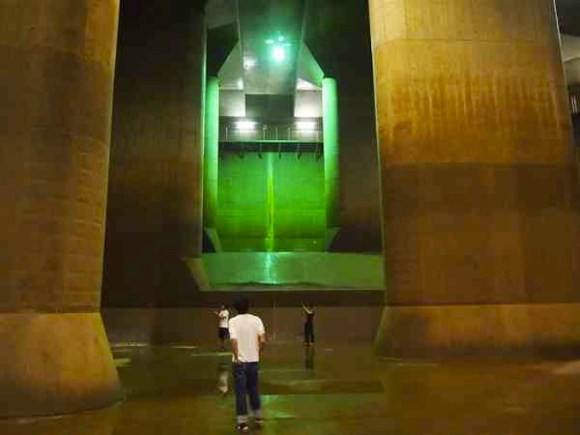
Storm water flows into the facility through five cylindrical shafts like this one:
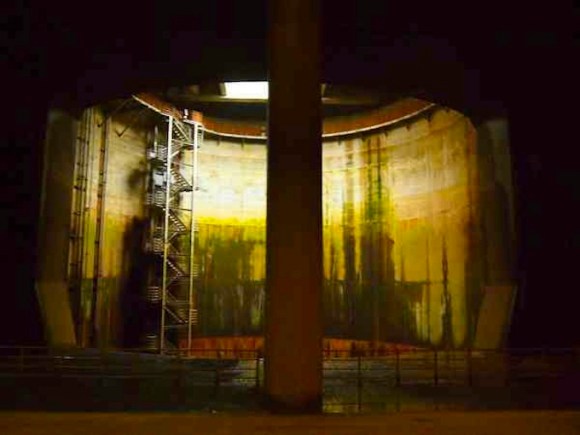
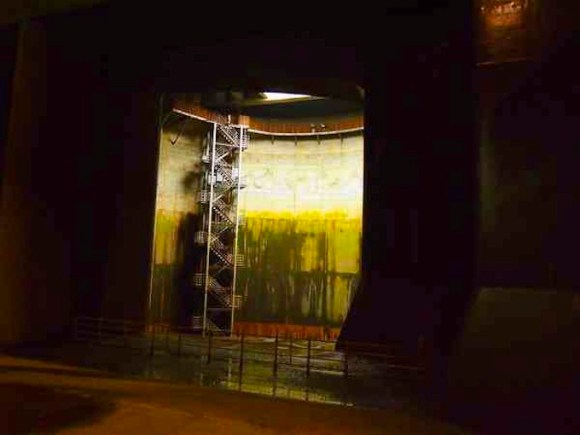
The ceiling is held up by 59 enormous pillars. Each weighing 500 tons, these also function as weights, preventing the tank, which is as large as a football pitch, from rising towards the surface.
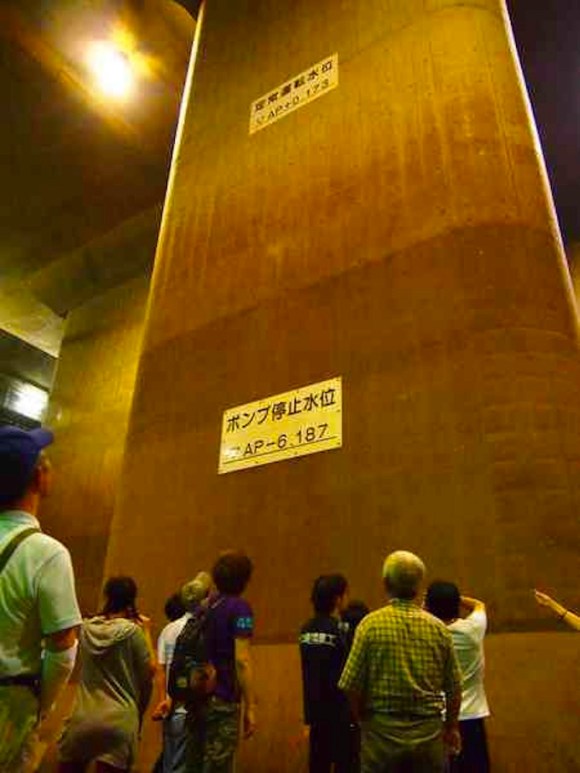
Tours operate three times a day, but only on weekdays – in fact, only Tuesday to Friday! – so unless your office is as cool as ours is here at RocketNews24, you might have to call in sick.
There is some English information available on the official website; however, there are no English tours, and if you don’t understand Japanese, the organisers require that you bring an interpreter. We recommend that you phrase this request more along the lines of “Come see this incredible hall of wonders! I’ll shout you lunch!” rather than, “Hey, want to interpret for me while I go round a drain next Tuesday?”
Oh yeah, and access to the main surge tank is cancelled when it’s “in use”. Well, you wouldn’t want to be in there with all that water, would you?
All photos © Another Tokyo, and are reproduced here with their kind permission.
Source and images: Another Tokyo
Additional sources: Shutoken Gaikaku Hōsuiro Official Site, Atlas Obscura
 Japanese Internet thanks the “Underground Temple” that siphoned off Typhoon Hagibis’ torrent
 Uniqlo announces new T-shirts for One Piece, Naruto and more for manga publisher’s 100th birthday
 Fatal stabbing at Pokémon Center in Tokyo reignites concern over rising stalking cases in Japan
 Japanese kindness restores our faith in humanity after a highway bus accident in Tokyo
 Japan now has a special desk for people who work at home with a pet cat[Photos]
 Japan’s ministry of economy reminds us to “use sound judgment” before buying toilet paper
 Totoro and Calcifer become little light-up lanterns for Ghibli-style excursions or at-home decor
 Japan now has a “for foreign tourists only” Mt. Fuji sightseeing train[Video]
 Krispy Kreme releases Super Mario doughnuts in Japan for a limited time
 Japanese potato chip Rubik’s Cubes coming soon
 This Gunpla builder designs amazingly life-like Gundam dioramas out of plastic model kits
 Starbucks Japan releases new My Fruit³ Frappuccino at only 34 stores around the country
 Tokyo government organizes food truck event to clear out delinquent/homeless teen gathering area
 7-Eleven Japan releases a crazy new viral sandwich: Chocolate Sprinkles and Whipped Cream
 Nine amazing off-the-beaten-path cherry blossom spots in Japan for yaezakura and shidarezakura
 Stunning central Japan wisteria festival is like a purple fantasy straight out of a Ghibli movie
 Studio Ghibli releases the My Neighbour Totoro tea caddy, with a magical self-closing lid
 Japanese onsen egg maker from 100-yen store Daiso needs to be on your shopping list
 Create a tiny Ghibli anime world on your bookshelf with new miniature papercraft art kits
 Starbucks Japan unveils new sakura cherry blossom collection for hanami season 2026
 Train station platform ramen store closes its doors on half a century of history in Tokyo
 Studio Ghibli releases Catbus pullback keychain that runs like the anime character
 Nine great places to see spring flowers in Japan, as chosen by travelers (with almost no sakura)
 Starbucks Japan releases first-ever Hinamatsuri Girls’ Day Frappuccino
 Cherry blossoms begin blooming in Japan with record-early starts for sakura season
 Studio Ghibli adds new Mother’s Day gift sets to its anime collection in Japan
 Virtual idol Hatsune Miku redesigned with look that adds new elements and brings back old ones
 Survey asks foreign tourists what bothered them in Japan, more than half gave same answer
 Japan’s human washing machines will go on sale to general public, demos to be held in Tokyo
 Starbucks Japan releases new drinkware and goods for Valentine’s Day
 We deeply regret going into this tunnel on our walk in the mountains of Japan
 Studio Ghibli releases Kodama forest spirits from Princess Mononoke to light up your home
 Starbucks Japan releases new sakura goods and drinkware for cherry blossom season 2026
 Japan’s newest Shinkansen has no seats…or passengers [Video]
 Major Japanese hotel chain says reservations via overseas booking sites may not be valid
 Put sesame oil in your coffee? Japanese maker says it’s the best way to start your day【Taste test】
 No more using real katana for tourism activities, Japan’s National Police Agency says