All of Japan was thrilled when traditional Japanese cuisine, or washoku in Japanese, became a registered UNESCO Intangible Cultural Heritage in December last year. And one thing that is for certain when it comes to Japanese food is that we Japanese love our rice with a passion. We have various brands and classes of rice, with differing flavors and prices depending on where it’s grown, much like what you might expect with fine wine, and we all have our favorites. It’s simply an irrefutable fact that rice holds a very central place in Japanese cuisine and in the hearts of the Japanese as well.
Yes, there’s nothing quite like the sensation of inhaling the scent of steaming hot freshly cooked rice when you open the rice cooker, and as fond as we are of rice, we were delighted to have the opportunity this week to attend a reception for foreign media titled “Celebrating Worldwide Recognition of Washoku and Rice“. And when we heard that it included being served a traditional Japanese meal by a master chef from a renowned Japanese restaurant and also a chance to try making some unique sushi rolls ourselves, we knew this was definitely a reception we couldn’t miss!
The reception, hosted by the Rice Stable Supply Support Organization (Beikoku Antei Kyoukyu Kakuho Shien Kikou), was held at the Foreign Correspondents’ Club last in Yurakucho this past Monday.
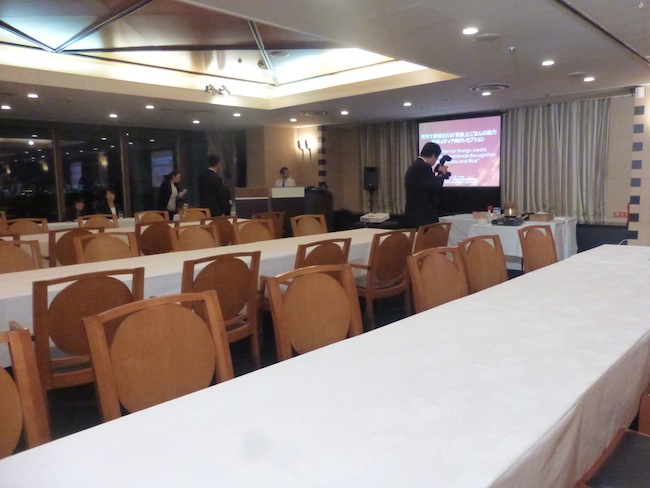
▼A large room was set up for the reception.
▼And there were ingredients for the demonstrations laid out on the table at the front. 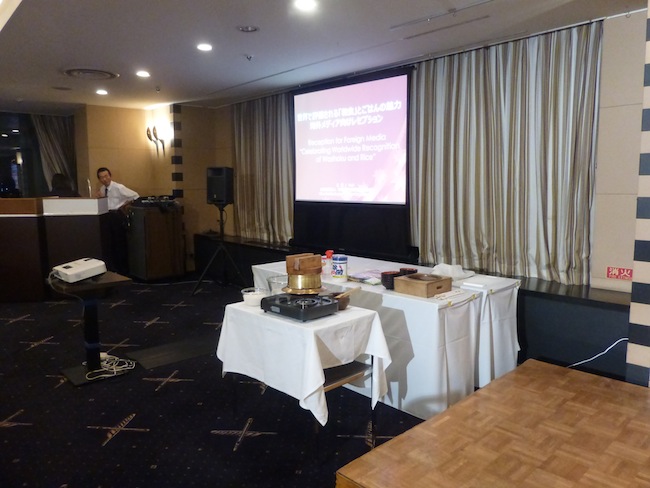
▼It definitely looked like we would be seeing some actual cooking. We were looking forward to the presentation already!
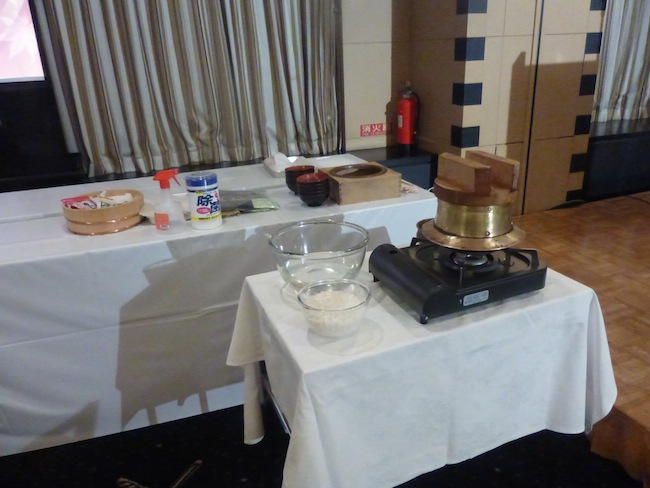
▼Yes, there was going to be some rice being cooked.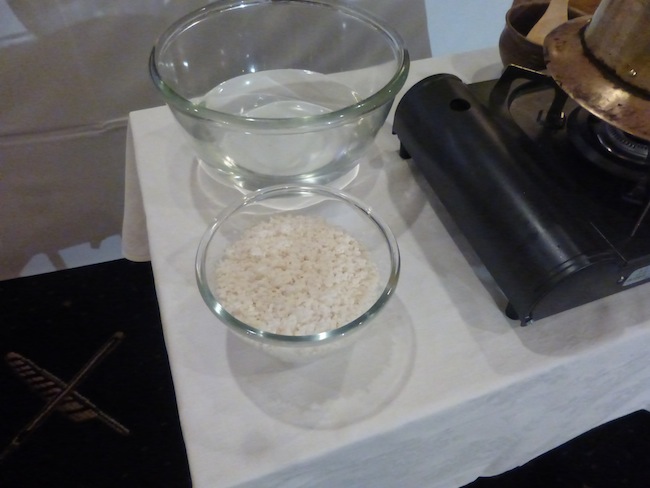
▼There were also examples of beautiful artistic sushi rolls on display near the entrance. The intricate and colorful patterns recreated with sushi, such as Mt. Fuji, snowmen and different flowers were amazing!
▼Some more sushi roll art, featuring the two characters which spell out the word washoku (和食) in the center. How do they make characters out of sushi rolls like that? 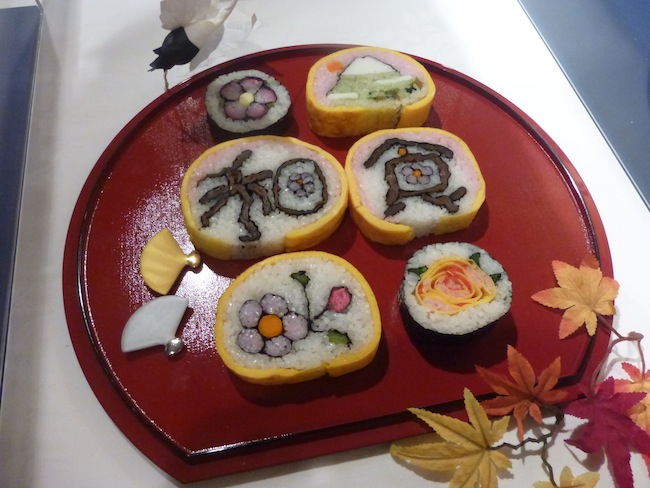
▼And here our some more rolls with additional flower patterns, as well as crab and butterfly motifs. We were thoroughly impressed with the artwork — but wait! Were we going to be expected to make something like that? While the prospect excited us, we have to say we had some doubts about how our culinary creative efforts might turn out … oh well, there was really no point in worrying, was there?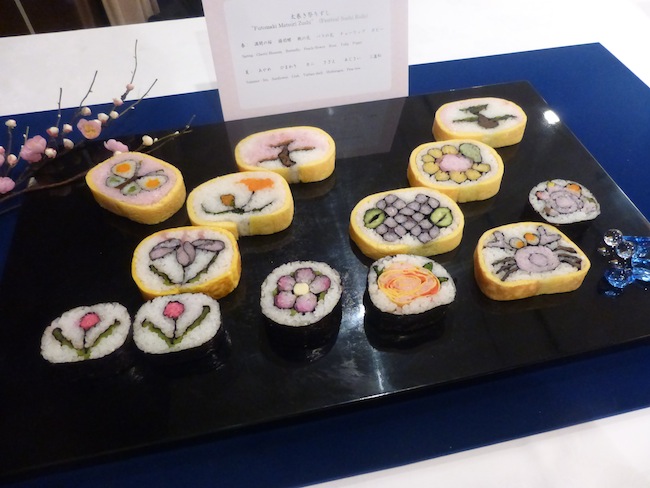
▼They gave us plenty of information and material on the talks that would be given, including a pamphlet on washoku and rice …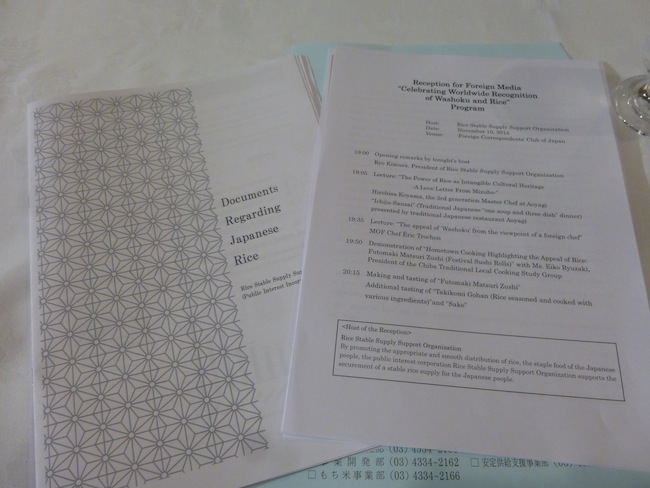
▼ … and also a pamphlet on how to make the festive sushi rolls called futomaki matsurizushi which we had already seen on display.
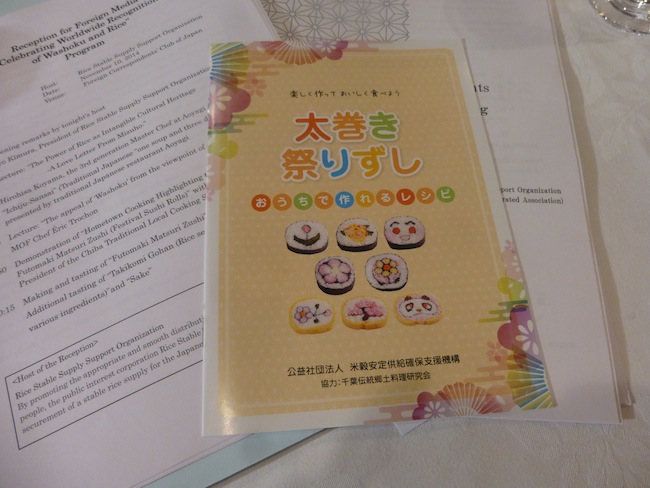
▼The pamphlet shows in detail how to create different rolls, from rose and camellia flower patterns …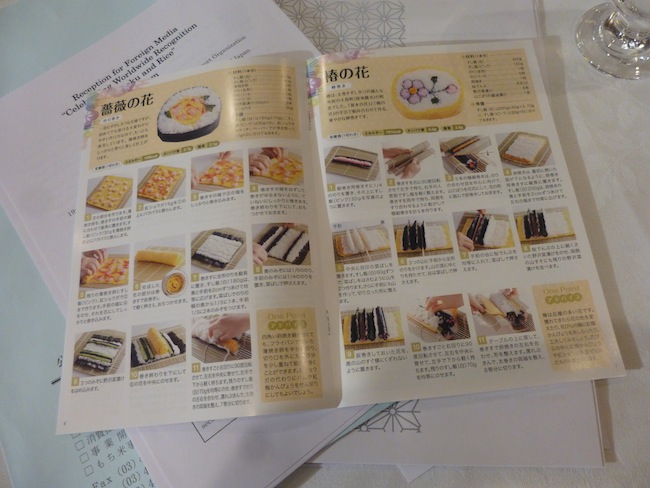
▼ … to playful patterns like this panda here. Amazing! 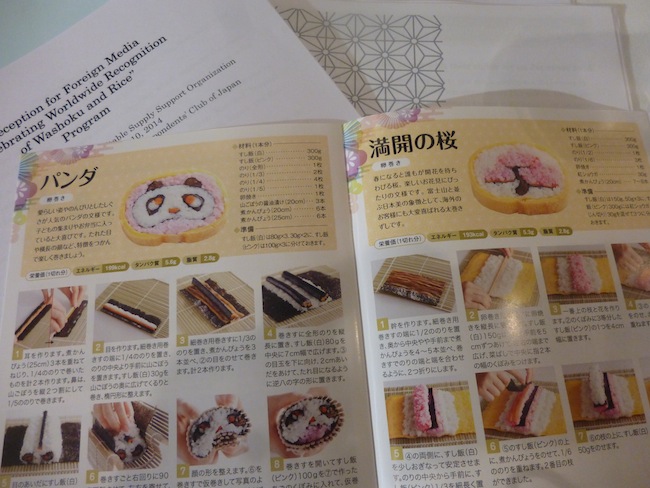
▼We also received material introducing the speakers who would be giving the lectures and demonstrations that evening. 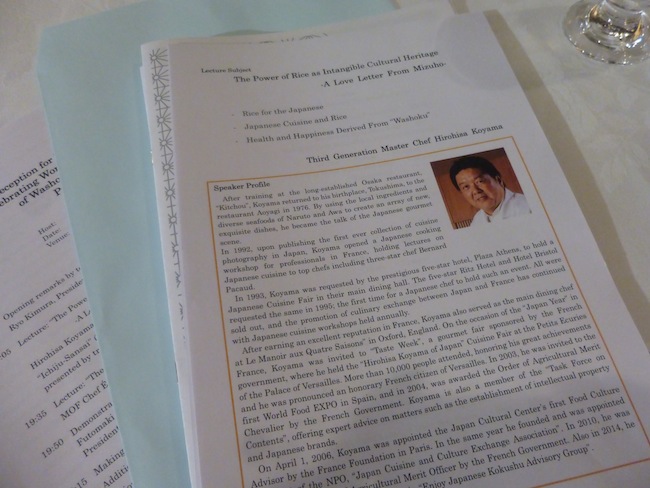
The reception began with a brief speech by Mr. Ryo Kimura, the president of the Rice Stable Supply Support Organization, in which he thanked everyone for coming and expressed his hope that the evening’s program would serve to highlight the importance of rice in Japanese cuisine.
We then heard the first speaker of the evening, Mr. Hirohisa Koyama, third generation Master Chef at the Japanese restaurant Aoyagi owned by his family in Tokushima Prefeture. Mr. Koyama has had experience giving lectures and workshops for chefs in Europe as well as holding special Japanese cuisine events at prestigious hotels such as the Plaza Athens, Ritz Hotel and Hotel Bristol. And even more importantly for us, he was going to serve all of us at the reception a traditional Japanese meal at the end of his talk!
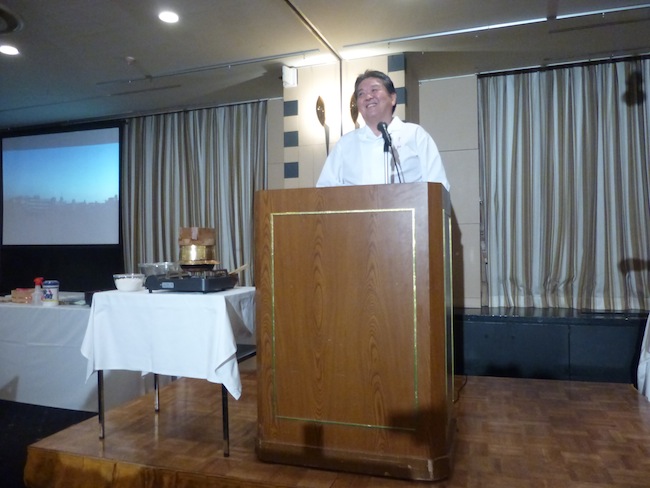
Mr. Koyama spoke of the long, roughly 3,000-year history rice has in Japanese cuisine, mentioning that it is interesting how food is treated as a very important matter even in ancient Japanese mythology, and how the principal sun goddess Amaterasu-ōmikami, who is worshipped at the famous Ise Shrine in Mie Prefecture, has a separate Outer Shrine at Ise (which is still part of the whole Ise Shrine complex but is located about 3 miles away from the main Inner Shrine) that is dedicated to another deity who specifically takes care of her dietary needs — a shrine that serves as her personal restaurant, in a way.
He also spoke of how Amaterasu-ōmikami loved foods such as rice, abalone and lobster (well, no surprise there!) and that it is quite extraordinary that these are items Japanese people very much favor even today.
Mr. Koyama went on to say that rice may be the only grain in the world that can be cooked just with plain water and still have a distinctly sweet taste.
▼To illustrate the point, he proceeded to cook rice during his talk, so that we can see exactly how rice tastes at the moment it’s finished cooking.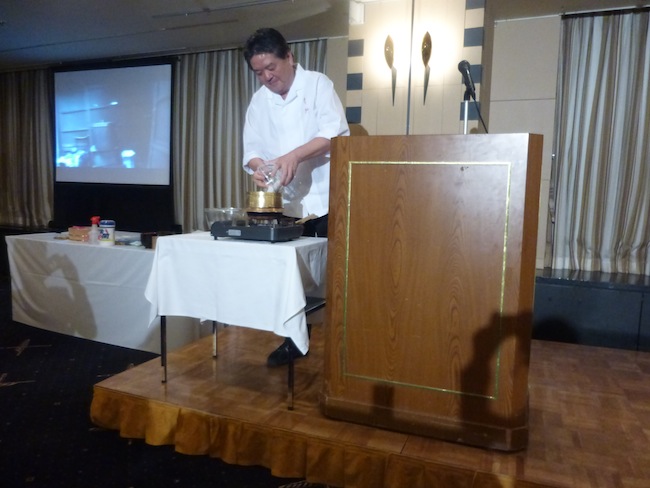
▼The rice and water were poured into the kettle.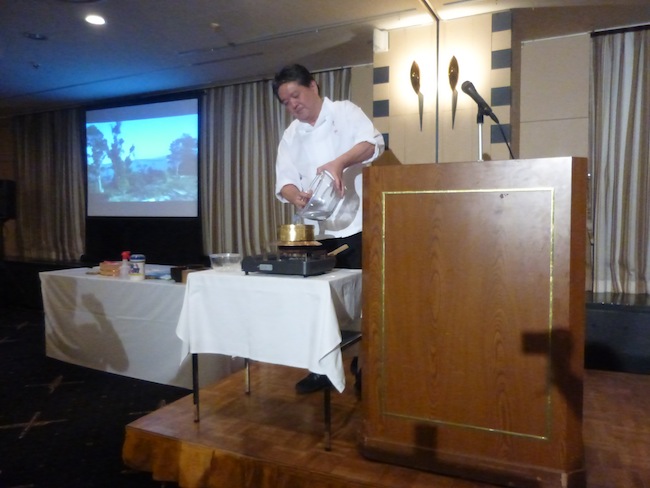
▼He stressed that he has added nothing other than rice and water, and he let the rice cook for about 15-20 minutes. 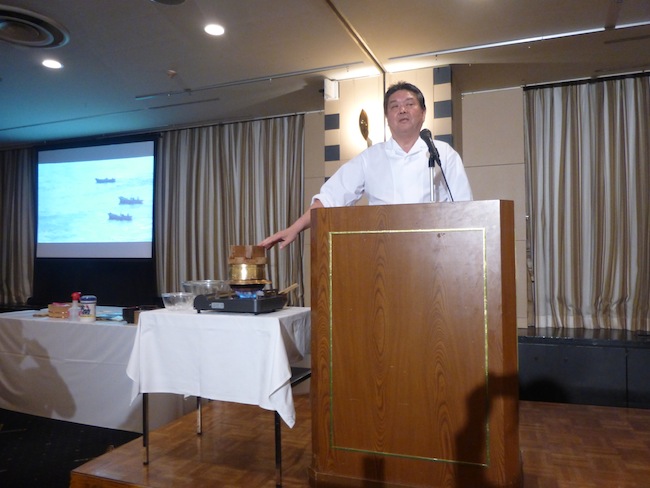
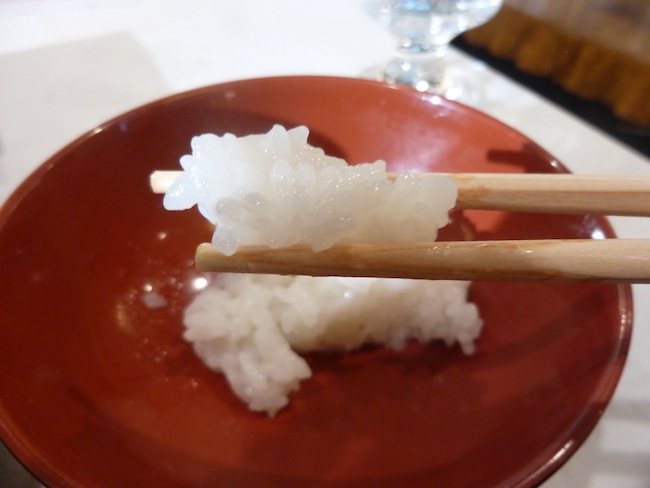
Once the rice was cooked, some of us were able to taste it, although there unfortunately wasn’t enough for everyone. Japanese rice cookers used at homes automatically “steam” the rice for about five minutes after it’s cooked, and Mr. Koyama wanted us to taste it as it is immediately after it finished cooking.
▼The freshly cooked rice was piping hot, and in addition to being sweet, had a moist texture and very rich flavor — a concentrated taste of rice, we might say.
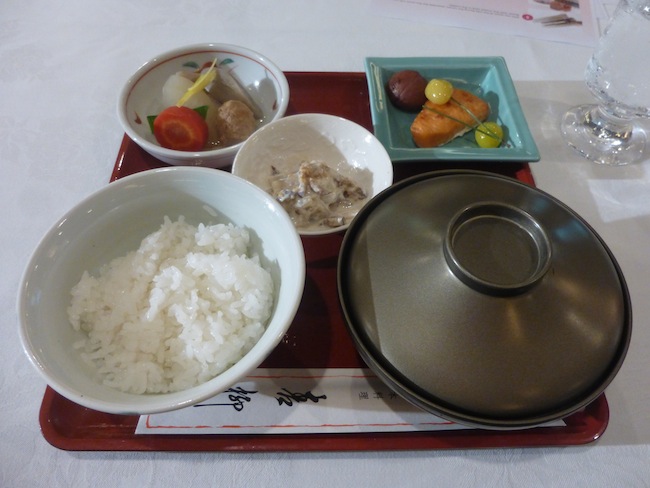
▼And now, it was time to try the traditional Japanese meal consisting of one soup and three dishes with rice. Yay!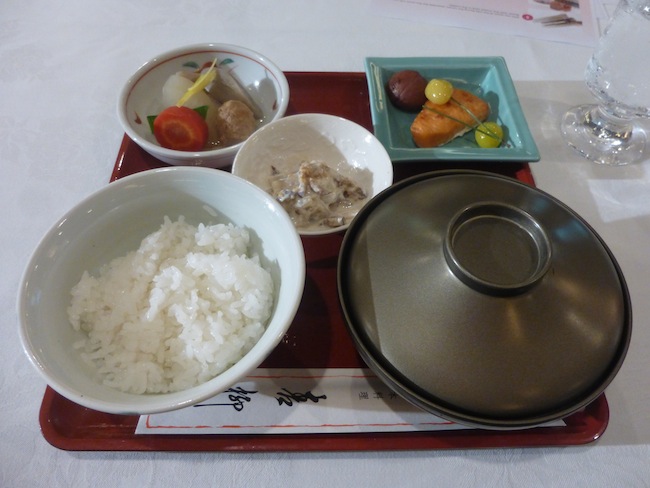
▼See that beautiful pearly white rice! The rice used for this meal was the Hitomebore brand grown in Miyagi Prefecture.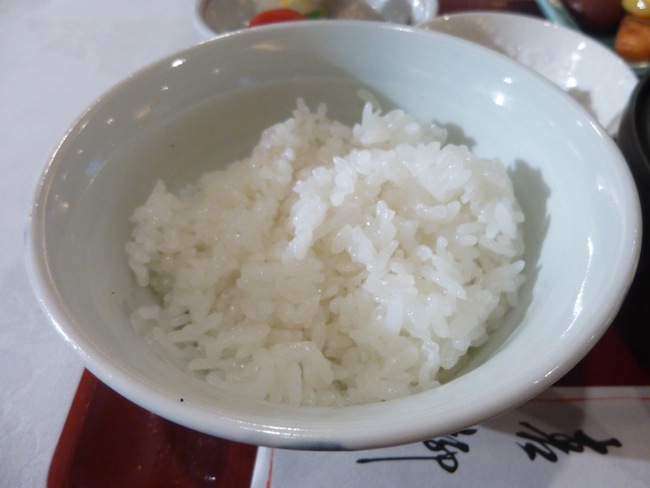
▼We took the lid off the miso soup bowl …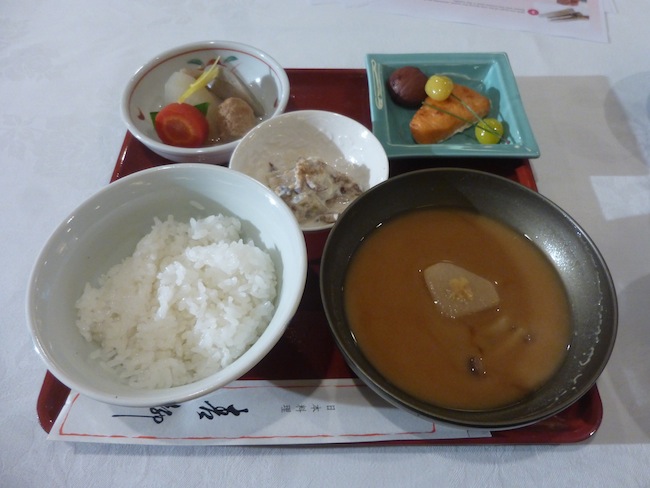
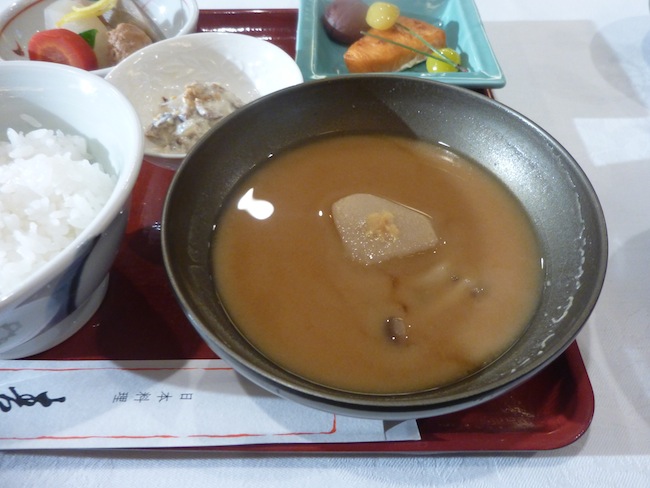
▼… and found a broth containing ebi-imo (a kind of taro potato) and shimeji mushrooms. The soup was made using dried bonito and kelp for stock and flavored with two types of miso, white miso and Hatcho miso. The resulting depth of flavor was amazing!
▼This was the taki-awase (stewed) dish which contained radish, lotus root, carrot, burdock, field peas and chicken meatball stewed in a soup of dried bonito and kelp and flavored with soy sauce and mirin rice wine. The overall flavor was incredibly gentle yet satisfying.
▼And this is the yaki-mono (grilled) dish, grilled salmon dressed with yuzu citrus, with stewed chestnut and grilled ginkgos on the side. The salmon was a perfect okazu (accompanying dish) to have with rice, and the salted ginkgos added a nice bit of flavor and interesting texture to the dish.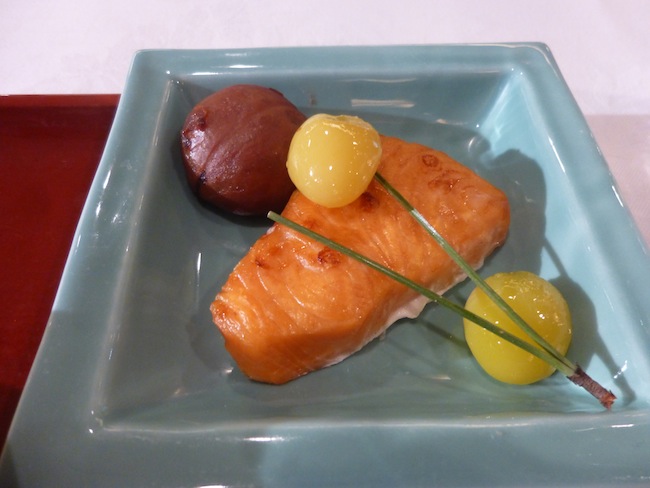
▼Lastly, there was the salad with konjac (devil’s tongue) and “fu” wheat gluten, flavored with a white sauce made from tofu, sesame and white miso. The rich, creamy white sauce was delightfully tasty, thanks to the flavor of sesame and miso.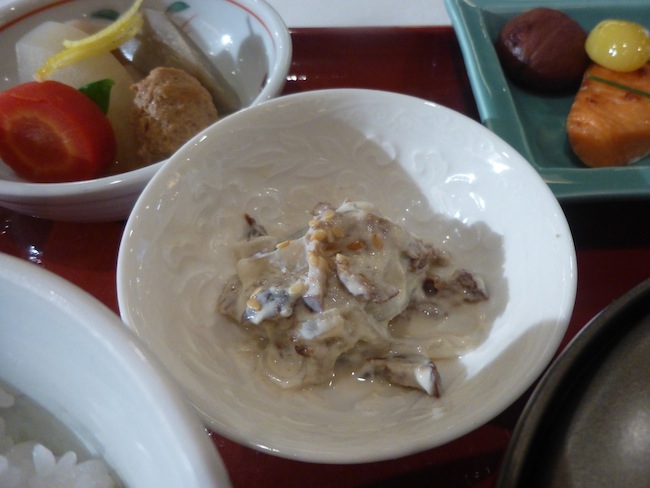
And as our stomachs were filled with all that masterfully prepared food, Mr. Koyama finished his talk by concluding that he hoped the Japanese tradition of using very little oil in cooking and relying on other ingredients such as bonito and seaweed for flavor would become more widely known abroad and that cooking becomes more healthy around the world as a result.
After Mr. Koyama’s presentation, we heard a talk by French MOF chef Mr. Eric Trochon on the appeal and potential of washoku from the viewpoint of a foreign chef. The MOF (Meiller Ouvrier de France) is one of the highest accolades that can be awarded to craftsmen in France, and Mr. Trochon, who is also a flight chef for Hermès, is considered a Living National Treasure.
▼Mr. Trochon, internationally renowned MOF chef, giving his talk

Mr. Trochon spoke about how French cuisine has been strongly influenced by Japanese cuisine, especially since many French chefs began to pay attention and draw inspiration from Japanese cuisine in the 1970s, both in terms of the actual cooking as well as the presentation of the food. Mr. Trochon actually heard Mr. Koyama give a lecture in Paris years ago and said he gained much insight and knowledge from Mr. Koyama’s talk.
Mr. Trochon finished his talk with the comment that Mr. Koyama’s lecture made him re-think the concept of cooking rice, which has become increasingly important in European cuisine and that most of all, he hoped both French and Japanese cuisine can grow out of mutual respect for each other to make customers around the world happy, which we felt was a very nice thought to finish with.
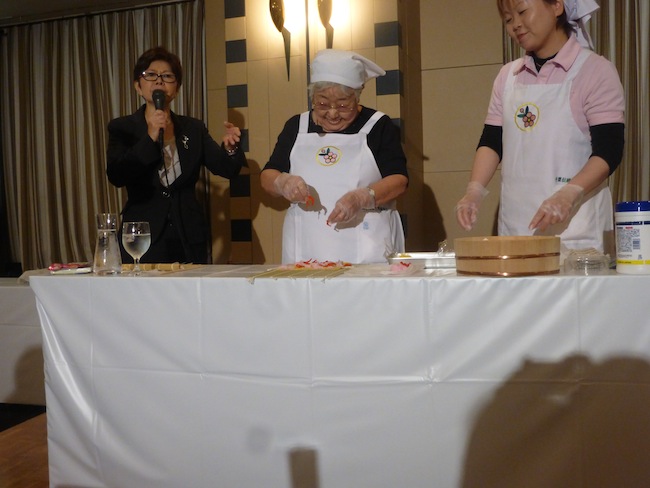
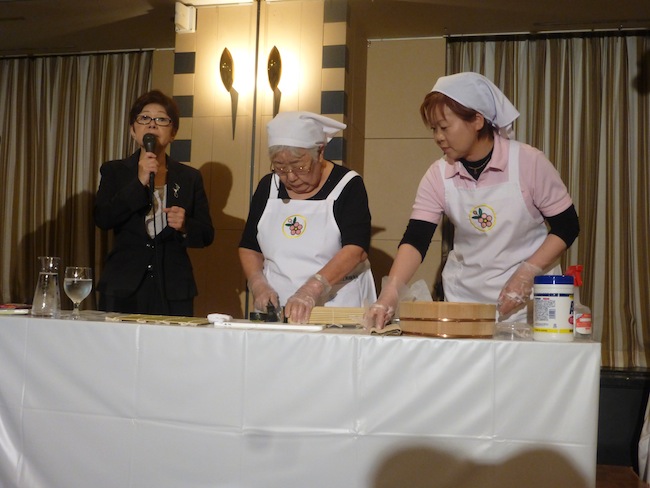
The last presentation in the first part of the evening’s reception was a highly interesting and visually captivating demonstration of making futomaki (a thick type of sushi roll usually wrapped with a layer of nori seaweed on the outside) by Ms. Eiko Ryuzaki, president of the Chiba Traditional Local Cooking Study Group. Ms. Ryuzaki, who has experience working as a nutritionist, has been creating futomaki for over 50 years.
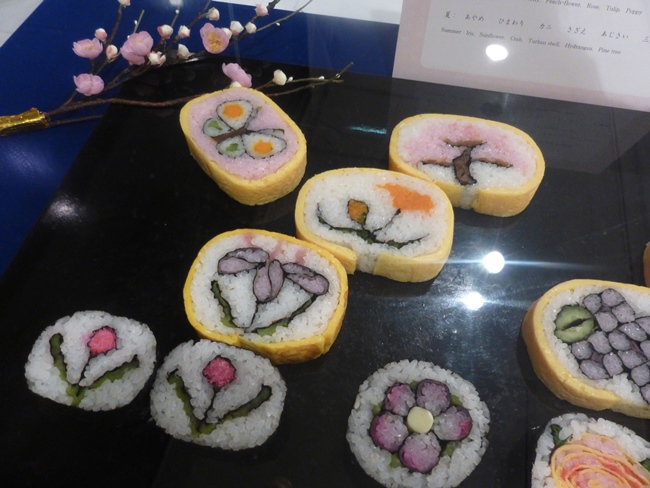
Futomaki is eaten across Japan, but apparently it is a traditional food particularly common in the Boso area of Chiba Prefecture. They also have a tradition in that region of creating elaborately designed festive rolls known as Futomaki Matsurizushi (literally, “thick roll festival sushi”) to celebrate special occasions. Ms. Ryuzaki and her assistants created two types of such rolls for us for the demonstration.
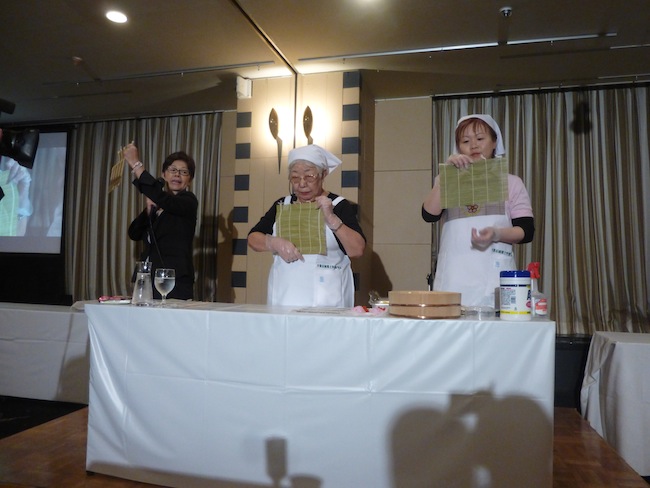
▼Here, Ms. Ryuzaki and her assistants show us the three different sizes of the bamboo mats used to make sushi rolls.
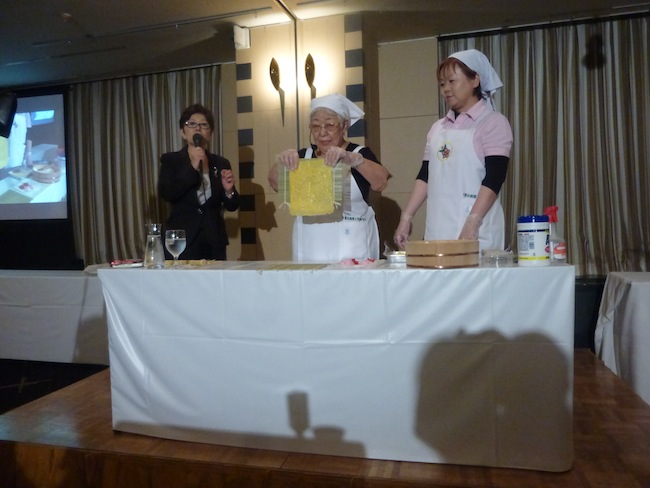
▼First, she places a thin sheet of cooked egg on the bamboo mat.
▼Pink colored sushi rice (vinegared rice) is placed evenly on top of the egg.
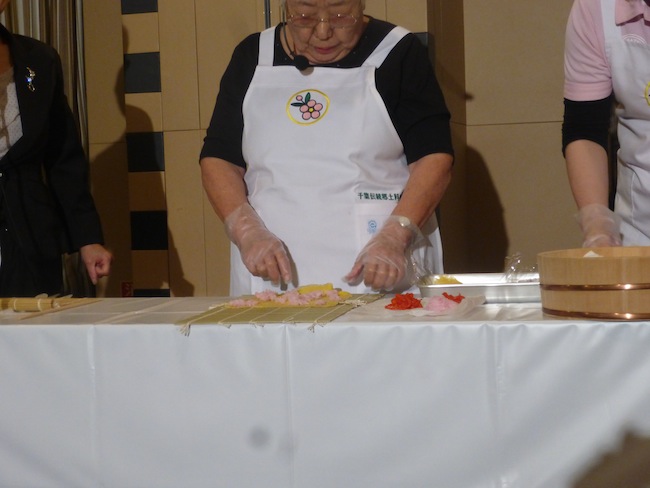
▼Pieces of red bell pepper are placed on top of the rice. (Typically, red ginger is used for the red color, but in this case paprika was used as a substitute.)
▼The egg and all the ingredients are rolled up to make one part of the roll.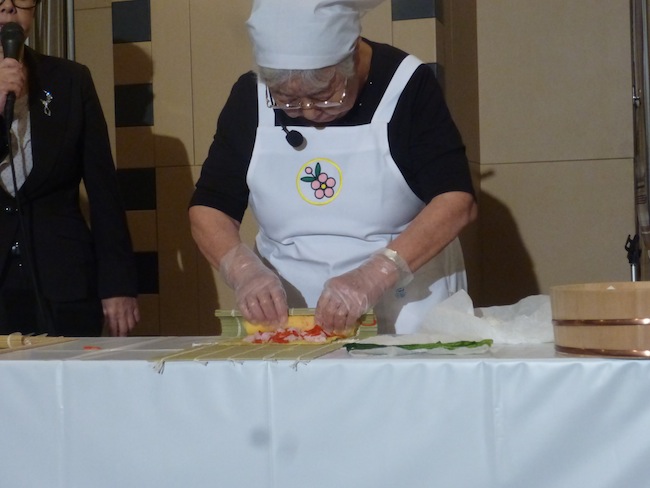
▼Next, she takes a large sheet of seaweed to make another part of the roll…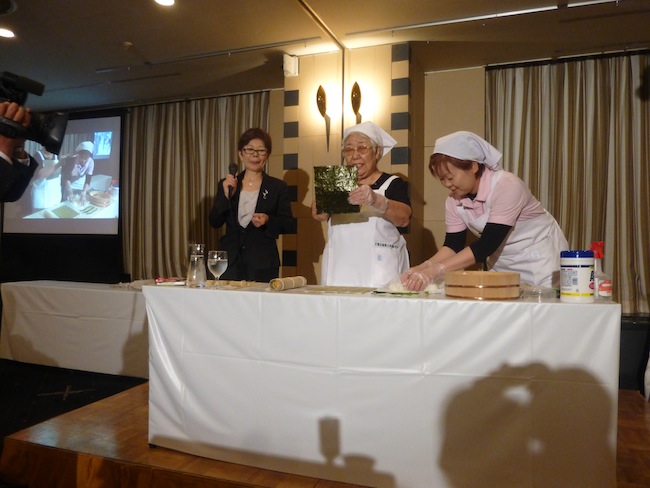
▼… then places white vinegared rice on top of the seaweed.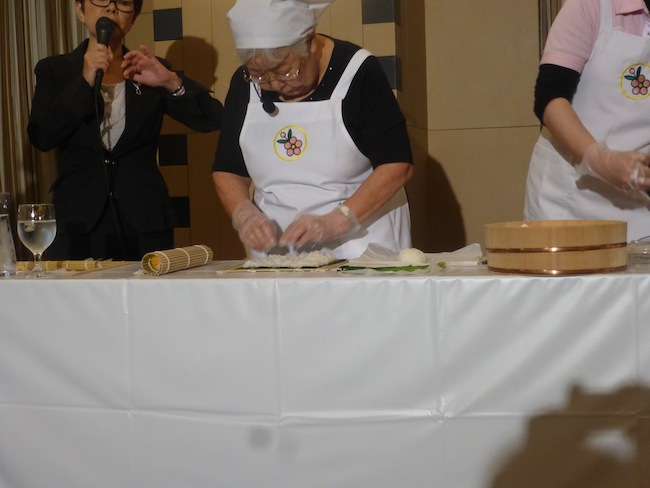
▼Then, she takes two thin strips of seaweed …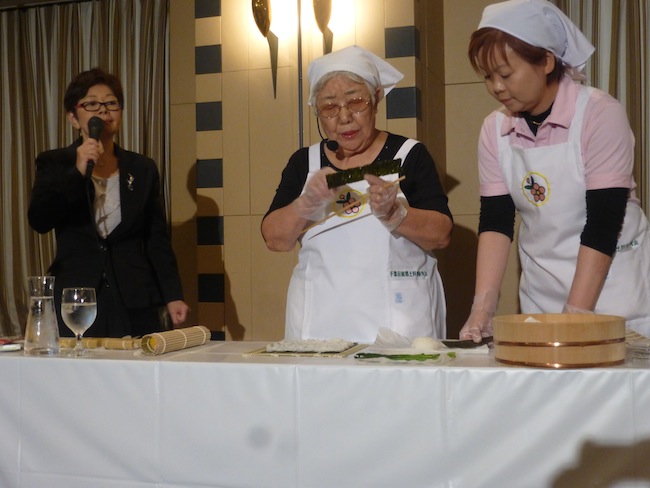
▼… and places them on the rice, along with strands of pickled greens. 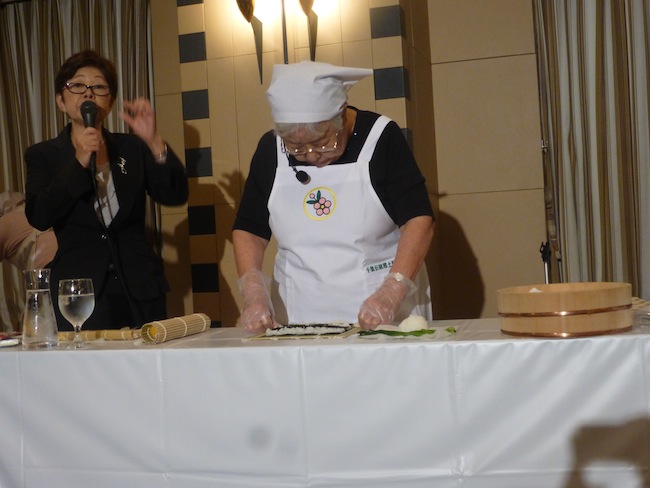
▼The first part of the roll wrapped in the sheet of egg is then placed on top, and all the ingredients are rolled up and wrapped with the outer sheet of seaweed.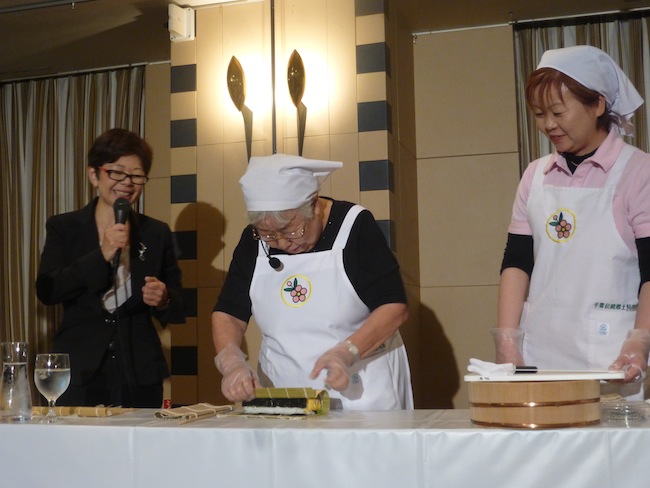
▼From the side, you can already see the beautiful pattern created inside the roll.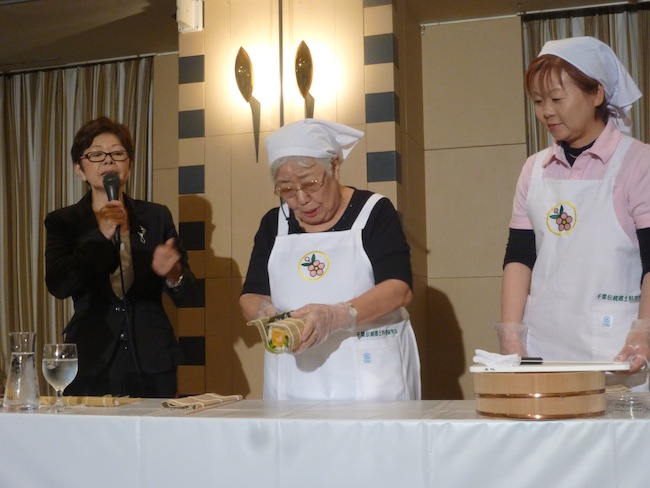
▼Finally, you cut the roll into even pieces of appropriate width …
▼… and you get a rose pattern, which looks something like this. The creamy yellow of the egg makes for gorgeous rose petals!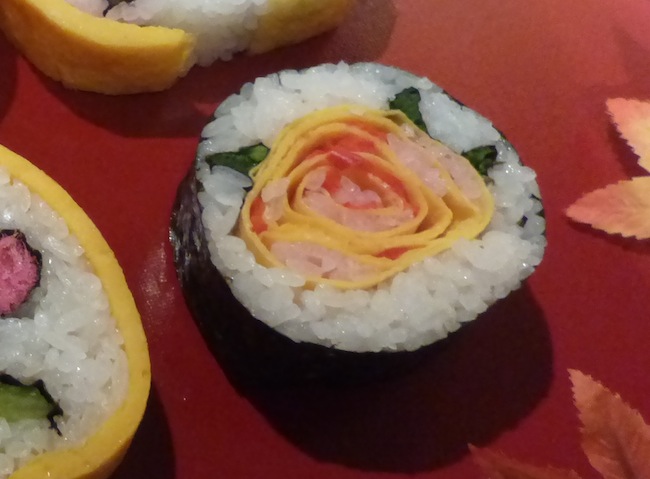
▼The second roll Ms. Ryuzaki made involves first preparing five very thin rolls of both pink and white vinegared rice wrapped in seaweed, which she is here placing together on the bamboo mat in held in her hand.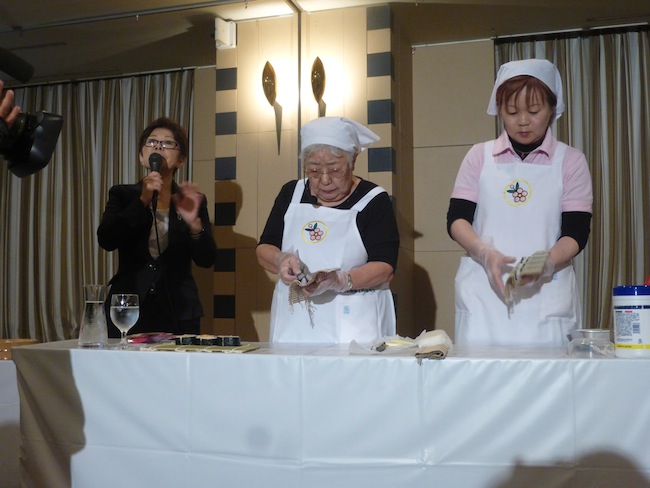
▼She then places a piece of processed cheese in the center of the five rolls, as well as long pieces of boiled spinach in between the rolls.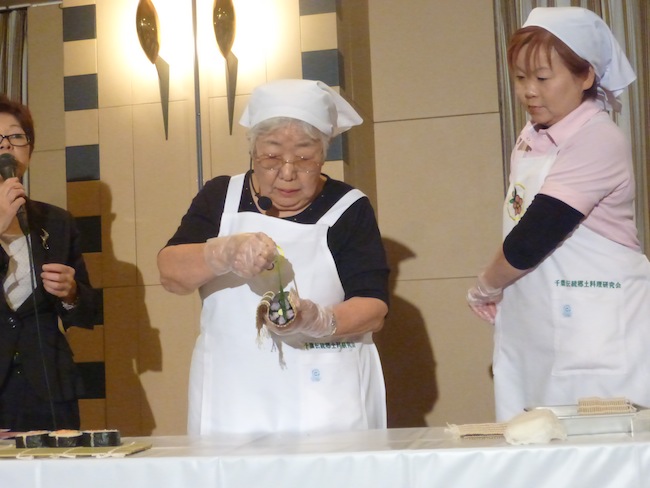
▼The five thin rolls are squeezed and rolled up together to form one part of the futomaki roll.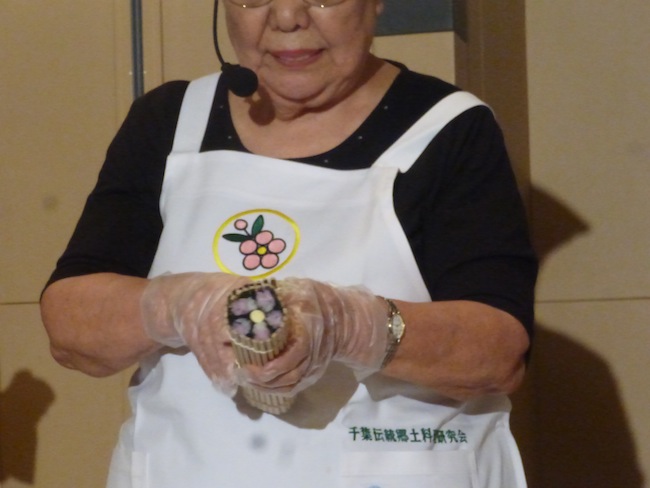
▼Then, to create the other part of the futomaki, she takes out a large sheet of seaweed, on which white vinegared rice is placed. 
▼The first roll made from the five thin rolls is then placed on top and everything is rolled up together, as was done with the first rose futomaki she made. 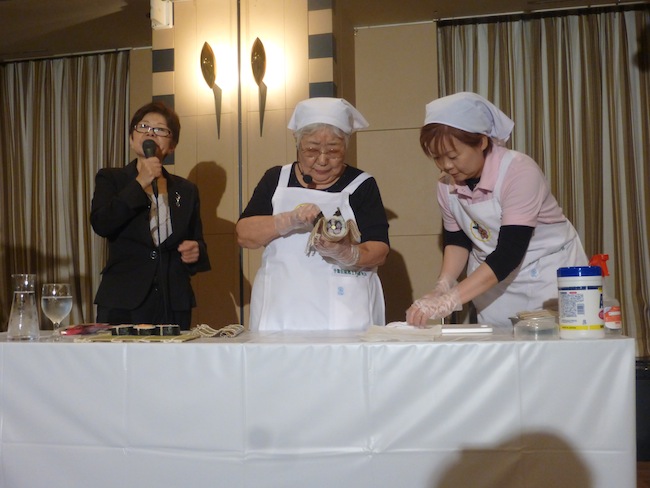
▼Make sure everything is wrapped up firmly … 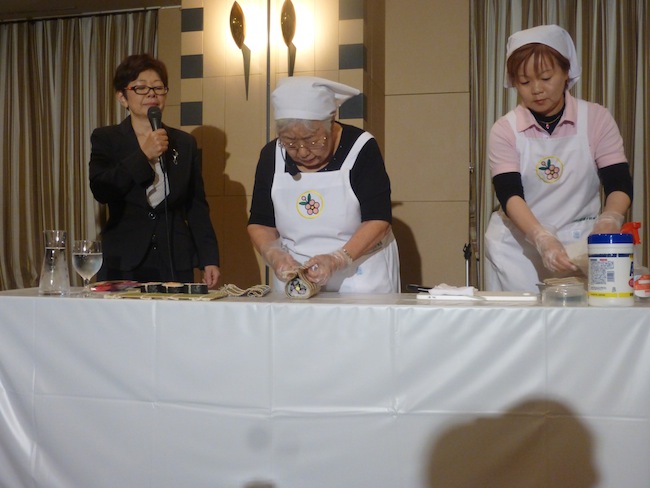
▼… then cut the finished roll …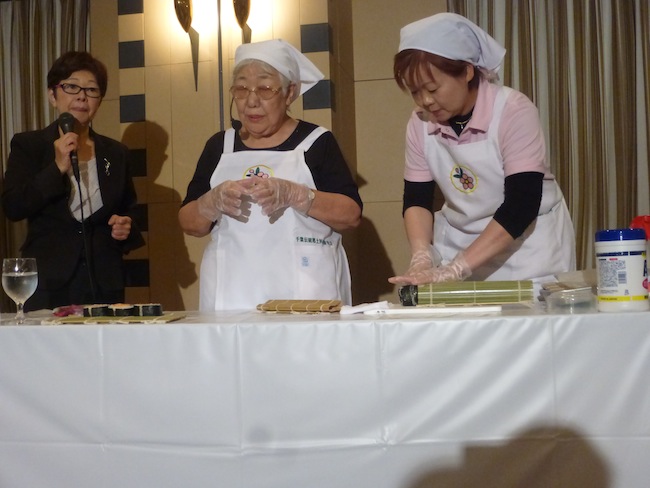
▼ …(this is roughly the thickness you want each piece to be) …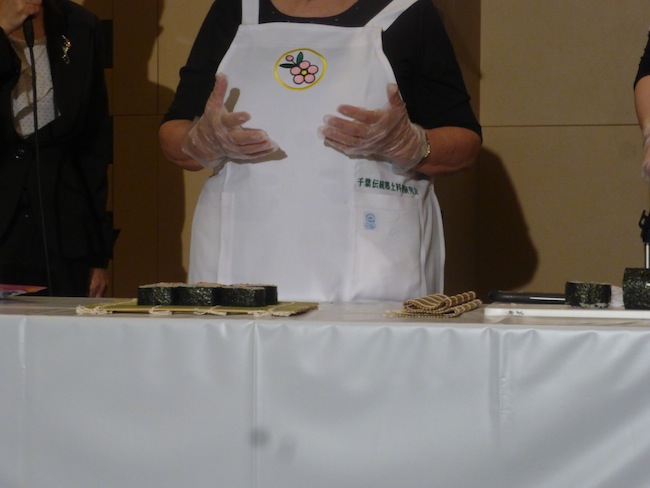
▼… and you get a pretty peach flower futomaki like the one you see in the center here. The mixture of the pink and white rice is perfect for representing the delicate color of peach blossoms!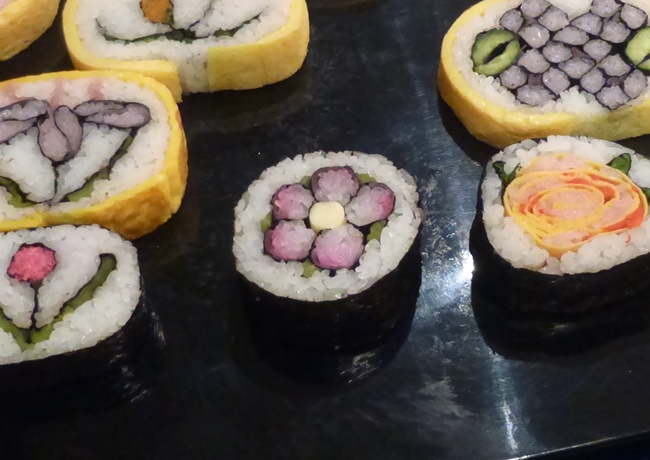
▼Here’s a short video capturing some of that rolling action!
Okay, after seeing these beautiful rolls being created, we were completely psyched up and ready to get “rolling”. We have to say the first part of the reception was thoroughly enjoyable, hearing two distinguished chefs speak, tasting an expertly prepared Japanese meal, and seeing the work of a sushi roll creator with over 50 years of experience. One thing that did leave an impression on us after having the meal prepared by Mr. Koyama was that the traditional Japanese repast of a warm hearty soup with three dishes containing a combination of vegetables and meat or fish, along with rice of course, seemed to be quite well-balanced, and that it is somewhat of a pity that we are seeing fewer and fewer meals like this Japan, with the diet here becoming increasingly bread or pasta- and meat-oriented.
And now, we had the second part of the program to look forward to — actually making a futomaki ourselves! Join us next time when we come back with the second part of this story when we find out if this reporter, with her extremely limited cooking experience, is up to the task!
Photos: RocketNews24