

But a potential problem is lurking in its proposed revision.
The Genetics Society of Japan, as you might expect, spends a lot of time discussing dominant and recessive genes. That doesn’t mean its members like those terms, though, and the organization has announced that it will no longer be using the traditional Japanese terms for “dominant” and “recessive,” citing a need to replace them in order to prevent misunderstandings about, and prejudice against, those in the latter group.
In Japanese, the word for dominant is yusei, which is written in kanji like this.

Recessive, on the other hand, is ressei, and written with these characters.

The problem with these terms, according to the GSJ, lies in the other vocabulary their respective first kanji show up in. 優 is the leading character in the verb sugureru (優れる), which means “to be better/superior/preferable.” Meanwhile, 劣 is found at the beginning of otoro (劣る), a verb that’s the opposite of sugureru and means “to be inferior.”
▼ Dominant and superior (left column) vs. recessive and inferior (right)
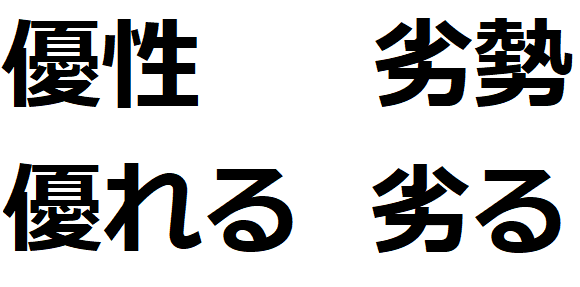
The GSJ contends that because of these overlapping kanji, laymen can become confused and arrive at the incorrect conclusion that dominant genes or genetic traits are preferable to recessive ones, and thus view people with recessive genes or traits as being less capable than others.
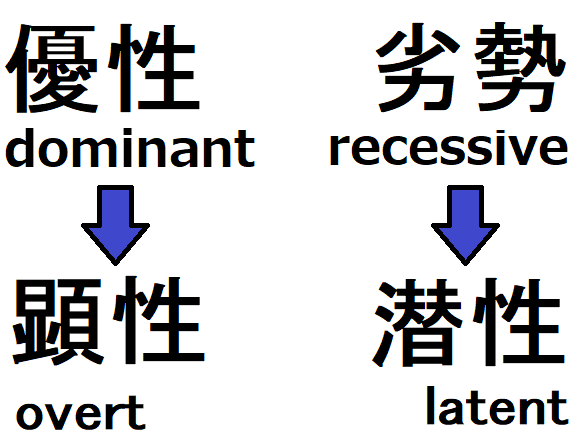
Because of that, the GSJ has revised its internal terminology standards. 優性/yusei/dominant has been replaced with 顕性/akirasei/overt, with 顕 having the meaning of “exposure” or “clarity.” The chosen replacement for 劣性/ressei/recessive is 潜性/sensei/latent, with 潜 representing the condition of latency or being hidden.
GSJ president and University of Tokyo professor Takehiko Kobayashi said that the organization plans to submit a petition to the Ministry of Education, Culture, Sports, Science and Technology to have the new terms replace existing ones in textbooks and educational materials. The GSJ will also be releasing a compiled collection of a number of proposed genetics terminology revisions commercially, for 2,800 yen (US$25), sometime later this month.
However, it’s debatable how necessary the change is. The 優 from 優性/dominant also shows up in 優しい/yasashii/kind-hearted, yet Japanese culture has no widely held perception of people with dominant genes being more caring or considerate than people of any other genotype. In the case of long-established compound-kanji vocabulary, native speakers don’t necessarily have their image of the word colored by its kanji components, in much the same way as English speakers don’t get a sense of repetition from the word “respect,” despite its origins lying in the concept of “looking back/repeatedly (hence the “re-“) at someone in admiration.”
There’s also the fact that while 潜性/sensei means “latent,” the kanji 潜 also shows up in the verb 潜む/hisomu, which means “to be hidden,” or, in more sinister contexts, “to lurk.” That’s something which isn’t likely to leave the best impression on people who get caught up on etymology, and may end up being a major sticking point in the GSJ’s bid to have its proposed terms become the new standard.
Source: Asahi Shimbun Digital via Hachima Kiko
Top image: Pakutaso
Insert images ©SoraNews24
Follow Casey om Twitter, where he wonders how much trouble would have been averted if Metal Gear Solid’s Liquid Snake understood that recessive genes aren’t bad.
 Japan’s Kanji of the Year for 2023 reveals the worries of Japanese society
 Kyoto temple bans visitors from wearing kimono
 Japan’s first fall color forecast for 2026 is here!
 Starbucks Japan adds new Sweet Potato Frappuccino and Latte to the menu, but do they deliver the taste of autumn?
 Lego PlayStation recreates Sony’s original console, makes unusual choice for games to salute
 American tourist in Japan arrested on charges of attempted murder and arson
 A real-world Pokémon Poké Ball hotel is opening in Japan at a still-secret location [Video]
 Starbucks Japan reveals new Tsukimi Moon-Viewing drinkware and gifts for autumn 2026
 Solo travel in Japan: $3 all-you-can-drink deal at this conveyor belt restaurant is a fun time for one
 Japan’s revolving sushi restaurant king Sushiro coming to U.S. this fall with high prices, no tipping
 German woman rescued from Mt. Fuji after suffering altitude sickness symptoms, hiking to peak anyway
 Studio Ghibli unveils new anime calendars and diary planners for 2027
 Solo travel in Japan: Hidden beer garden in Tokyo is a haven for single visitors
 Japan’s final Penguin Suica train cards have already shipped, and when they’re gone, they’re gone
 Family Mart releases new Human Made Cup Noodle in Japan, with freebies for Nigo fans
 Hobonichi unveils new 2027 planners, diaries and stationery with One Piece, Suica Penguin, Hello Kitty and a must-buy Mini Techo
 One Piece Day 2026 brings new art, music, and new cast announcements
 Tamagotchi evolves into a ring for its 30th anniversary, preorders now open
 12-year-old British girl who went missing in Tokyo found safe after visiting anime sites around Yokohama
 7-year-old boy left behind on Mt. Fuji by his own dad
 Sushi Bus: Japan’s first conveyor-belt bus lets you eat sushi while sightseeing around Tokyo
 Japanese toilet aims to attract foreign tourists but not everybody is happy about it
 New Japanese vending machine at Shinkansen station sells cups of ice on platform
 Study finds hundreds of people in Indonesia legally named after Naruto, Inuyasha, other anime stars
 Japan approves foreign resident visa renewal fee increases of up to 967 percent, starts soon
 Japan tripled its departure tax to fund tourism but is using the money on cherry blossoms and bears
 Japan announces sudden 400-percent increase in visa fees for foreigners entering the country
 Japan’s human washing machines will go on sale to general public, demos to be held in Tokyo
 Studio Ghibli has a new anime out, and there’s only one place in the world where you can see it
 Starbucks Japan releases new drinkware and goods for Valentine’s Day
 Starbucks Japan releases new sakura goods and drinkware for cherry blossom season 2026
 Japan’s newest Shinkansen has no seats…or passengers [Video]
 Tokyo subway installing new ticket gates that don’t accept payment through Suica or other IC cards
 Japanese ninja certification exam attracts 131 candidates from Japan and abroad
 Salomon releases Japan-exclusive Mt. Fuji hiking gear that doubles as an amazing souvenir
 Put sesame oil in your coffee? Japanese maker says it’s the best way to start your day【Taste test】