
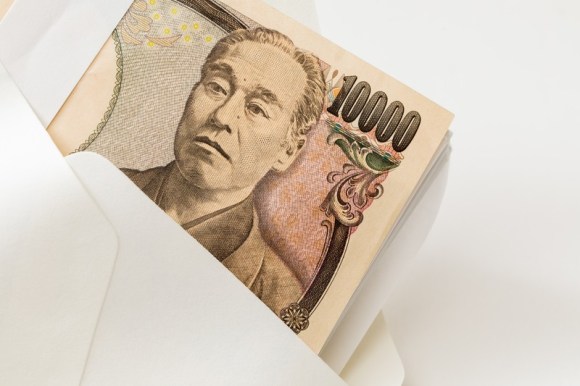
It turns out these envelopes of money can be quite controversial.
Otoshidama are gifts of money that children in Japan get from their parents, grandparents, and other relatives on New Year’s.
I’d always thought that otoshidama were only given to little kids, maybe up to high school. But the first year I spent New Year’s with a Japanese family, I was surprised to see the grandparents gave otoshidama not only to their young grandchildren, but their adult children as well (who were 40 or 50 years old).
So at what age should kids stop expecting to get otoshidama from their family? The question was recently asked on the Japanese question and answer site Oshiete! goo, with Japanese netizen tom_world_312 asking this:
“I’m 23 now and I still get otoshidama from my relatives. What age do you normally stop getting them? And those who stopped getting them, what happened to make it stop?” (i.e.: you reached a certain age, graduated, etc.)
▼ Translated further: “So how long can I keep counting
otoshidama as part of my yearly budget?”

Here’s some of the answers translated into English, of which there was a surprising amount of variety:
“I stopped getting them after graduating elementary school. Nothing happened in particular to make them stop, I just stopped getting them once I was a middle school. I didn’t even ask for them lol.” (from rolfesann)
“For me, I had a part-time job in high school, so I stopped getting them as a freshman. In college a lot of my friends didn’t get them, so I think normally kids get them up to high school, then stop once they go away to college.” (from mkoda)
“I got them until high school. When I went away to college and lived alone, I stopped getting them. I mean, my parents were helping me with my expenses at that point, so they were already giving me way more than any otoshidama.” (from showeran)
For many netizens, it seems like school graduation also meant “graduation” from otoshidama as well. The youngest was elementary school, but high school and college graduations also brought the end of otoshidama for others.
“Typically the earliest is at 18 and the latest is 20, when you officially become an adult. When I turned 20 my parents told me, ‘Well I guess that’s the end of your otoshidama, huh?'” (from warumon3)
“I got them until age 22. Once I graduated college and starting earning money myself, I didn’t get them anymore. I thought I’d stop getting them at 20, but since they still kept giving me them, I took them lol. I think stopping it around age 20 or when you get a real job is about the right timing. All the other adults around me just naturally stopped receiving them too. (from kanamamma)
“Once I got a job and a salary of my own I refused to take them anymore. Each person stops getting otoshidama at different ages, but I think when you become an adult with a career, you should naturally start having reservations about getting them.” (from cart2013)
This group seemed to feel that becoming an adult (age 20 in Japan) and getting a job signaled the end of otoshidama. Not too different from the last group, but the difference between losing otoshidama in middle school/high school and college graduation is several years. For a country that likes to have most everyone following the same cultural rules and guidelines, that’s quite a gap.
“I got them until I graduated from college at 22. I think it’s fine so long as you’re a student. Once I started working I gave my parents otoshidama instead.” (from tippingpoint785)
“I think once you become an adult and start earning money, that’s around when you stop getting otoshidama. But if any relatives decide to give you one anyway, you should just accept it.” (from sikio275)
“I got them until I was 20. Starting this year, I’m giving my 65-year-old parents otoshidama.” (from syota1127)
It seems that this group sees otoshidama more like presents. They’re something that kids can give to their parents too when they get old enough, and they’re something that you should still accept with a smile at any age, even if you think you’re too old.
▼ “Thanks, grandma. Yeah, I’ll use it
to ‘get myself something nice,’ for sure.”

In the end, it looks like most Japanese people agree that otoshidama stops around late teens/early twenties. Of course there are outliers, like those in the last group or the family I visited where the middle-aged “kids” still got them, but they seem to be the exception rather than the rule.
Maybe that makes otoshidama similar to Easter baskets in the U.S. — a little embarrassing to get when you’re older, and not something you particular miss when they go away. And then, later in life, maybe something you’d put together for your parents to make them happy and remember good times.
Unless, of course, your parents gave you otoshidama made up of one-yen coins. No good times ever came from that.
Source: Oshiete! goo
Top image: Pakutaso
Insert images: Pakutaso (1, 2)
[ Read in Japanese ]
 How much money should you give children for New Year’s otoshidama? Adults weigh in
 How much should we give in a New Year’s otoshidama without looking like a jerk?
 Cha-Ching! Kids in Japan Receive Up to $1,500 During New Year’s
 Flush with New Year’s present cash, Japanese kids can now look forward to…saving it
 Japan’s otoshidama tradition of giving kids money at New Year’s gets a social welfare upgrade
 Lawson convenience store at popular tourist site is one of the most unusual in Japan
 Downtown Tokyo’s meaty monster Kaibutsu ramen will challenge your stomach, thrill your taste buds
 Mr. Sato discovers his inner beaver with a 16-inch chocolate “twig” at Tokyo Station
 Star of Studio Ghibli’s Kiki’s Delivery Service now comes as a doll with four cute accessories
 Japan has omurice chocolate, and the weirdest thing isn’t how it tastes
 Japan’s prime minister exchanges Dragon Ball kamehamehas with president of France[Video]
 McDonald’s Japan adds new Hello Kitty and Pompompurin drinks to the menu for a limited time
 Who makes Japan’s best moon-viewing burger? Let’s eat as many as we can and find out【Taste test】
 Drink vending machines disappearing in Japan as number drops to lowest in 30 years
 Foreign man arrested for walking on Shinkansen tracks, claims he was on the run from yakuza
 Japan reportedly adding Japanese language skill requirement to most common foreigner work visa
 Mt. Fuji decorated with a 500,000-flower pink carpet is Japan’s ultimate spring view
 Pokémon and Ikea Japan cross over into each other’s worlds with collaboration events
 Starbucks Japan closing only Shinkansen platform branch for popularity-triggered renovations
 You can assemble a well-balanced team of Pokémon, them eat them, thanks to Japanese cake chain
 30 Pikachus want to share a Tokyo hotel room with you that has separate Grass, Water, Fire spaces
 Man bites woman at cherry blossom park in Japan, dies shortly after
 7-Eleven Japan’s new baked-in-store sweet treat is only available in three parts of the country
 Peanuts and Coke becomes a viral hit in Japan, but is it a trend worth joining?
 Japan now has a special desk for people who work at home with a pet cat[Photos]
 Famous Tokyo cherry blossom spot installs view-blocking screens to fight overcrowding[Video]
 Uniqlo announces new T-shirts for One Piece, Naruto and more for manga publisher’s 100th birthday
 Train station platform ramen store closes its doors on half a century of history in Tokyo
 Starbucks Japan releases new My Fruit³ Frappuccino at only 34 stores around the country
 Krispy Kreme releases Super Mario doughnuts in Japan for a limited time
 Japanese onsen egg maker from 100-yen store Daiso needs to be on your shopping list
 Survey asks foreign tourists what bothered them in Japan, more than half gave same answer
 Japan’s human washing machines will go on sale to general public, demos to be held in Tokyo
 Starbucks Japan releases new drinkware and goods for Valentine’s Day
 We deeply regret going into this tunnel on our walk in the mountains of Japan
 Starbucks Japan releases new sakura goods and drinkware for cherry blossom season 2026
 Studio Ghibli releases Kodama forest spirits from Princess Mononoke to light up your home
 Japan’s newest Shinkansen has no seats…or passengers [Video]
 Major Japanese hotel chain says reservations via overseas booking sites may not be valid
 Put sesame oil in your coffee? Japanese maker says it’s the best way to start your day【Taste test】
 No more using real katana for tourism activities, Japan’s National Police Agency says
 Otoshidama: How kids in Japan get rich once a year
 Supporting anime/idol crush tops Japanese teen girls’ New Year’s cash spending targets【Survey】
 A surprising number of Japanese kids still bathe with their parents up until high school
 Another New Year cash giveaway hinted at by former Zozotown CEO Yusaku Maezawa
 Japanese parent finds a quick and easy way to get your kids to love reading from an early age
 We turn 100,000 yen into 100,000 one-yen coins, in the spirit of New Year’s generosity
 Traditional Japanese holiday gets boost with an injection of cold hard cash
 What do Japanese kids spend their allowance on? Survey finds out
 Lots of Japanese parents want their kids to work for Nintendo, but not just for the money, survey says
 Is a woman “middle-aged” at 30? 40? 50? Japanese men and women give different answers in poll
 Former otaku regrets wasting so much money as a kid, Dad tells him why it was money well spent
 The power of the Japanese schoolgirl outfit is so miraculous it can create food
 Japanese mom considers cutting off financial support for son who wants to make porn games
 Japan’s legal age of adulthood dropping by two years, but do teens understand what that means?