
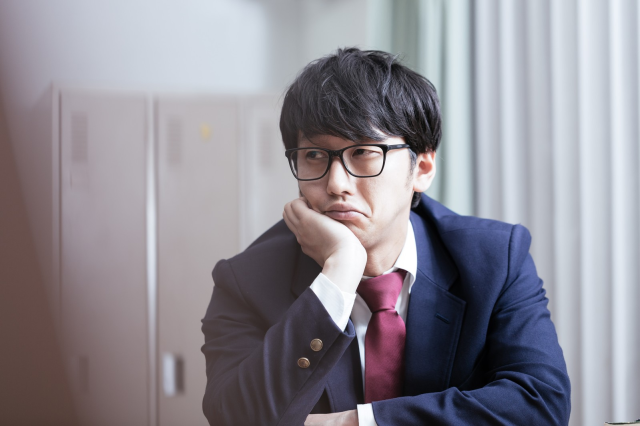
Apparently the two block hairstyle is too dangerous for kids to have.
Japan has a lot of school rules that don’t make a lot of sense. While exact regulations vary by specific school, some of the more frustrating ones we’ve examined include “students must participate in extracurricular activities,” “girls must not wear tights,” and “students’ underwear must be white.”
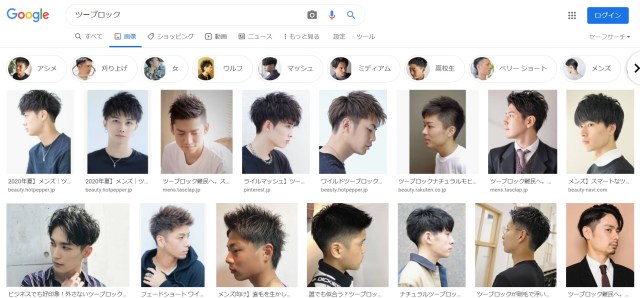
Today, though, let’s talk about a head-related head-scratcher: Tokyo public high schools not allowing students to have what’s known in Japanese as a “two block” hairstyle. In simple terms, it’s a style where the har is trimmed short at the sides and back, but left long on top.
▼ Japanese Google search results for “two block”
At a meeting of the Tokyo Metropolitan Assembly (Tokyo’s city council equivalent), assemblyman Yuichi Ikegawa, a member of the Japanese Communist Party representing a district of Tokyo’s Machida City, wanted to know why the two block hairstyle is prohibited, and got a very surprising answer, as shown in the video below.
▼ The meeting took place in March, but Ikegawa only recently posted the video through his Twitter account.
都立高校の校則。
— 池川友一 Yuichi Ikegawa (@u1_ikegawa) July 13, 2020
なんでツーブロックはダメなのか。
本当に驚愕の答弁。pic.twitter.com/Wj2JhIchEu
As the video opens, the 35-year-old Ikegawa, wearing a gray suit and blue tie, stands up and poses his question.
“I have heard from so many students that, when they ask why the two block hairstyle is not allowed, they are stubbornly told ‘Because that’s the rule’ or ‘Those are the school regulations.’
So why is it not allowed?”
We then see Yuji Fujita, the head of the Tokyo Metropolitan Board of Education, standing at a podium to give his response. The video jumps a few times as he starts speaking, but shows him saying:
“In regards to the hairstyle you mention…there are cases of students being involved in incidents or getting into accidents as a result of their appearance, and so the rule is something that has been put in place with the objective of protecting the students.”
▼ But wouldn’t it be even safer to give all the kids helmets, to cushion them against impacts and hide any dangerous haircuts?

It’s worth noting that in Japanese, the term jiken (“incident”) often refers to some sort of dangerous altercation or other or other trouble with the law. After delivering his response, Fujita then swiftly leaves the podium, while Ikegawa attempts to follow up with:
“So what you’re saying just now is that if they have a two block hairstyle, there is a chance that students will be involved in incidents and accidents? If I may speak frankly, I don’t understand what you mean by that. I think that’s a surprising answer. Does any data actually exist that shows that having a two block hairstyle makes someone more likely to get into such trouble or accidents?
When kids get into trouble, the message that reaches them isn’t that there’s a problem with their hairstyle. I do not believe that schools banning two block hairstyles has any basis in societal common sense or the progression of modern times, and is simply an arbitrary requirement set by schools.”
No doubt making the two block prohibition especially frustrating for students is that it’s arguably the most popular hairstyle among Japanese teens and young adults, being featured on the heads of numerous pop idols and TV drama stars. The two block has become a common enough sight that many Twitter commenters who watched Ikegawa’s videos were also left exasperated by Fujita’s explanation.
“There’s no need to ban the two block.”
“They had this rule at the junior high I went to…It’s totally out of touch with the times.”
“Hairstyling is a form of personal expression. I think it’s unconstitutional for a school rule to impose upon the student’s freedom of expression.”
“A two block is just common sense these days. People trim their hair at the sides and back before it gets too long or hot. It’s not like 30 years ago where two blocks were only something super-fashionable Harajuku guys or punk rockers had.”
The last comment points to what might be the rationale behind the no-two-block rule. Taken in its loosest definition, a two block could also include mohawks, as well as certain types of pompadours, which also have a strong association with gangs and juvenile delinquency in Japan. Perhaps it’s that image that Fujita and others behind the ban are worried about, and they feel that two blocks are favored by youths likely to go looking for trouble and find it. Alternatively, they may also feel that boys with more modern, fashionable two blocks are concentrating more on their appearance than their studies, though that leaves the question of how that will cause them to be involved in “incidents and accidents.”
Even a few Twitter commenters to Ikegawa’s post voiced their opinions that they think a two block is unacceptable for a high schooler, so it’s unlikely that the ban will be repealed anytime soon, but at least students in Tokyo with naturaly brown hair won’t be forced to dye it black anymore.
Source: Twitter/@u1_ikegawa via Hachima Kiko
Top image: Pakutaso
Insert images: Google, Pakutaso
● Want to hear about SoraNews24’s latest articles as soon as they’re published? Follow us on Facebook and Twitter!
Follow Casey on Twitter, where he still doesn’t understand why his junior high school’s dress code bothered to ban ascots, as though anyone wanted to wear one.
 Has five years with the dangerous haircut banned in Tokyo schools led this man to a life of crime?
 All Tokyo public high schools abolish rules forcing students to dye non-black hair, underwear color regs
 Japanese high schools abolish old rules, provide freedom with underwear, hair and dating
 Elementary and junior high students speak out on Japan’s strangest school rules
 A look back on 40 years of Japanese schools banning stuff
 Lawson convenience store at popular tourist site is one of the most unusual in Japan
 Mt. Fuji decorated with a 500,000-flower pink carpet is Japan’s ultimate spring view
 Howl’s Moving Castle’s scene-stealing dog is here to clean your home as a plushie mop
 Downtown Tokyo’s meaty monster Kaibutsu ramen will challenge your stomach, thrill your taste buds
 Sailor Moon musical to be released on DVD next month, footage available online【Video】
 Conan O’Brien visits Conan Town in Japan…but things don’t go entirely as planned
 Haunted hospital near Mt Fuji re-opens after renovation at Fuji-Q Highland, and it’s terrifying
 Japan’s master knife maker returns with a razor-sharp blade made out of plastic wrap【Video】
 Taste-testing Japan’s real-world Dragon Balls and Senzu Beans at Marugame Seimen
 Soon, Japanese kids will be learning about virtual idol Hatsune Miku in their school textbooks
 Japan reportedly adding Japanese language skill requirement to most common foreigner work visa
 Pokémon and Ikea Japan cross over into each other’s worlds with collaboration events
 Starbucks Japan closing only Shinkansen platform branch for popularity-triggered renovations
 You can assemble a well-balanced team of Pokémon, them eat them, thanks to Japanese cake chain
 Two food hacks take Japan’s convenience store fried chicken to amazing new sandwich heights
 30 Pikachus want to share a Tokyo hotel room with you that has separate Grass, Water, Fire spaces
 7-Eleven Japan’s new baked-in-store sweet treat is only available in three parts of the country
 Man bites woman at cherry blossom park in Japan, dies shortly after
 Peanuts and Coke becomes a viral hit in Japan, but is it a trend worth joining?
 Japan now has a special desk for people who work at home with a pet cat[Photos]
 Famous Tokyo cherry blossom spot installs view-blocking screens to fight overcrowding[Video]
 Uniqlo announces new T-shirts for One Piece, Naruto and more for manga publisher’s 100th birthday
 Train station platform ramen store closes its doors on half a century of history in Tokyo
 Starbucks Japan releases new My Fruit³ Frappuccino at only 34 stores around the country
 Krispy Kreme releases Super Mario doughnuts in Japan for a limited time
 Japanese onsen egg maker from 100-yen store Daiso needs to be on your shopping list
 Studio Ghibli releases Catbus pullback keychain that runs like the anime character
 Survey asks foreign tourists what bothered them in Japan, more than half gave same answer
 Japan’s human washing machines will go on sale to general public, demos to be held in Tokyo
 Starbucks Japan releases new drinkware and goods for Valentine’s Day
 We deeply regret going into this tunnel on our walk in the mountains of Japan
 Starbucks Japan releases new sakura goods and drinkware for cherry blossom season 2026
 Studio Ghibli releases Kodama forest spirits from Princess Mononoke to light up your home
 Japan’s newest Shinkansen has no seats…or passengers [Video]
 Major Japanese hotel chain says reservations via overseas booking sites may not be valid
 Put sesame oil in your coffee? Japanese maker says it’s the best way to start your day【Taste test】
 No more using real katana for tourism activities, Japan’s National Police Agency says
 Japanese middle school criticized for pulling out girls’ bra straps to check their color
 Former schoolgirl sues Tokyo high school that made her drop out for breaking no-dating rule
 All-boys’ high school in Japan has mandatory grooming lesson, teaches about skincare, hairstyling
 Japanese junior high school girl removed for class from three days for grooming her eyebrows
 Some Japanese elementary schools don’t let kids wear underwear during P.E., and parents are mad
 Students in Finland, the world’s best-educated country, react to Japan’s harsh school rules
 Students confused over Japanese school banning ponytails for “conjuring lustful feelings”
 Majority of Nagasaki high schools and middle schools have white-underwear-only rules, study finds
 Japanese schoolgirl points out an especially dumb part of her school’s “no tights” dress code
 Japanese school bans non-white masks for students, teacher can’t believe dumb waste of time
 Public schools in Japan’s Saga Prefecture will no longer regulate/check students’ underwear color
 Dumb Japanese school dress codes — Coronavirus winter edition
 Brown-haired girl sues Japanese school for telling her to dye hair black, court makes decision
 Tokyo public schools will stop forcing students with non-black hair to dye it, official promises
 Japanese schoolgirl says education is pointless, gets schooled in debate on Twitter