
Who needs a car when you can fit this many kids on your chari when running errands?
Japan has a reputation for making some of the highest-quality automobiles and fastest bullet trains in the world. But for a lot of people, when they need to make quick trips around urban or suburban neighborhoods, they don’t use a car or bus, but a chari.
Usually, if you look up how to say “bicycle” in an English-Japanese dictionary, you’ll find the word jitensha. But a “chari” is a special kind bicycle, one built for practicality and comfort rather than stylish sportiness. These types of bikes are often referred to as “mama chari”, and many of them are outfitted with special equipment and accessories so that a Japanese parent can do the shopping or run errands by bike with kids along for the ride.
And yes, we said kids, plural, as this photo from Canadian sports journalist Scott Stinson (@scott_stinson), who’s in town for the Tokyo Olympics, shows.
Very efficient transport pic.twitter.com/d3hku02cvs
— Scott Stinson (@scott_stinson) July 31, 2021
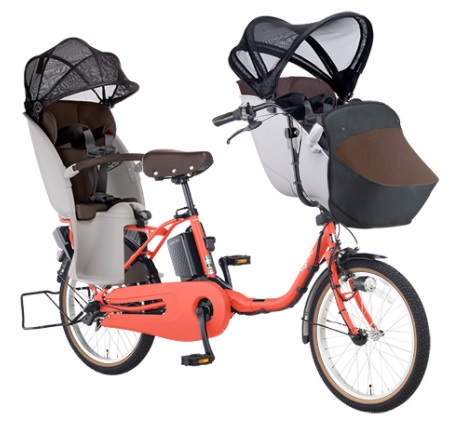
With Mom in the middle, the youngest kid up front, and the older sibling in the back, this single bike seats three, and has a couple of other add-ons for even more functionality. The clear coverings for the child seats, with front sections that can be folded up or down? That’s to keep the kids dry if they need to go somewhere by bike on a rainy day, an especially welcome feature in Japan’s storm-prone summer.
A key difference between this type of mama chari and a tandem bike, though, is that there’s still only one set of pedals. The tykes up front and in back aren’t providing any propulsion, so does that leave Mom pumping her two legs for three people’s bodyweight? Not necessarily. Fancier models, like the one seen in Stinson’s photo, have an electric assist to help with hauling kids, groceries, or whatever else needs transporting.
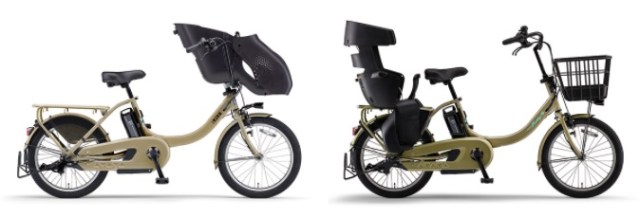
▼ A pair of mama chari from manufacturer Yamaha
▼ Other models from Panasonic, with adjustable sun shades
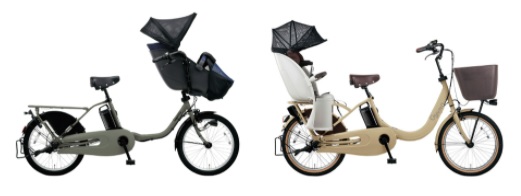
In general, these types of mama chari come standard with one child seat, with the second being an option that covers or replaces either the front basket or rear parcel platform. Prices for electric-assist models run around 150,000 yen (US$1,360), with a second child seat being an additional 25,000 yen or so.
While mami chari like these can be startling to see for the first time, like Stinson says, they’re a very efficient way of getting yourself and two kids around cities like Tokyo where the public transportation system can get very crowded and tough to navigate with small kids, making mama chari an ubiquitous part of family life in Japan, and another everyday part of the country getting a fresh round of attention during the Olympics.
Source: Twitter/@scott_stinson via Livedoor News/The Answer via Jin
Featured image: Twitter/@scott_stinson
Insert images: Yamaha, Panasonic (1, 2)
● Want to hear about SoraNews24’s latest articles as soon as they’re published? Follow us on Facebook and Twitter!
 Hardcore anime fan rides bike 250 miles to Tokyo to attend Comiket convention
 Japan’s perception of skateboarding could change thanks to Olympic wins, pro skater says
 Studio Ghibli releases the My Neighbour Totoro tea caddy, with a magical self-closing lid
 Create a tiny Ghibli anime world on your bookshelf with new miniature papercraft art kits
 Japan now has a “for foreign tourists only” Mt. Fuji sightseeing train[Video]
 7-Eleven Japan releases a crazy new viral sandwich: Chocolate Sprinkles and Whipped Cream
 Fake police phone scam also highlights dumb stereotype about how foreigners speak Japanese[Video]
 Nissin Donbei to sell Classic line of instant udon and soba noodles for its 50th anniversary
 Here’s what you need to know before the 2026 Sanrio Character Ranking voting goes live
 Japan’s Mos Burger creates tempura rice bowl bento boxed lunch burger, but not for its menu
 Calendar sales of a certain foreign world leader are surpassing those of native stars in Japan
 Foreign tourists in Japan will get free Shinkansen tickets to promote regional tourism
 Starbucks Japan releases new My Fruit³ Frappuccino at only 34 stores around the country
 Japanese onsen egg maker from 100-yen store Daiso needs to be on your shopping list
 Cherry blossoms begin blooming in Japan with record-early starts for sakura season
 Tokyo government organizes food truck event to clear out delinquent/homeless teen gathering area
 Nine amazing off-the-beaten-path cherry blossom spots in Japan for yaezakura and shidarezakura
 Stunning central Japan wisteria festival is like a purple fantasy straight out of a Ghibli movie
 When will the cherry blossoms reach full bloom in Japan this year?[Forecast]
 Studio Ghibli unveils new Rollbahn notebook in honour of Howl’s Moving Castle
 Studio Ghibli adds new anime tumblers to its cool streetwear brand in Japan
 Universal Studios’ Sailor Moon theme park attraction is finally coming to America
 Starbucks Japan unveils new sakura cherry blossom collection for hanami season 2026
 Train station platform ramen store closes its doors on half a century of history in Tokyo
 Studio Ghibli releases Catbus pullback keychain that runs like the anime character
 Nine great places to see spring flowers in Japan, as chosen by travelers (with almost no sakura)
 Starbucks Japan releases first-ever Hinamatsuri Girls’ Day Frappuccino
 Studio Ghibli adds new Mother’s Day gift sets to its anime collection in Japan
 Virtual idol Hatsune Miku redesigned with look that adds new elements and brings back old ones
 Survey asks foreign tourists what bothered them in Japan, more than half gave same answer
 Japan’s human washing machines will go on sale to general public, demos to be held in Tokyo
 Starbucks Japan releases new drinkware and goods for Valentine’s Day
 We deeply regret going into this tunnel on our walk in the mountains of Japan
 Studio Ghibli releases Kodama forest spirits from Princess Mononoke to light up your home
 Starbucks Japan releases new sakura goods and drinkware for cherry blossom season 2026
 Japan’s newest Shinkansen has no seats…or passengers [Video]
 Major Japanese hotel chain says reservations via overseas booking sites may not be valid
 Put sesame oil in your coffee? Japanese maker says it’s the best way to start your day【Taste test】
 No more using real katana for tourism activities, Japan’s National Police Agency says