Who needs a car when you can fit this many kids on your chari when running errands?
Japan has a reputation for making some of the highest-quality automobiles and fastest bullet trains in the world. But for a lot of people, when they need to make quick trips around urban or suburban neighborhoods, they don’t use a car or bus, but a chari.
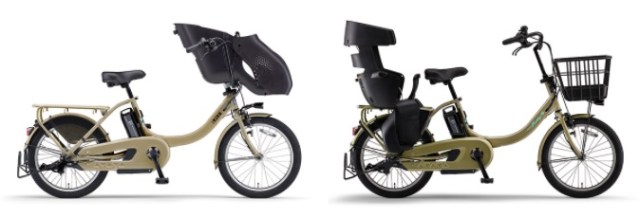
Usually, if you look up how to say “bicycle” in an English-Japanese dictionary, you’ll find the word jitensha. But a “chari” is a special kind bicycle, one built for practicality and comfort rather than stylish sportiness. These types of bikes are often referred to as “mama chari”, and many of them are outfitted with special equipment and accessories so that a Japanese parent can do the shopping or run errands by bike with kids along for the ride.
And yes, we said kids, plural, as this photo from Canadian sports journalist Scott Stinson (@scott_stinson), who’s in town for the Tokyo Olympics, shows.
Very efficient transport pic.twitter.com/d3hku02cvs
— Scott Stinson (@scott_stinson) July 31, 2021
With Mom in the middle, the youngest kid up front, and the older sibling in the back, this single bike seats three, and has a couple of other add-ons for even more functionality. The clear coverings for the child seats, with front sections that can be folded up or down? That’s to keep the kids dry if they need to go somewhere by bike on a rainy day, an especially welcome feature in Japan’s storm-prone summer.
A key difference between this type of mama chari and a tandem bike, though, is that there’s still only one set of pedals. The tykes up front and in back aren’t providing any propulsion, so does that leave Mom pumping her two legs for three people’s bodyweight? Not necessarily. Fancier models, like the one seen in Stinson’s photo, have an electric assist to help with hauling kids, groceries, or whatever else needs transporting.
▼ A pair of mama chari from manufacturer Yamaha
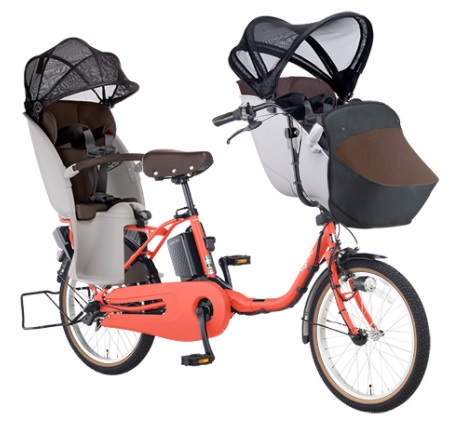
▼ Other models from Panasonic, with adjustable sun shades
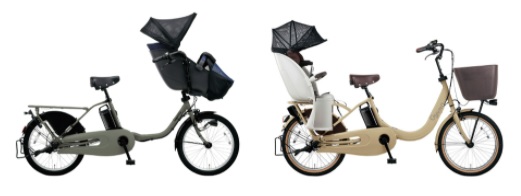
In general, these types of mama chari come standard with one child seat, with the second being an option that covers or replaces either the front basket or rear parcel platform. Prices for electric-assist models run around 150,000 yen (US$1,360), with a second child seat being an additional 25,000 yen or so.
While mami chari like these can be startling to see for the first time, like Stinson says, they’re a very efficient way of getting yourself and two kids around cities like Tokyo where the public transportation system can get very crowded and tough to navigate with small kids, making mama chari an ubiquitous part of family life in Japan, and another everyday part of the country getting a fresh round of attention during the Olympics.
Source: Twitter/@scott_stinson via Livedoor News/The Answer via Jin
Featured image: Twitter/@scott_stinson
Insert images: Yamaha, Panasonic (1, 2)
● Want to hear about SoraNews24’s latest articles as soon as they’re published? Follow us on Facebook and Twitter!