
This will change the way you think about counting things in Japanese forever.
There are a lot of differences between English and Japanese that make learning the latter incredibly difficult.
Take the way that animals and people are counted, for instance. In English, you’d simply pop the number in front of the subject — “one cow”, “one bird”, “one person” and so on. But in Japanese, you have to attach a unique word to the number, depending on what the subject is. This requires study, practice, and patience, as around 500 counters exist in Japanese.
▼ “Do you know how to count me?”

Why do these counters exist, and how can you remember them? It’s a question that’s plagued not only students of the language for years, but Japanese people themselves, who are often as puzzled as the rest of us when asked about them.
However, Japanese Twitter user Mano Mano (@manomano_farm) recently shared a reason behind some of the counters for animals and people, and after sharing it online it blew everyone’s minds, earning over 383,000 likes from people who couldn’t believe they’d never made the connection before.
Are you ready to connect the dots behind the language conundrum? Prepare to have your mind blown as you read the translation of the below tweet, which will change the way you think about Japanese counters forever.
“An amazing thing I recently discovered is that ‘How to count animals is dependent on what remains after death’.
Cows and pigs are counted as “一頭” (“ittou”), birds are counted as “一羽” (“ichiwa”), and fish are counted as “一尾” (“ichibi”).
In other words, the counter is named after the part that’s not eaten or the part that remains.
And since humans leave behind their “名前” (“namae” or “name”) after they die, the counter for people is “一名” (ichimei).
Did you all know this? The scales have fallen from my eyes so I’m sharing it.”
最近知ったのですが「動物の数え方は死んだ後に何が残るかで決まる」って話がすごい。牛豚は「一頭」、鳥は「一羽」、魚は「一尾」つまり食べられない部位、残る部位で呼ぶらしい。そして人間は死んでから「名前」が残るから「一名」なんだって。これみんな知ってた?目から鱗だったのでシェアします😌
— マノマノ🌾 (@manomano_farm) April 18, 2022
The scales certainly fell from our eyes too, as it did for thousands of other people around Japan upon hearing this revelation.
So let’s unpack some of the details from the tweet.
When Mano Mano says “Cows and pigs are counted as “一頭” (“ittou”)“, this is the counter for one animal, as it has the kanji for “one” (“一”) in front of the kanji counter. That’s the case for all the counters mentioned, and if you were to describe more than one animal, you would change that number accordingly.
▼ “Ittou? Correct.”
However, the really interesting part comes with the counter itself. The kanji used to count cows and pigs (and other large animals like elephants and tigers) is “頭“, which is the kanji for “head”. Some people believe this counter originates from the end of the Meiji era (1868-1912), when Japan adopted the Western style of counting livestock by the head. However, the skulls of these large animals also invoke impactful imagery that are synonymous with the remains of giant animals.
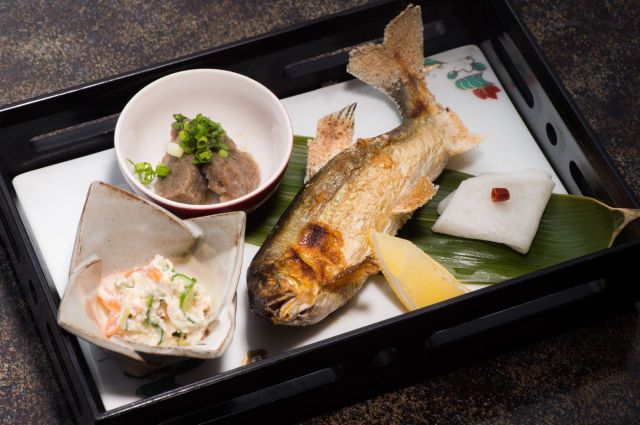
Taking a look at the other mentions in the tweet, the counter for birds is “羽“, which is the kanji for “wing“, while the counter for fish is “尾” (“tail“). When you think about it, one of the most distinguishing features of a fossilised bird skeleton is the wings, and when it comes to fish, people often leave the tail behind, so you’d be able to count how many fish you’ve eaten by counting the tails.
▼ Small-boned fish like this are often eaten whole in Japan, although later in the season the tails can be hard, prompting people to leave the tails on their plate.
Of course, there are exceptions to the rule, as there always have been — take rabbits, for instance, which use the “羽” counter despite not having wings. There are theories for these discrepancies too, though, with some saying the rabbit counter came about because monks weren’t allowed to eat quadrupeds for religious reasons, so counting rabbits’ ears as “wings” allowed them to get around that fact.
The most poetic takeaway from Mano Mano’s tweet, though, is the notion that all humans leave behind is their name. This is particularly poignant in Japan, where people are given a new name after they die, to avoid them returning to this world when their former name is spoken.
The theory that counters are connected to what an animal or person leaves behind is an intriguing one that provides us with a lot of food for thought. It’s certainly a handy tool to help us remember some of the counters and how to identify them, which is much needed when there are still so many more counters in the language to master!
Source: Twitter/@manomano_farm via Hachima Kikou
Featured image: Pakutaso (edited by SoraNews24)
Insert images: Pakutaso (1, 2,)
● Want to hear about SoraNews24’s latest articles as soon as they’re published? Follow us on Facebook and Twitter!