You can’t keep a good candy down.
When perusing a Japanese candy store, you’re likely to come across some packages that look like major throwbacks to bygone eras. Although they might not have the electrifying flavors of more modern snacks, these products are worth trying out simply as a part of living history.
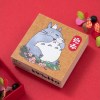
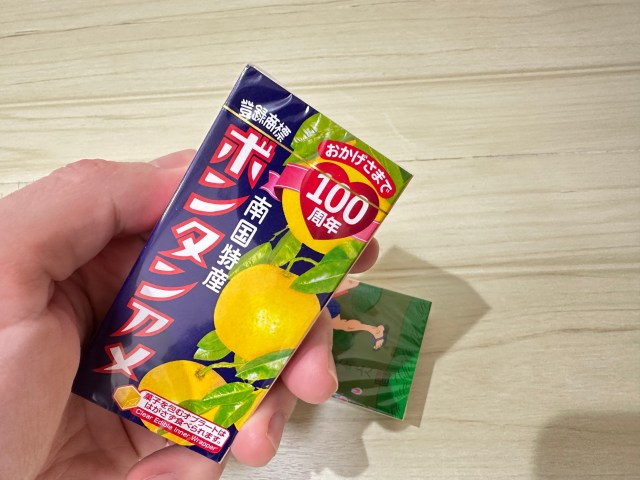
Right now, we’ll take a look at Bontan Ame, a box of small soft candies sold by Seika Foods. Seika sells a few different variations of this candy, but Bontan Ame has been the most popular due to its citrus flavor of the pomelo fruit (“bontan” in Japanese).
 Photo ©SoraNews24
People new to these treats might initially struggle to remove what appears to be a plastic wrapper on each candy, until realizing that the wrapper is made of starch and can just be eaten whole along with the candy itself.
 Photo ©SoraNews24
 Photo ©SoraNews24
Again, it’s not a candy that’ll knock your socks off, but it’s nice. And after understanding everything Seika went through to keep Bontan Ame on the shelves throughout the last century, it’d be hard not to admire the company’s sheer perseverance.
Back in the early 20th century, it was already a hard road for Seika. They specialized in mizuame, a transparent and sweet starch syrup that’s similar to a really thick coffee sweetener and lacks the bold flavor and overall razzle-dazzle of Western confections that were flooding the Japanese market at the time.
▼ Mr. Sato, holding some mizuame and unsure of how to eat it
 Photo ©SoraNews24
To compensate for this loss of market share, Seika decided to ship their mizuame to other parts of Japan in 1925. However, the cans that the syrup was packaged in developed leaks which ruined their entire shipment. They complained to the shipping company and expected compensation but much to their surprise, instead of receiving any money, they got a bill to clean up the mess their mizuame caused.
Already in dire financial straits, Seika was nearly wiped out by this disaster. It was then that Bontan Ame was developed as a Hail Mary of sorts, taking cues from other countries’ candies, such as bite-sized portions and a tangy flavor. The candy was a hit, partly due to an aggressive advertising campaign that involved live street performers called “chindonya” touring the country and promoting Bontan Ame.
▼ You can still occasionally see chindonya around Japan to promote store openings, but it’s rather rare so consider yourself lucky if you do.
In 1928, in a quintessentially early-20th-century scheme, Seika planned to hire an old war plane to literally bombard Tokyo with candies and promoted the event widely. Funding for the project fell through at the last minute and it was canceled, but the embarrassment of the whole debacle was so great that it made national news and ended up being good promotion for the candy anyway.
Bontan Ame was produced by a factory in Kagoshima, but during World War II, nearly the entire city was leveled in bombing raids by the U.S. military. Seika’s headquarters and factory were both completely reduced to rubble. After the war, the president and remaining staff returned to the ruins of Seika.
▼ Kagoshima in November, 1945
 Image: Wikipedia/Unknown
They found a safe that barely survived, with the company’s accounts and bank documents inside. This allowed Seika to at least settle all of its finances, including paying off all employees’ salaries and retirement benefits, bringing it back to zero.
Rather than waiting for things to get better, Seika took action immediately. The president had secured a hammer and saw before evacuating and everyone scavenged materials to build a four-square-meter (43-square-foot) shack that would serve as the first post-war headquarters of Seika.
Faced with the problem of how to make candy in a country with almost no infrastructure, supplies, or even food, Seika decided to start by producing their Hyoroku Mochi. This is a similar candy to Bontan Ame but made with a blend of domestic ingredients like rice, seaweed, matcha, and sweet beans.
 Photo ©SoraNews24
On top of the numerous supply problems Seika faced, they also faced an unexpected obstacle in the form of the occupying US military. Post-war Japan was forbidden from glorifying pre-war Japan at the time, particularly symbols such as samurai. The package of Hyoroku Mochi shows a man with a sword, so Seika went to the U.S. official to ask permission, saying that the sword was merely the fashion of the time and not intended to promote war.
The U.S. official agreed but said that a bigger problem was the visible buttocks of the man on the package and ordered him to be given pants. It took a little convincing but Seika was able to keep the image unchanged, arguing that the fundoshi the man wore was a form of “Japanese pants” and covered all the naughty bits just as well as regular pants.
Bit by bit, the company managed to pull themselves back up from nothing, and in 1957 conditions were right for them to make an aggressive pivot to ice cream. Despite still having very limited equipment and no experience making ice cream, their risk paid off and demand for their ice cream outpaced their ability to produce it for the next few years.
▼ Currently, their frozen big seller is Nankoku Shirokuma. It’s not really ice cream though, rather shaved ice with fruit, a regional dessert called “shirokuma” or “polar bear.”
With Bontan Ame, Hyoroku Mochi, and Nankoku Shirokuma ice cream as their main pillars, Seika had returned to their former glory and then some. It wasn’t all smooth sailing, though, as natural disasters such as the 1993 Kagoshima Flood also brought adversity to Seika Foods.
▼ A scene from the ’93 flood where heavy rain and related landslides claimed 71 lives
 Image: Wikipedia/Ministry of Land, Infrastructure, Transport and Tourism
But with each setback, they only get more resilient and continue to offer their goods well into the 21st century.
On ads for Bontan Ame, like the one above, you might see the slogan “tokidoki, zutto” which means “sometimes, always.” According to the current president of Seika, this means that they know their candy isn’t something you’ll eat every day, but if you eat it sometimes – even just once every 10 years – they’ll always be there for us.
Source: Seika Foods, TBS News Dig, Hachima Kiko
Featured image: ©SoraNews24
● Want to hear about SoraNews24’s latest articles as soon as they’re published? Follow us on Facebook and Twitter!