
Cool Japan’s mission has been accomplished, but not because of Cool Japan.
Back in 2013, the Japanese government’s Ministry of Economy, Trade and Industry had an idea. What if they created a program to promote the appealing aspects of Japanese culture, including pop culture, to people around the world? This wasn’t going to be a stuffy, overly academic way of looking at Japanese culture, either, but rather a way of spreading the word about all the ways Japan is cool.
And thus was born the Cool Japan Fund, which describes itself as “a public-private fund with the aim of contributing to the sustainable growth of Japan’s economy through the expansion of overseas demand and supply of attractive products and services unique to Japanese lifestyle and culture.” Entertainment content such as anime, manga, and pop music were among the areas to be championed, along with food, fashion, technology, and tourism attractions.
With the rapid rise in global enthusiasm for Japanese stuff over the last decade and a half, one might expect the Cool Japan Fund to have been a huge success, but that’s actually not the case at all. Instead, in 2025 the Cool Japan Fund’s deficit grew to a staggering 54 billion yen (US$340 million), and now the Japanese government is ready to effectively shut the program down.
Inside sources have leaked to multiple media organizations that the Ministry of Economy, Trade and Industry’s upcoming 2027 budget proposal will not be asking for any funds for the Cool Japan Fund. This would remove the program’s ability to invest in any new projects, and since investing is pretty much all the Cool Japan Fund does, by extension, this would terminate the program, since the chance of the it somehow rising out of being 54 billion yen in the red while in a dormant state is negligible.
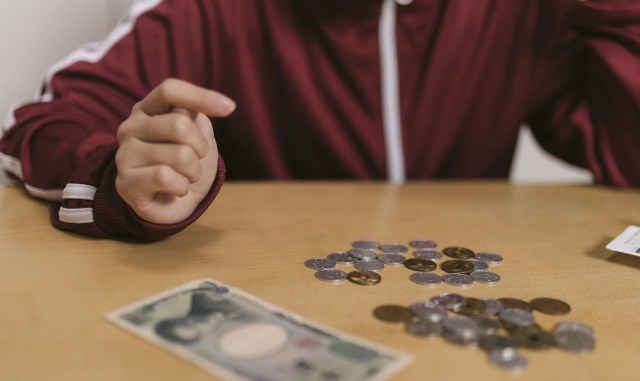
▼ We don’t know how many sofas there are in the ministry’s offices, but there probably don’t collectively contain enough dropped change to balance the Cool Japan Fund’s budget.
As for how the Cool Japan Fund got itself into such a dire situation, the program has been criticized for picking poor partners for more than a decade, with detractors saying Cool Japan was in the habit of providing vague, unhelpful support to projects with poor prospects. Among the most recent embarrassments is the Cool Japan Fund’s backing of Junglia Okinawa, a dinosaur-themed amusement park/resort that opened in Okinawa last year. Almost immediately, Junglia was mocked by Japanese travelers for its high prices and dull attractions, and foreign tourists, who were charged more for admission due to Junglia’s two-tier ticket prices, seemed even less interested in visiting.
The irony here is that while the Cool Japan Fund was flailing and floundering, Japan still managed to build a reputation as one of the coolest countries in the world. Global interest in Japanese media franchises, food, and travel has skyrocketed, just not for the specific partners that the Cool Japan Fund was pushing. Part of that recent boom is, undeniably, stems from the yen’s recent weakness making Japanese products and vacations suddenly very affordable for people from other countries, and arguably some of the Cool Japan Fund’s early swings-and-misses might have performed better had they taken place with today’s exchange rates. The bigger takeaway, though, is that Japanese businesses and private-sector organizations have shown themselves to be perfectly capable of showing the world the cool stuff they have without the Cool Japan Fund’s help.
So in an odd way, while the Cool Japan Fund itself didn’t accomplish the goal is set out to, that goal has still been accomplished. In a time when cost of living increases are making middle and lower-class Japanese households tighten their belts, it’s for the best that the Ministry of Economy, Trade and Industry stop throwing taxpayer money at a program whose help isn’t needed, and whose efforts probably wouldn’t be very helpful anyway.
Source: Asahi Shimbun via Yahoo! Japan News via Jin, Mainichi Shimbun, Cool Japan Fund
Top image: Pakutaso
Insert image: Pakutaso
● Want to hear about SoraNews24’s latest articles as soon as they’re published? Follow us on Facebook and Twitter!