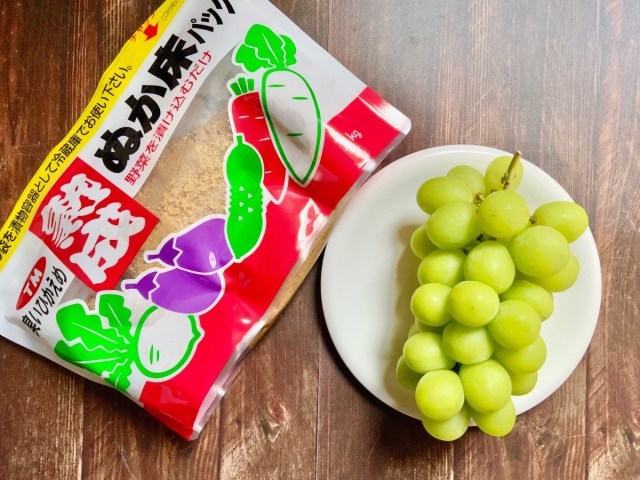
We followed a tip we heard through the grapevine that Japan’s sweet grape variety is even sweeter when pickled in a bed of fermented rice bran.
Shine Muscat grapes are in season right now, and we’ve been craving them as a result. We bought our own bunch and began exploring creative ways of eating them besides straight from the fridge. That’s when we stumbled upon a tip to pickle them in nukadoko, a fermented rice bran bed that’s usually used to make nukazuke pickled vegetables and can be easily purchased at grocery stores, online, or even at Muji Japan stores. Would fruit really taste good using this method as well? There was only one way to find out.
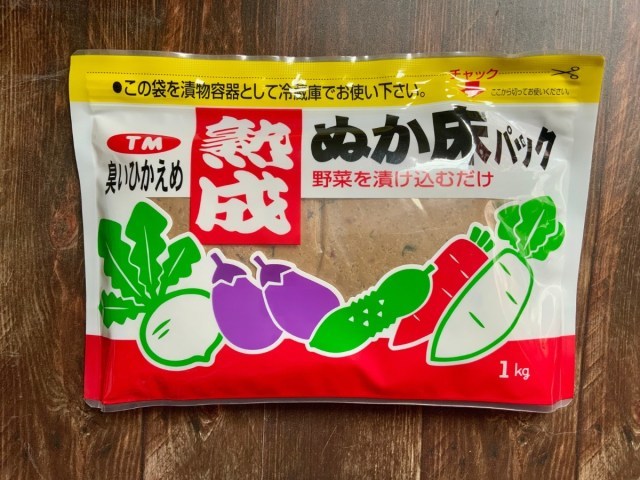
The only two ingredients needed for our culinary experiment were a 1-kilogram (2.2-pound) bag of aged nukadoko, like this one from brand Tsukemoto, and a bunch of Shine Muscat grapes.
▼ For the fastest pickling results, make sure that your bag says 熟成 (jukusei) like the one we used, which means that the mixture inside is already matured and ready for fermenting.
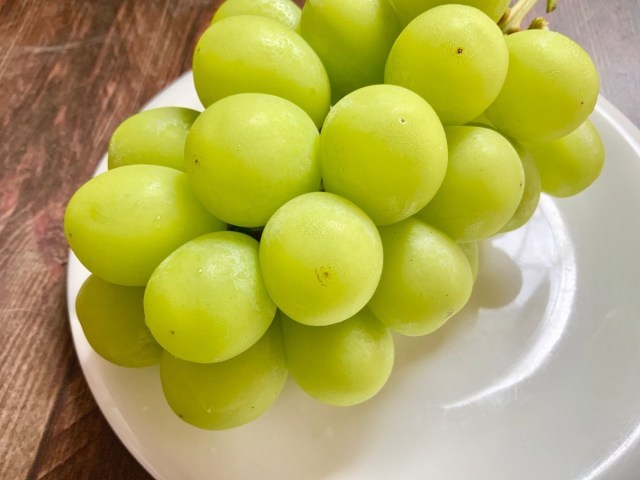
▼ Shine Muscats are on the pricey side, so we were a bit anxious about wasting them if this experiment didn’t turn out well.
We gently washed the grapes and removed the moisture, then laid them neatly inside the nukadoko bag…
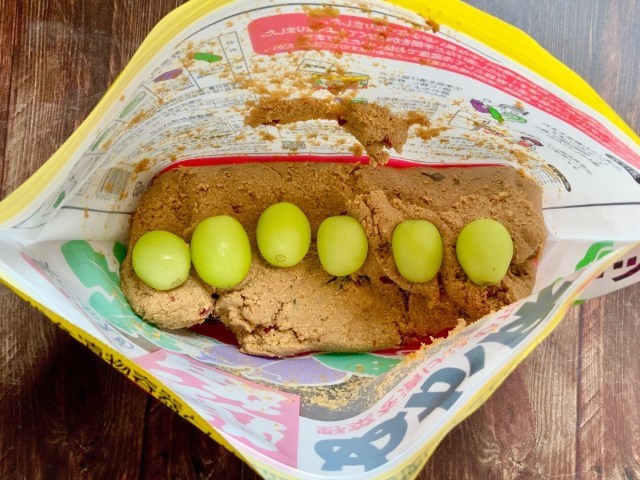
…only to cover them up completely in the mixture as the last step. They need to stay like that for at least three hours, and we set our timer for four since even though we didn’t want to do the bare minimum, this was a brand-new bag of nukadoko and we wanted to avoid ending up with an overly strong flavor.
▼ Enjoy your special bath, grapes!
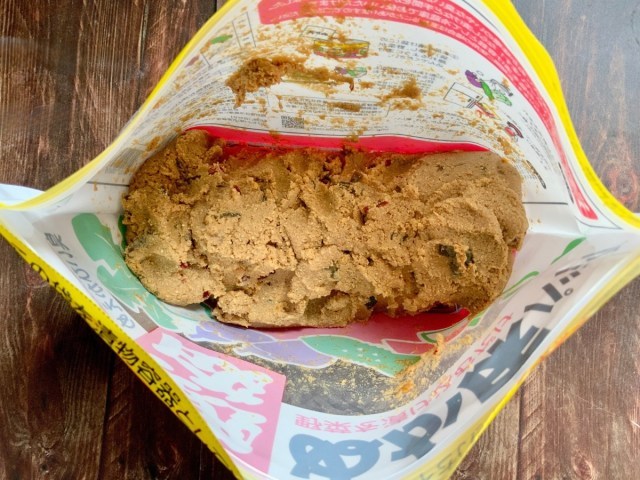
Once enough time had passed we removed them from the bag.
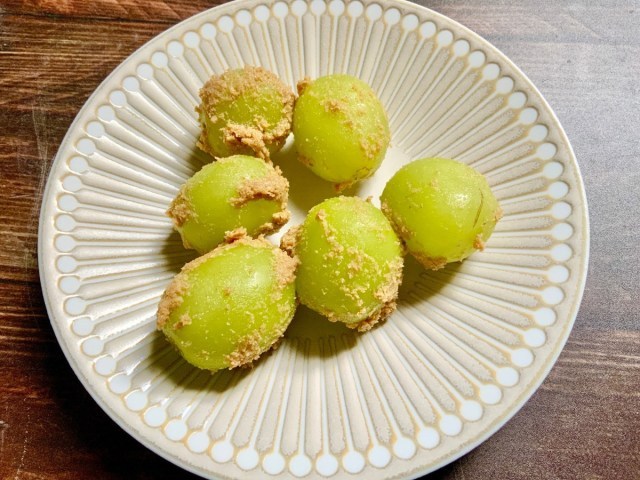
After washing them, there was no outward sign that they had been chilling in a fermented rice bran bath.
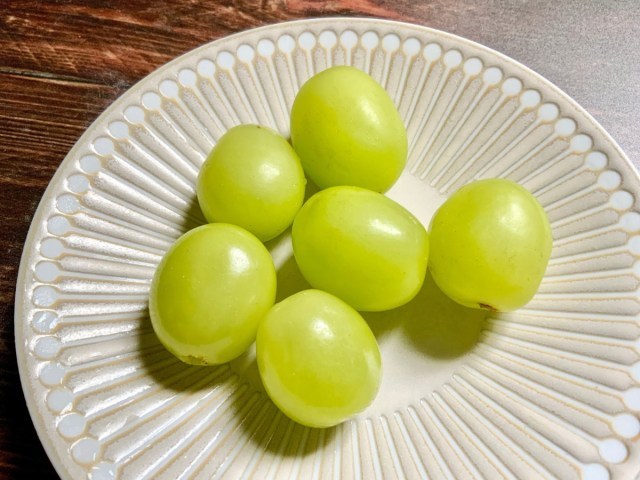
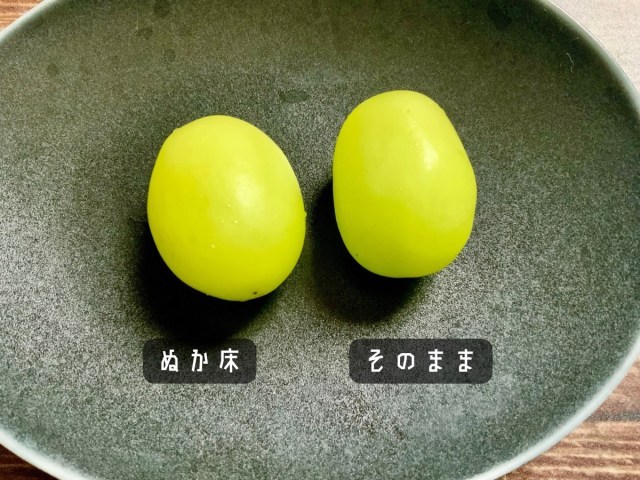
There was also no visible change when we compared one of them with a grape that hadn’t undergone a bath–both in terms of outer appearance…
▼ Nukadoko grape (left) and ordinary grape (right)
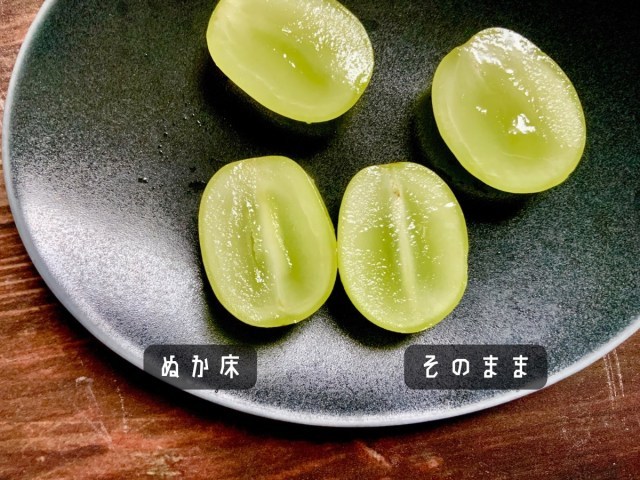
…as well as when sliced. Even when touching them we couldn’t discern any change in their texture or elasticity. Our doubts about this process were growing stronger by the minute.
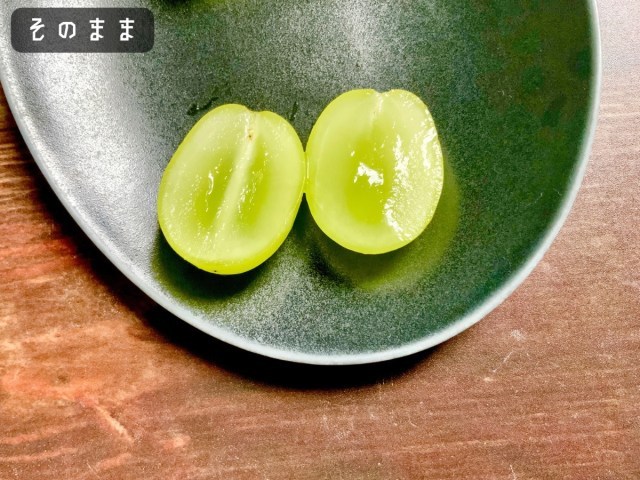
Let’s see if they lived up to the online hype. First, we took a bite of a regular Shine Muscat to calibrate our taste. As usual, it was sweet, refreshing, and juicy, exemplifying its status as one of Japan’s favorite grapes.
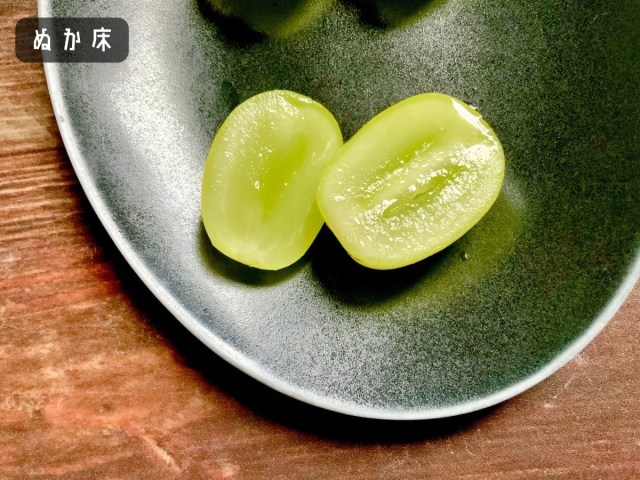
Then it was time to sample the results of our little experiment. WHOAH! Even though it looked no different to the naked eye, the flavor of these grapes was unmistakably deeper and sweeter. It was as if that sweetness were concentrated and enhanced to a strong degree. There were no lingering smell or taste reminders of the fermented rice bran itself, but the saltiness and acidity of the bath must have drawn out the sweetness to the highest possible degree.
The end result? The remaining untouched grapes went right into the nukadoko bag for their own fermentation bath.
For now, the jury’s still out on whether we enjoy this other unorthodox approach to eating Shine Muscats more, so we invite readers to do a taste comparison and decide for themselves.
All images © SoraNews24
● Want to hear about SoraNews24’s latest articles as soon as they’re published? Follow us on Facebook and Twitter!
[ Read in Japanese ]