
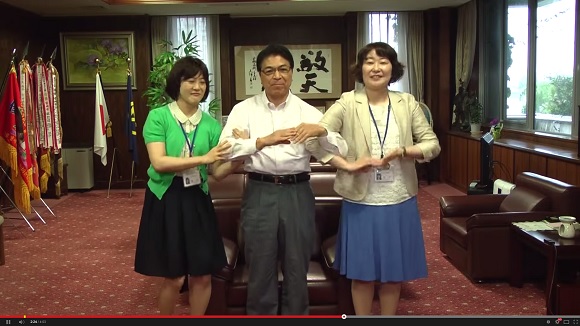
By now you are probably more than sick of hearing Pharell Williams’ “Happy.” We’re not ragging on the song, but we strongly suspect that the international hit, though infectious, has started to wear out its welcome. It took a dedicated Weird Al to even keep us interested through the summer, so we’d say it’s about time to put this song to bed. Maybe we’ll break it out again next summer and laugh at all the memories.
However, there is one thing the video has helped illustrate beyond people’s willingness to show off their dance skills (or lack thereof) for a YouTube video: The nebulous world of copyright violation in Japan.
Update: It looks like something happened after this post was published: The offending video has apparently been taken down. We’ll provide updates when more information becomes available.
Like most of the internet-connected world, Japan fell in love with “Happy” the moment it was released. Tons of videos have been produced, with everywhere from Harajuku to Okinawa putting out their own versions. Perhaps the most notable was the Fukushima-themed video, directed and uploaded by social media expert and video producer Hitomi Kumasaka, which both gave viewers a new appreciation for the disaster-stricken prefecture and attempted to bolster the spirits of the locals.
Following the success of the Fukushima video, a plethora–a plethora, I say!–of regionally themed videos appeared on YouTube, with locals dancing their way into the hearts of their viewers. Who could criticize a local citizenry for having some fun with a song to promote their local culture? “No one!” you might say.
But you’d be wrong, as the government of Miyazaki City recently discovered.
▼And not just because of this immensely bewildering scene…
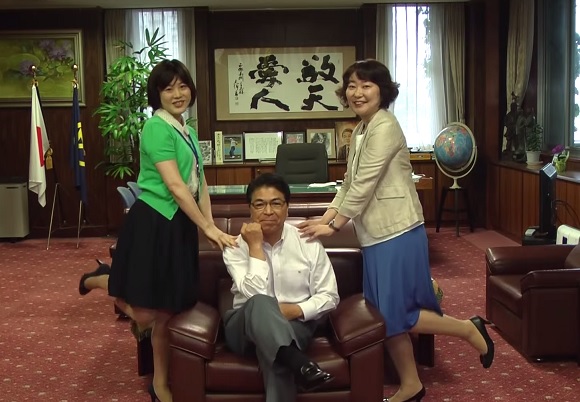
According to a recent Mainichi Shinbun article, while “Happy” is, indeed, a very happy song, its copyright owners most certainly aren’t. It turns out that the Miyazaki City video, which was produced by local media production company MIBtv, caught the eye of someone at Sony Music Publishing, which along with Universal Music Publishing co-owns the Japanese rights to “Happy”. Sony Music apparently contacted the city and MIBtv, claiming that the video was in violation of copyright law.
Wait a second, you’re probably thinking, but what about that Fukushima video? And the dozens, if not hundreds, of “Happy” dance videos still clogging up the YouTubes? Why is Miyazaki being singled out?!
▼The video isn’t that bad after all!
It turns out there is one big difference between Miyazaki City’s video and the numerous other “Happy” videos, which have basically been ignored by Sony’s lawyers. As the Mainichi Shinbun explains, the Miyazki City video is designed to make money. As a part of the city’s PR campaign for their 90th anniversary, the #miyazakihappy video was published on MIBtv’s YouTube channel after the company finished producing it–with financial assistance from the local government.
As baffling as copyright laws can be to everyday citizens (this humble writer included), this makes sense. Sony Music will generally ignore dance videos that are uploaded to personal channels–there’s nothing to gain by taking them down after all. And whether or not you agree with copyright law and how it’s enforced, at least this logic allows people to have some fun with the song.
But when you start trying to make money using someone else’s copyrighted music–even indirectly through an official PR campaign–Sony is going to want a piece of the pie.
▼You dirty copyright violators!
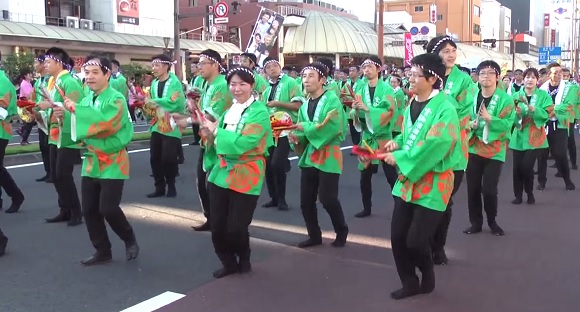
Not only is the video part of a PR campaign–which you could probably argue the Fukushima video is as well–but it was also uploaded to the official MIBtv YouTube channel. As we mentioned before, the Fukushima “Happy” video was uploaded to producer Hitomi Kumasaka’s personal channel, making it an unofficial video of sorts. While the difference may seem insignificant, in the eyes of Sony Music it is worlds apart.
Another issue with Miyazaki City’s video is the international origin of “Happy.” Copyright laws in Japan and the United States aren’t identical, and the way companies approach violations are equally dissimilar. The Mainichi Shinbun provided a counter example in the form of AKB48’s recent hit “Koi Suru Fortune Cookie,” which has gained popularity online thanks in part to the numerous dance videos produced by local governments.
AKS, the copyright owner of the AKB48 song, has chosen to ignore most copyright violating dance videos, believing that they will only help to increase the song’s popularity. This means that city governments can use the pop song in an official capacity–like this video of from Yoyooka City of firefighters dancing/educating the public on fire prevention.
▼You can turn the sound down if you want, but don’t miss these
guys awkwardly shuffling around and scolding careless citizens.
Despite the potential trouble that Miayazaki City has found itself swimming in, the “Happy” video is still up on YouTube. We found this a little strange, since getting the rights to use a song can cost anywhere from a thousand to a million dollars (or more) in Japan. We’re sure Miyazaki City is a prosperous place, but we doubt their citizens would be excited about paying Sony Music a million dollars for a loan of one song! Kanagawa Prefecture had also reportedly considered using “Happy” in a promotional video earlier this year, but gave up on the plan after discussing licensing fees with Universal music.
So, what’s happening with Miyazaki City? Though the matter isn’t entirely settled yet, it appears that the city government has been in contact with Sony Music and they are working out a plan. Hopefully the city won’t find itself grossly in debt to the music label.
▼And since that’s depressing, here’s that sailor-uniformed girl from last
month dancing to “Kin’youbi Ohayo” to put a smile on your face.
But let this be a warning to all of the vloggers in Japan: If you’re going to make a dance video set to music you don’t own, be sure to upload it to a personal channel and don’t even think about trying to capitalize on it. Also, we’re totally not lawyers and are completely not responsible if you get sued by Columbia for uploading a video of you twerking with your virtual girlfriend set to “Turn Down For What”.
Sources: READ2Ch, Mainichi Shinbun, YouTube
Images: YouTube